What Are the Different Types of Fibers Used in Textiles?
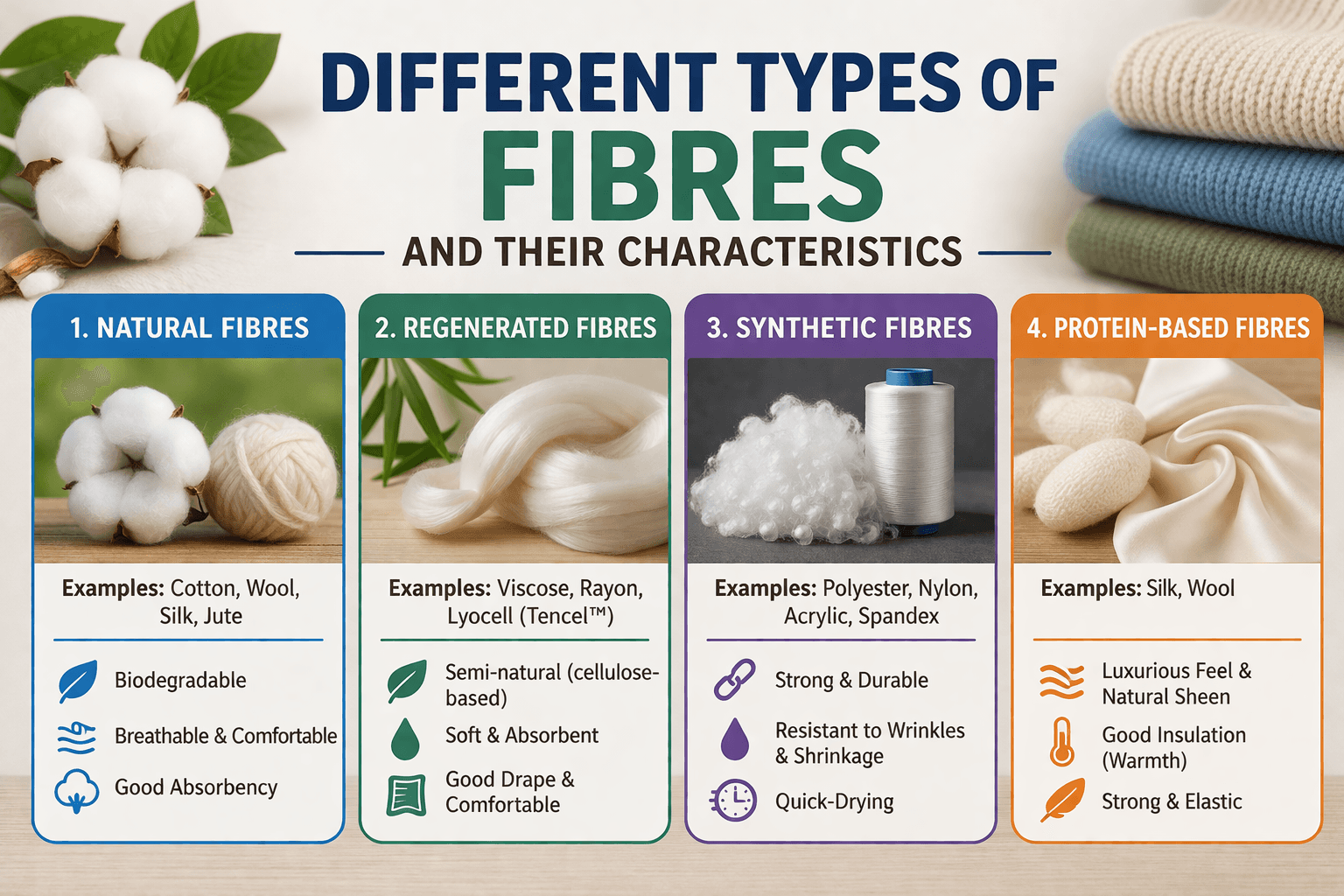
Textile fibers fall into five broad categories:
Natural fibers
Plant-based (cellulosic): cotton, linen, hemp, jute, ramie
Animal-based (protein): wool, silk, alpaca, cashmere
Synthetic fibers
Polyester, nylon, acrylic, polypropylene, spandex
Semi-synthetic fibers
Rayon, viscose, modal, lyocell, acetate
Mineral fibers
Glass fiber, basalt fiber, asbestos (historical use only)
Advanced / Emerging fibers
Bio-based PLA fibers, carbon fibers, CNT fibers, aramid fibers, biodegradable polymers
Each fiber type influences yarn formation, dyeing behavior, finishing methods, and weaving performance. Spun fibers often require warp sizing - an area where Alpenol’s adhesive technologies provide performance advantages.
Can You Explain Various Fiber Types and Their Common Uses?
Natural Fibers
1. Cotton
Soft, breathable, hydrophilic
Excellent for comfort, absorbency
Common uses: T-shirts, bed linens, shirtings, denim
Spun cotton yarn requires sizing during weaving → Alpenol improves warp strength and reduces hairiness.
2. Linen (Flax)
Strong, crisp, cool to touch
Highly absorbent; natural luster
Uses: summer apparel, home textiles, table linen
3. Hemp
Stronger than cotton, eco-friendly
Highly breathable, antimicrobial
Uses: denim, eco-fashion, ropes, composites
4. Wool
Excellent insulation, elasticity, wrinkle recovery
Uses: suits, sweaters, blankets
5. Silk
Natural filament, lustrous, smooth
Uses: luxury garments, sarees, scarves
Synthetic Fibers
1. Polyester
High strength and abrasion resistance
Hydrophobic → dries quickly
Uses: sportswear, shirtings, technical textiles, home furnishings
2. Nylon
Extremely strong, flexible, resilient
Uses: hosiery, swimwear, ropes, airbags
3. Acrylic
Soft, wool-like feel
Uses: sweaters, blankets, upholstery
4. Polypropylene
Lightweight, moisture-resistant
Uses: activewear, geotextiles, filtration
5. Spandex (Elastane)
Exceptional stretch and recovery
Uses: leggings, lingerie, performance wear
Synthetic fibers often perform well even without warp sizing due to smooth surfaces, but high-speed weaving of fine deniers may still benefit from light, uniform sizing - where Alpenol plays a facilitative role.
Semi-Synthetic (Regenerated) Fibers
1. Viscose / Rayon
Soft, absorbent, breathable
Drapes well like silk
Uses: dresses, shirtings, home textiles
2. Modal
Stronger than viscose
Resistance to shrinkage and pilling
Uses: innerwear, loungewear
3. Lyocell (Tencel)
Eco-friendly closed-loop production
Smooth, moisture-absorbent, anti-bacterial
Uses: denim, shirtings, premium knits
These fibers, especially viscose, benefit from effective warp sizing due to high swelling tendency and reduced wet strength Alpenol’s flexible film systems accommodate this behavior.
Mineral Fibers
1. Glass Fiber
Fire-resistant, strong, dimensional stability
Uses: insulation, composites, filtration
2. Basalt Fiber
High thermal resistance, excellent strength
Uses: aerospace, automotive, construction
Emerging Innovations in Fiber Technology
1. Bio-Based Fibers (PLA, Soy Silk, Banana Fiber)
Compostable and renewable
Used in eco-conscious apparel
2. Carbon Fibers
Ultra-high tensile strength
Used in sports equipment, aerospace, performance composites
3. Carbon Nanotube (CNT) Fibers
Exceptional electrical conductivity
Potential uses in smart textiles and wearable electronics
4. Graphene-Enhanced Fibers
High thermal and mechanical performance
Used in technical fabrics
Advanced fibers often require highly controlled weaving tension, and some high-performance woven structures benefit from meticulously engineered sizing systems - reflecting how Alpenol’s chemistry supports precision-driven weaving environments.
List Common Uses for Plant-Based Fibers Like Cotton, Linen, and Hemp
Cotton
Daily wear, baby clothing, bedding, medical textiles
Linen
Summer clothing, upholstery, table textiles
Hemp
Denim, heavy-duty workwear, eco-materials, ropes
Plant fibers generally offer breathability and comfort but may require greater yarn protection during weaving, especially for medium to fine counts - where Alpenol’s sizing stability ensures stronger warp performance.
How Do Fiber Properties Affect Fabric Performance?
1. Strength
Determines durability and abrasion resistance.
Filament synthetics (polyester, nylon) excel here.
2. Elasticity
Controls stretch & wrinkle recovery.
Wool, spandex, and some knits show high elasticity.
3. Absorbency
Affects comfort, moisture management, and dyeability.
Cotton, viscose, and linen lead in this category.
4. Thermal Properties
Wool insulates; polyester dries fast; linen cools.
5. Surface friction
Influences yarn behavior during weaving:
Higher friction (cotton, viscose) → greater need for sizing
Lower friction (polyester filament) → smoother weaving
This is where Alpenol subtly enhances woven fabric performance by reducing friction and improving yarn cohesion.
Compare Cotton, Polyester, and Nylon: Durability, Comfort & Care
Feature | Cotton | Polyester | Nylon |
Durability | Moderate | High | Very high |
Comfort | Excellent | Moderate | Moderate |
Care | Easy, breathable | Easy, wrinkle-resistant | Easy, but heat-sensitive |
Dyeability | Excellent | Requires disperse dyes | Good with acid dyes |
Abrasion Resistance | Low | High | Very high |
Moisture Absorption | High | Low | Moderate |
Cotton provides natural comfort, while polyester and nylon deliver superior durability and technical performance-important considerations for fabric engineers and procurement teams.
Types of Fibers Across Categories: Concise Overview
Natural (Plant/Animal)
Cotton, linen, hemp, wool, silk
Synthetic
Polyester, nylon, acrylic, spandex, polypropylene
Semi-Synthetic
Viscose, modal, lyocell, acetate
Mineral
Glass fiber, basalt fiber
Emerging / Optical / Technical
Carbon fiber, CNT fibers, conductive polymers, aramids, PLA
These classifications form the basis of material selection in apparel, home textiles, and technical textile manufacturing.
FAQ
1. What are the main types of textile fibers?
Natural, synthetic, semi-synthetic, mineral, and emerging technical fibers.
2. Which fibers are best for comfort?
Cotton, viscose, modal, lyocell, and wool.
3. Why do some fibers require sizing before weaving?
Fibers like cotton and viscose have high friction and hairiness. Sizing, such as Alpenol solutions, enhances strength and reduces abrasion.
4. Which fibers are strongest?
Nylon, polyester, aramids, and carbon fibers.
5. What are the newest innovations in fibers?
PLA biopolymers, graphene-enhanced fibers, CNT fibers, and high-performance aramids.
References
Wikipedia – Cotton (Natural Plant Fiber: Absorbency, Softness, Uses), https://en.wikipedia.org/wiki/Cotton
Wikipedia – Linen (Flax Bast Fiber: Strength, Breathability, Applications), https://en.wikipedia.org/wiki/Linen
Wikipedia – Hemp (Durable Natural Fiber: Eco-Friendly, Antimicrobial), https://en.wikipedia.org/wiki/Hemp
Wikipedia – Wool (Animal Fiber: Insulation, Elasticity, Wrinkle Recovery), https://en.wikipedia.org/wiki/Wool
Wikipedia – Silk (Natural Protein Filament: Luster, Strength, Luxury), https://en.wikipedia.org/wiki/Silk
Wikipedia – Polyester (Synthetic Fiber: Durability, Hydrophobic, Sportswear), https://en.wikipedia.org/wiki/Polyester
Wikipedia – Nylon (Synthetic Polyamide: Strength, Flexibility, Resilience), https://en.wikipedia.org/wiki/Nylon
Wikipedia – Acrylic Fiber (Wool-Like Synthetic: Lightweight, Warm), https://en.wikipedia.org/wiki/Acrylic_fiber
Wikipedia – Polypropylene (Lightweight Synthetic: Moisture-Resistant, Geotextiles), https://en.wikipedia.org/wiki/Polypropylene
Wikipedia – Viscose (Rayon: Regenerated Cellulose, Drape, Absorbency), https://en.wikipedia.org/wiki/Viscose
Wikipedia – Modal (Semi-Synthetic: Beech Pulp, Softness, Anti-Shrink), https://en.wikipedia.org/wiki/Modal_(textile)
Wikipedia – Lyocell (Tencel: Closed-Loop, Eco-Friendly, Moisture-Wicking), https://en.wikipedia.org/wiki/Lyocell
Wikipedia – Carbon Fiber (Ultra-High Tensile Strength, Aerospace Applications), https://en.wikipedia.org/wiki/Carbon_fiber_reinforced_polymer
Wikipedia – Glass Fiber (Mineral Fiber: Fire-Resistance, Composites), https://en.wikipedia.org/wiki/Glass_fiber
Wikipedia – Aramid (High-Performance Fiber: Kevlar, Heat Resistance), https://en.wikipedia.org/wiki/Aramid
Selfless Clothes – Natural vs Synthetic vs Semi-Synthetic Fibers (Origin/Durability/Comfort Comparison Table), https://www.selflessclothes.com/blog/natural-vs-synthetic-fibers/
Meridian Millhouse – Types of Fibers: Natural vs Synthetic (Breathability, Colorfastness, Performance), https://meridianmillhouse.com/blogs/blog/types-of-fibers-natural-vs-synthetic
Aysantex – Types of Fiber: An In-Depth Look at Fiber Types (Acrylic/PVC/Olefin/Polyester), https://aysantex.com/types-of-fiber-an-in-depth-look-at-fiber-types/
VN Polyfiber – Classification of Textile Fibers (FTC Definition, Natural/Synthetic/Regenerated), https://vnpolyfiber.com/classification-of-textile-fibers/
Coats Group – Know About Textile Fibres (Industry-Grade Fiber Overview), https://www.coats.com/en/info-hub/know-about-textile-fibres/
BYJU'S – Synthetic and Natural Fibres (Cotton/Wool/Silk vs Polyester/Nylon/Acrylic), https://byjus.com/chemistry/synthetic-natural-fibres/
Vedantu – Types of Synthetic Fibres: Properties, Uses and Examples (Polyester/Acrylic/Nylon), https://www.vedantu.com/chemistry/types-of-synthetic-fibres
Sahni Fabrics – 8 Different Types of Synthetic Fabrics (Acrylic, Polyester, Spandex, Nylon), https://www.sahnifabrics.com/blogs/news/different-types-of-synthetic-fabrics
Cikis Studio – Natural, Artificial and Synthetic Fabrics: How Do They Differ? (Sustainability Analysis), https://www.cikis.studio/en/article/natural-artificial-and-synthetic-fabrics-how-do-they-differ
Slideshare – Different Types of Fibers with Pictures and Their Properties (Visual Reference), https://www.slideshare.net/slideshow/different-types-of-fibers-with-pictures-their-properties/101894237
Slideshare – Properties and Uses of Textile Fiber: Wool, Silk, Cotton, Nylon (Physical/Chemical Properties), https://www.slideshare.net/slideshow/properties-and-uses-of-textile-fiber-61330329/61330329
TLD Apparel – Bio-Based Fibers Driving Sustainability in Fashion (PLA, Lyocell, Organic Cotton, Hemp), https://tld-apparel.com/news-inspired/bio-based-fibers-driving-sustainability/
IRIS Publishers – High-Performance Bio-Based Fibers for Sustainable Textile Applications (PLA, Lyocell, Chitin), https://irispublishers.com/jtsft/fulltext/High-Performance-Bio-Based-Fibers-for-Sustainable-Textile-Applications.ID.000765.php
Composites World – KCARBON/KIST: Lyocell/PLA/Wood Biocomposites (Emerging Fiber Innovation), https://www.compositesworld.com/articles/kcarbon-and-kist-develop-lyocellplawood-bio-composites
Sewport – Cotton Fabric Guide (Spun Fiber Properties and Processing), https://sewport.com/fabrics-directory/cotton-fabric
Sewport – Polyester Fabric Guide (Synthetic Filament Properties), https://sewport.com/fabrics-directory/polyester-fabric
Sewport – Silk Fabric Guide (Natural Protein Filament Characteristics), https://sewport.com/fabrics-directory/silk-fabric
Sewport – Lyocell/Tencel Fabric Guide (Eco-Friendly Regenerated Fiber), https://sewport.com/fabrics-directory/tencel-fabric
Good On You – Material Guide: Recycled Polyester (rPET Sustainability vs Virgin Polyester), https://goodonyou.eco/material-guide-recycled-polyester/
Textile Exchange – Preferred Fiber & Materials Market Report (Global Fiber Usage Trends), https://textileexchange.org
Textile Learner – Yarn Sizing: Important Warp Preparatory Process (Why Cotton/Viscose Needs Sizing), https://textilelearner.net/yarn-sizing-important-warp-preparatory-process/Textile Trainer – Sizing in Weaving: Objectives (Fiber-Specific Warp Protection), https://textiletrainer.com/sizing-in-weaving-easy-objectives-of-sizing/PMC – Performance Evaluation of Cotton Warp Sizing (Fiber Strength and Abrasion Metrics), https://pmc.ncbi.nlm.nih.gov/articles/PMC12845530/OEKO-TEX® – STANDARD 100 (Chemical Safety Standards Across All Fiber Types), https://www.oeko-tex.com/en/our-standards/oeko-tex-standard-100/GOTS – Global Organic Textile Standard (Natural Fiber Certification and Chemical Restrictions), https://www.global-standard.org
Liked it? Share it with your people.


Disclaimer
The information provided in this blog is intended solely for educational and informational purposes within the textile industry. While the content references technical concepts, sizing and desizing practices, and general chemical information, it does not constitute professional, commercial, or operational advice for any specific textile process or production environment.
Process conditions, chemical selections, and operational parameters may vary significantly across mills, machinery types, fabric constructions, and environmental constraints. Readers should always consult qualified technical professionals, internal laboratory data, and product-specific Technical Data Sheets before making any decisions related to textile processing.
Any references to Alpenol, Sizaltex, or other products are included only for contextual, educational, and illustrative purposes and should not be interpreted as endorsements, recommendations, or guarantees of performance. The authors assume no responsibility for decisions made based on the information contained herein.