What Are the Different Types of Yarn by Fiber?
Yarns can be categorized by fiber origin, a core concept in any study of yarns and their characteristics.
1. Natural Fiber Yarns
These come directly from plants or animals.
Examples & Characteristics
Cotton yarn → breathable, soft, easy to dye
Wool yarn → warm, elastic, excellent resilience
Silk yarn → lustrous, smooth, strong filament fiber
Linen/Hemp → strong, crisp, natural luster
Best uses: everyday apparel, knitwear, shirting, home textiles.
In weaving: Natural spun yarns often require protective warp sizing, where Alpenol’s sizing technology enhances uniformity and reduces hairiness.
2. Man-Made / Synthetic Yarns
Created through chemical polymerization or regeneration.
Examples
Polyester → strong, wrinkle-resistant, moisture-repellent
Nylon → stretch, abrasion-resistant
Acrylic → wool-like softness
Viscose/Modal/Lyocell → regenerated cellulose with excellent drape
Best uses: sportswear, technical apparel, home textiles.
In weaving: filament yarns often need low-viscosity sizing films for high-speed looms; Alpenol formulations support this by reducing synthetics’ abrasion tendencies.
3. Recycled Yarns
Growing rapidly in global sustainability efforts.
Types
Recycled cotton
Recycled wool
rPET (recycled polyester)
Upcycled blended yarns
Characteristics: eco-friendly, variable staple length, slightly reduced strength (spun).
In weaving: recycled cotton’s shorter fibers benefit significantly from modern sizing systems; Alpenol improves cohesion and reduces end-breakage.
These categories reflect the growing shift toward eco-friendly yarn types.
What Are Spun Yarns & Where Are They Used?
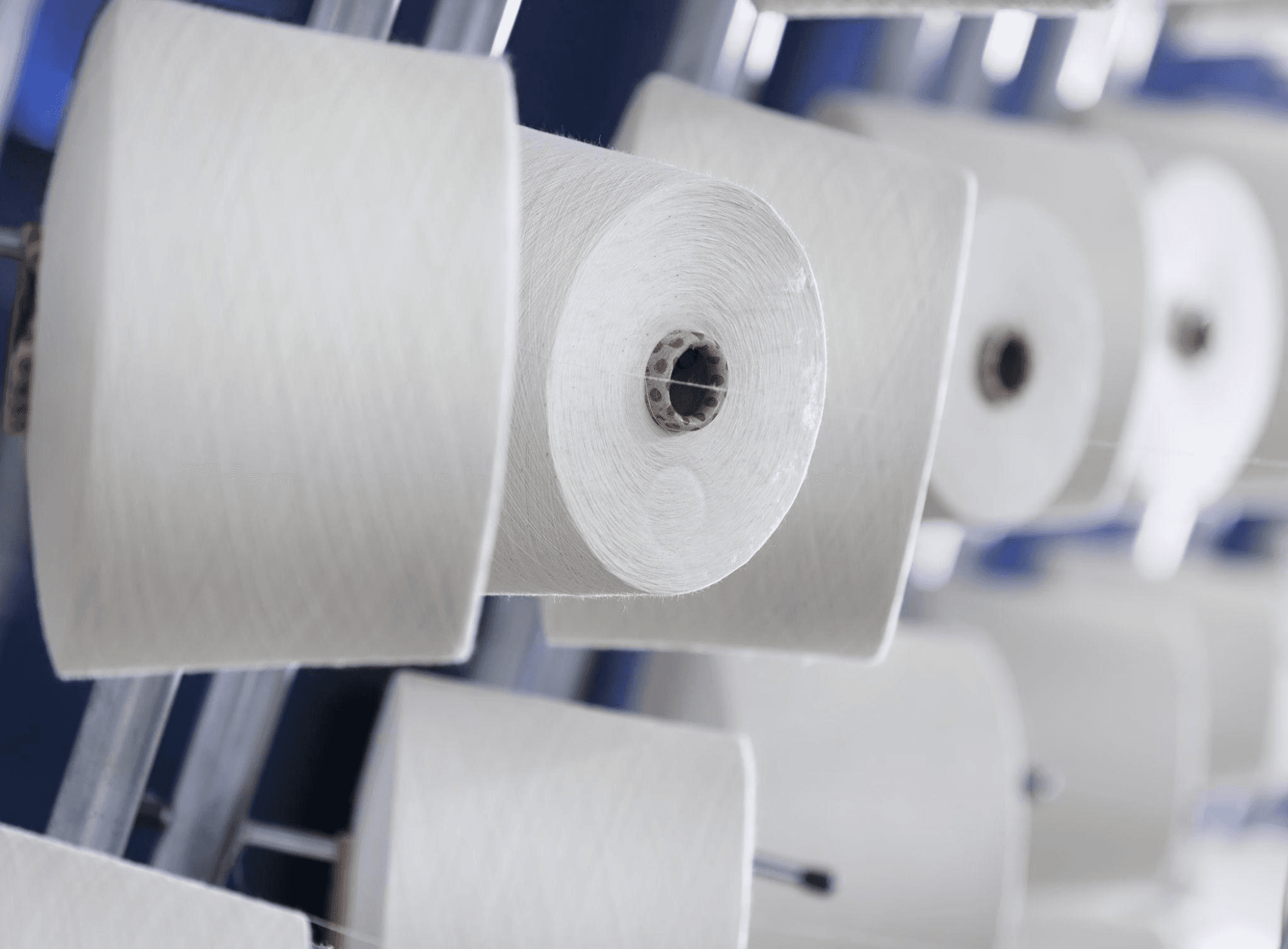
Spun yarns
Made from staple fibers twisted together.
Characteristics
Natural hand-feel
Moderate strength
Visible texture
Prone to hairiness
Common Uses
Knits
Denim warp
Towels
Shirting
In weaving, spun yarns require sizing to strengthen the yarn surface. Alpenol solutions help stabilize spun cotton, recycled cotton, and blended yarns.
What Are Filament Yarns & Where Are They Used?
Filament yarns
Continuous strands extruded from synthetic or silk fibers.
Characteristics
High strength
Smooth surface
Uniform diameter
Low hairiness
Common Uses
Lingerie
Sportswear
Technical fabrics
Upholstery
Filament yarns sometimes need minimal sizing (low-add-on), especially in high-speed air-jet weaving; Alpenol’s formulas support this requirement.
Yarns for Technical Textiles: Types & Applications
Technical textiles require purpose-specific yarns:
High-tenacity polyester & nylon → geotextiles, seat belts
Aramid yarns → heat and flame-resistant fabrics
Glass fiber yarns → composites
Carbon fiber yarns → aerospace & performance industries
UHMWPE yarns (Dyneema) → ballistic textiles
These applications demand exceptional strength, consistency, and machine behavior.
Yarn Types by Construction: Single Ply, Plied, Cabled & Textured
Understanding constructions is vital to evaluating yarn varieties and properties.
1. Single Ply Yarn
One strand
Softer, less stable
Used in lightweight knits
2. Plied Yarn
Two or more singles twisted together
Higher durability, better stitch definition
Widely used in weaving
3. Cabled Yarn
Plied yarns twisted again
Very strong, round, abrasion-resistant
Ideal for technical textiles
4. Textured Yarn
Bulked or crimped synthetic filaments
High elasticity & comfort
Used in leggings, activewear
Construction directly influences durability, mildew resistance, and appearance.
Yarn Types by Count (Ne), Weight & Texture
Yarn count indicates fineness.
Cotton System (Ne)
Higher Ne = finer yarn
Lower Ne = thicker yarn
Texture Categories
Smooth
Slub
Mélange
Bouclé
Tweed
Chenille
Designers often choose yarn weight & texture for drape, opacity, and garment style.
How Does Fiber Content & Ply Count Affect Durability & Stitch Definition?
Fiber Content Effects
Animal fibers (wool) → elasticity, warmth
Plant fibers (cotton, linen) → comfort, breathability
Synthetic fibers → strength, durability
Ply Count Effects
More plies → stronger, balanced, improved uniformity
Single ply → softer, but more prone to pilling
This is critical for understanding natural vs synthetic yarn characteristics.
Pros & Cons of Different Yarn Fibers
Fiber Type | Pros | Cons |
Cotton | Breathable, soft, natural | Shrinks, prone to pilling |
Wool | Warm, elastic, resilient | Can felt, requires care |
Silk | Luxurious, strong | Expensive, delicate |
Polyester | Durable, fast-drying | Unsustainable if virgin |
Nylon | Strong, stretchy | Heat sensitive |
Acrylic | Affordable, wool-like | Pills easily |
Recycled Fibers | Eco-friendly | Quality variation |
This guides buyers evaluating yarn varieties and properties across markets.
How Yarn Construction Affects Elasticity, Drape & Pilling
Single ply → high drape, moderate pilling
Plied yarn → balanced elasticity, reduced pilling
Cabled yarn → low pilling, firm drape
Textured filament → high stretch, low crease
Fabric feel & behavior come from the synergy of fiber, twist, count & construction.
How to Care for Different Types of Yarn
Cotton → gentle wash, reshape while damp
Wool → cold wash, avoid agitation
Silk → dry clean or gentle hand wash
Polyester/Nylon → machine washable
Acrylic → low heat, avoid tumble drying
Recycled fibers → gentle care to preserve integrity
Proper care prevents fiber fatigue and extends fabric life.
Yarns for Weaving: Why Sizing Matters & Alpenol’s Role
In weaving, yarn must withstand:
High-speed loom insertion
Abrasion through drop wires, heddles & reeds
Tension fluctuations
Shedding impacts
Why Sizing Is Essential
Improves strength
Reduces hairiness
Minimizes breaks
Enhances loom efficiency
Ensures clear shed formation
How Alpenol Supports Yarn Performance
Cleaner, sustainable sizing solutions
Suitable for cotton, blends, and recycled fibers
Lower chemical load → lower effluent impact
Improved film formation → smoother warp
Reduced linting & surface abrasion
This is where Alpenol becomes relevant and impactful without sounding commercial.
To learn more about sizing, click here.
To learn more about weaving, click here.
FAQ
1. What are the different types of yarn?
Natural, man-made, and recycled yarns classified by fiber and structure.
2. What are spun yarns used for?
Knitwear, shirting, denim, and woven fabrics requiring warp sizing.
3. What is the difference between filament and spun yarns?
Filament yarns are continuous and smooth; spun yarns are staple-based and textured.
4. How does yarn construction influence garment performance?
Ply count and twist determine strength, drape, elasticity, and pilling.
5. How does Alpenol support weaving performance?
By offering sustainable sizing products that strengthen warp yarns, especially spun and recycled fibers.
References
Sewport - Yarn Types Guide (Spun, Filament, Textured, Novelty),
https://sewport.com/fabrics-directory/lyocell-fabric
Textile Learner - Yarn Sizing: Important Warp Preparatory Process (Sizing for Spun vs Filament),
https://textilelearner.net/yarn-sizing-important-warp-preparatory-process/
Textile School - Yarn Manufacturing (Spinning Processes & Ply Types),
https://www.textileschool.com/206/basic-weaving-operations/
VN Polyfiber - Classification of Textile Fibers (Natural, Synthetic, Regenerated),
https://vnpolyfiber.com/classification-of-textile-fibers/
MasterClass - 28 Types of Fabrics and Their Uses (Fiber Content Impact),
https://www.masterclass.com/articles/28-types-of-fabrics-and-their-uses
Textile Trainer - Standard Sizing Recipe of Synthetic Spun Yarn (Sizing for Blends),
https://textiletrainer.com/standard-sizing-recipe-of-synthetic-spun-yarn/
Sanrui Chemical - Sizing for Polyester Filament Yarn (Fine Denier Needs),
https://www.sanruichemical.com/sizing-for-polyester-filament-yarn/
Warped Fibers - Difference Between Weaving and Knitting Yarn (Ply & Twist),
https://warpedfibers.com/difference-between-weaving-and-knitting-yarn/
Thread Collective - Weaving vs Knitting Yarns (Strength & Sizing),
https://threadcollective.com.au/blogs/yarn/weaving-knitting-yarns
GOTS - Manual for Implementation (Recycled/Organic Yarn Requirements),
Textile Value Chain - Control of Chemicals in GOTS Goods (Sizing for Sustainable Yarns),
https://textilevaluechain.in/control-of-chemicals-in-gots-goods
PMC - Performance Evaluation of Cotton Warp Sizing (Spun Yarn Strength),
https://pmc.ncbi.nlm.nih.gov/articles/PMC12845530/
Sekisui SC - Polyvinyl Alcohol vs Starch as Warp Sizing Chemical (Sizing Agents for Cotton/Poly),
https://www.sekisui-sc.com/blog/polyvinyl-alcohol-vs-starch-as-warp-sizing-chemical-in-textiles/
Siam Modified Starch - Warp Sizing (Eco-Friendly Sizing for Spun Yarns),
https://www.siammodifiedstarch.com/product/non-food/detail/Warp-Sizing
Liked it? Share it with your people.


Disclaimer
The information provided in this blog is intended solely for educational and informational purposes within the textile industry. While the content references technical concepts, sizing and desizing practices, and general chemical information, it does not constitute professional, commercial, or operational advice for any specific textile process or production environment.
Process conditions, chemical selections, and operational parameters may vary significantly across mills, machinery types, fabric constructions, and environmental constraints. Readers should always consult qualified technical professionals, internal laboratory data, and product-specific Technical Data Sheets before making any decisions related to textile processing.
Any references to Alpenol, Sizaltex, or other products are included only for contextual, educational, and illustrative purposes and should not be interpreted as endorsements, recommendations, or guarantees of performance. The authors assume no responsibility for decisions made based on the information contained herein.