What Is Banana Yarn?
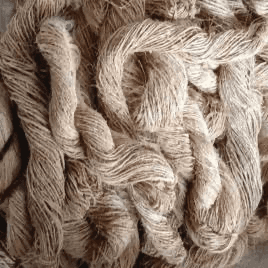
Banana yarn is a plant-based yarn extracted from the banana pseudostem fiber, a by-product of banana cultivation. It belongs to the category of natural fibers, eco-friendly yarns, and sustainable textiles, offering high cellulose content and exceptional biodegradability. Historically connected to abaca fiber, banana yarn today is part of the global shift toward plant-based yarns made from agricultural waste.
Yarn Made From Banana Fibers - What Is It Called? (Abaca/Banana Silk)
Depending on processing, yarn made from banana fibers is often called:
Banana fiber yarn (from outer stalk)
Banana silk yarn (from inner stalk, softer and shinier)
Abaca yarn (from specific banana species known for strong bast fibers)
Organic banana yarn (certified eco-friendly versions)
These variations highlight the versatility within banana yarn production.
How Is Banana Yarn Produced?
The banana fiber extraction process is predominantly mechanical and includes these steps:
1. Harvesting the Banana Pseudostem
After bananas are harvested, the pseudostem-usually discarded-is collected as fiber-rich biomass.
2. Retting (Enzymatic or Water Retting)
Natural or enzymatic retting helps loosen lignin and pectin. Enzymatic options are preferred in sustainable textiles because they reduce chemical load.
3. Fiber Extraction / Decortication
Banana stalks are fed into a decorticator that scrapes and separates fibrous strands.
4. Washing & Sun Drying
Fibers are washed to remove residual gum and dried under controlled sunlight to preserve tensile strength.
5. Softening Treatment (Mechanical/Enzymatic)
Softening increases spinnability, crucial for how banana yarn is produced for knitting and weaving applications.
6. Fiber Opening, Carding & Combing
Fibers are carded into slivers to create uniform linear alignment.
7. Spinning
Staple fibers are converted into yarn through:
Ring spinning
Rotor spinning
Hand-spinning for artisanal banana silk
This step completes how to make banana yarn from raw banana biomass.
Mechanical and Chemical Properties of Banana Fiber Yarn
Banana fiber yarn contains:
Cellulose content: high (similar to bamboo/linen)
Micron count: variable across inner vs outer stalk
Tensile strength: high for outer fibers
Biodegradability: excellent
Moisture absorption: moderate
Thermal resistance: naturally strong
These banana yarn characteristics make it ideal for fashion, home textiles, and craft projects.
Environmental Impact of Banana Yarn Production
Banana yarn is one of the most environmentally beneficial plant-based yarns because:
It uses agricultural waste textiles instead of virgin resources.
It requires very little water compared to cotton.
It avoids pesticide-intensive farming.
It biodegrades rapidly.
It supports rural income through waste repurposing.
This significantly reduces environmental pressure compared with traditional cotton or synthetic yarns and explains how banana yarn contributes to sustainable fashion.
Banana Yarn vs Cotton Yarn: Key Differences
Feature | Banana Yarn | Cotton Yarn |
Raw Source | Waste pseudostem | Cultivated cotton |
Water Usage | Very low | Very high |
Environmental Impact | Minimal | Significant |
Fiber Length | Long, strong bast fibers | Medium staple |
Feel | Coarse to silky (depending on layer) | Soft natural feel |
Biodegradability | Excellent | Excellent |
Processing | Mostly mechanical | Ginning + spinning |
This comparison explains why banana yarn vs cotton yarn often favors banana fiber from sustainability and waste-reduction perspectives.
Is Banana Yarn Sustainable and Eco-Friendly?
Yes - banana yarn is considered one of the most eco-friendly yarns because:
It upcycles agricultural waste
It reduces environmental burden
It avoids land, water, and pesticide use
It has excellent biodegradability
It supports circular textile models
Many brands exploring sustainable textiles adopt banana fiber due to its minimal ecological footprint.
Uses for Banana Yarn in Crafting Projects
Banana yarn is popular among artisans due to its texture and natural sheen. Common uses include:
Handbags
Rugs
Table mats
Wall hangings
Home décor
Knitting & crochet
Jewelry cords
Upholstery and ropes
These applications drive high demand for banana yarn projects, banana yarn for crochet, and banana yarn knitting patterns.
Is Banana Yarn Durable and Machine-Washable?
Banana yarn is durable due to its bast-fiber strength, especially outer-pseudostem yarn. However:
Hand-washing is recommended for banana silk yarn.
Machine-washing is possible for blends with strong supportive fibers.
Durability depends on banana yarn characteristics and whether it is blended.
How to Dye Banana Yarn Naturally?
Natural dyeing techniques for banana yarn include:
Indigo fermentation vats
Turmeric + alum mordant
Madder root
Pomegranate rind
Walnut hulls
To protect fiber strength, dyeing uses low-temperature, slow extraction techniques. This aligns with research on how to dye banana yarn naturally without degrading tensile properties.
Other Plant-Based Yarns Similar to Banana Fiber
Examples include:
Bamboo fiber
Pineapple leaf fiber (Piñatex)
Coconut coir
Hemp
Flax/Linen
Ramie
These strengthen the relevance of natural fibers and plant-based yarns in sustainable design.
Banana-Cotton & Banana-Viscose Blend Yarn
Banana fibers are frequently blended with cotton or viscose to improve softness, durability, and spinning efficiency.
How blends are produced:
Fiber opening
Controlled blending ratios
Carding & drawing
Standard spinning routes
Some mills use specialized sizing strategies for banana-cotton or banana-viscose blended yarns to stabilize warp performance; this is where sizing agents like Alpenol are occasionally applied depending on blend requirements.
FAQ SECTION
1. What is banana yarn?
A natural, plant-based yarn extracted from banana pseudostem fibers.
2. How is banana yarn produced?
Through mechanical decortication, retting, softening, carding, and spinning.
3. Is banana yarn biodegradable?
Yes - banana yarn is fully biodegradable and fits into circular textile systems.
4. Is banana yarn durable?
Outer-stem banana fiber is strong; banana silk is softer but less abrasion-resistant.
5. Can banana yarn be used for clothing?
Yes - especially in blends for softer, durable garments and accessories.
6. Do banana yarns require sizing?
Yes, banana yarns - like other natural spun yarns used as warp
7. What are the advantages of sizing banana yarns?
Using advanced, eco-friendly sizing solutions like those developed by Alpenol helps improve banana yarn strength, reduce hairiness, and ensure smooth weaving efficiency while maintaining sustainability standards.
References
PMC – Banana Pseudostem Fiber Properties (Thai Cultivars Extraction/Layers),
https://pmc.ncbi.nlm.nih.gov/articles/PMC11564061/
PMC – Biosoftening of Banana Pseudostem Fiber (Cellulase Treatment),
https://pmc.ncbi.nlm.nih.gov/articles/PMC10728375/
ScienceDirect – Banana Agro-Waste as Cotton Alternative (Yarn/Fabric Process),
https://www.sciencedirect.com/science/article/abs/pii/S0926669022011700
IRJET PDF – Exploration of Banana Fiber in Yarn Manufacturing,
https://www.irjet.net/archives/V12/i8/IRJET-V12I859.pdf
AIASA PDF – Banana Pseudo-Stem Fibre Processing & Applications,
https://aiasa.org.in/wp-content/uploads/2020/09/22.pdf
NABARD Research – Utilization of Banana Pseudostem for Textiles,
Google Patents – CN100424237C Banana Fiber Production Method (Blended Yarn),
https://patents.google.com/patent/CN100424237C/en
IDOSR PDF – Extraction Treatment & Characterization of Banana Fibers,
https://www.idosr.org/wp-content/uploads/2024/04/IDOSR-JBBAF-9123-39-2024.pdf
UGD Eprints – Enzymatic Desizing of Cotton Review (Banana Fiber Context),
BananaFiber.net – Banana Fiber vs Cotton Comparison (Properties/Sustainability),
https://bananafiber.net/banana-fiber-vs-cotton-a-comparison/
BananaFiber.net – How Banana Fiber Processed into Yarn (Step-by-Step),
https://bananafiber.net/how-is-banana-fiber-processed-into-yarn-for-textile-production/
FabricLore – Banana Silk Fabric Guide (Extraction/Softening),
https://fabriclore.com/blogs/fabric-wiki/banana-silk
Kaelir – Banana vs Cotton Sustainability (Water/Chemical Use),
Wikipedia – Abacá (Manila Hemp/Banana Fiber Industrial Processing),
Liked it? Share it with your people.


Disclaimer
The information provided in this blog is intended solely for educational and informational purposes within the textile industry. While the content references technical concepts, sizing and desizing practices, and general chemical information, it does not constitute professional, commercial, or operational advice for any specific textile process or production environment.
Process conditions, chemical selections, and operational parameters may vary significantly across mills, machinery types, fabric constructions, and environmental constraints. Readers should always consult qualified technical professionals, internal laboratory data, and product-specific Technical Data Sheets before making any decisions related to textile processing.
Any references to Alpenol, Sizaltex, or other products are included only for contextual, educational, and illustrative purposes and should not be interpreted as endorsements, recommendations, or guarantees of performance. The authors assume no responsibility for decisions made based on the information contained herein.