
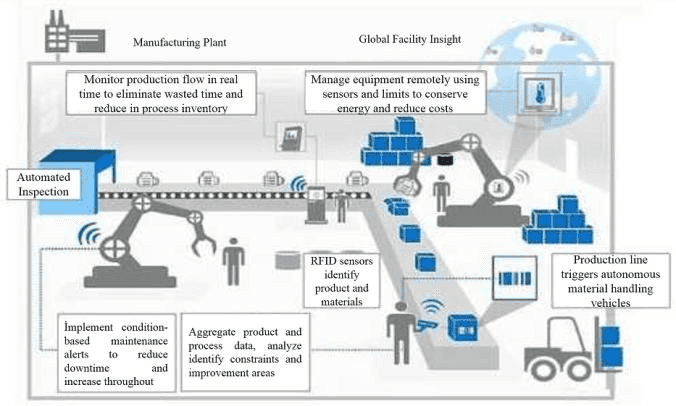
What Does AI Mean for the Textile Industry?
At its core, artificial intelligence in various industries enables machines to learn from data, recognise patterns, and improve performance without manual intervention.
Applied to textiles, AI effects on textile industry operations include:
Real-time optimisation of spinning, weaving, and finishing
Automated fabric inspection
AI for fabric defect detection
Machine learning algorithms for fabric design
Robotics in textile manufacturing processes
Predictive insights for inventory and market forecasting
These capabilities explain what does AI mean for the textile industry: an evolution from labour-heavy processes to intelligent, automated decision-making systems.
How Is AI Impacting the Textile Sector Right Now?
The AI impact on textile sector is visible across multiple layers:
Yarn quality prediction
Automated defect detection
Loom performance optimisation
Real-time energy monitoring
Worker safety analytics
Production planning enhancements
This shift represents the impact of technology on textile industry performance, where data replaces guesswork and automation replaces reactive manufacturing.
How Is AI Changing Textile Manufacturing?
One of the strongest global trends is “How is AI changing textile manufacturing?”, especially as the country upgrades weaving and processing infrastructure.
Key transformations include:
Smart looms adjusting parameters autonomously
AI-driven automation in textile production reducing manual checks
Data-based shift planning and costing
Intelligent batching systems
Predictive warp/weft stop detection
These innovations show how technology shapes the global textile market by enabling accuracy, speed, and competitiveness.
What Types of AI Are Used in Textiles?
The main AI technologies impacting textiles include:
Computer vision → AI fabric inspection, defect mapping
Machine learning → quality prediction, demand planning
Deep learning → pattern generation, anomaly detection
Robotics → cutting, sewing, material handling
Predictive analytics → supply chain optimisation
Together, these create the foundation for digital transformation in manufacturing sectors.
How Is AI Different From Traditional Textile Manufacturing?
Traditional Method | AI-Driven Method |
Manual inspection | AI applications in textile quality control |
Reactive maintenance | Predictive analytics in textile supply chains |
Experience-based planning | Algorithmic optimisation |
Human-driven design | Machine learning algorithms for fabric design |
Limited automation | AI-driven automation in textile production |
This comparison shows why AI effects on textile industry efficiency are so significant.
What Problems Does AI Solve in the Textile Industry?
Artificial intelligence resolves long-standing inefficiencies:
High defect rates → solved by AI for fabric defect detection
Machine downtime → reduced by predictive maintenance
Inventory imbalance → corrected through AI solutions for textile inventory management
Slow market reaction → solved through AI tools for textile market analysis
Inconsistent quality → fixed with How does AI improve textile quality? algorithms
This demonstrates why textile companies aggressively adopt AI to reduce waste and increase competitiveness.
Specific Applications of AI in Textile Design and Production
AI in Fabric Design
ML-generated pattern designs
Automated colour matching
Trend forecasting using AI influence on textile consumer trends
AI in Production
Vision systems performing AI applications in textile quality control
Automated fault classification
Real-time loom analytics
Robotics in textile manufacturing processes
AI in Processing
Dye recipe prediction
Parameter optimisation
Batch reproducibility modelling
These developments represent cutting-edge technological innovations in fabric production.
Future of Textiles With AI Advancements
The future of textiles with AI advancements is driven by:
Fully autonomous weaving sheds
Digital twins of textile factories
Predictive yarn quality modelling
AI-optimised dye house operations
End-to-end smart supply chains
These advances are emerging in parallel with broader trends in industrial AI applications.
Role of Automation in Manufacturing (Textile Perspective)
The role of automation in manufacturing is expanding rapidly as robotics and AI converge. In textiles, this means:
Robotic cutters
Automated handling systems
Yarn package movement automation
Robotic sewing units
Smart safety and worker-protection systems
This is reshaping not only production speed but also how does AI affect textile workers, shifting roles from manual execution to supervision and data management.
Benefits of AI Integration in the Textile Supply Chain
AI-driven supply chain solutions enhance:
Transparency
Forecasting accuracy
Inventory optimisation
Route planning
Order fulfilment reliability
Supplier-risk analysis
These improvements are powered by AI tools for textile market analysis and deeper predictive analytics in textile supply chains.
What Are the Limitations of AI in the Textile Sector?
Despite major advantages, textile AI adoption faces limitations:
High digitalisation requirements
Need for sensor retrofitting
Skilled workforce shortages
Integration issues with legacy machinery
Data collection inconsistencies
Understanding what are the limitations of AI in the textile sector helps mills prepare realistic adoption strategies.
How Does AI Influence Textile Sustainability?
There is a growing relationship between AI and sustainability.
Key contributions include:
Reduced fabric waste
Improved right-first-time performance
Lower energy use
Efficient resource planning
Enhanced chemical optimisation
This explains what is the relationship between AI and textile sustainability, a central driver of modern industry transformation.
As a Small Textile Mill Owner, How Can I Adopt AI?
Small mills can begin with affordable, modular AI tools such as:
Smartphone-based defect detection apps
Cloud ERPs with machine learning analytics
AI monitoring dashboards for energy and machine stops
Lightweight IoT sensors for predictive maintenance
Cloud-based AI solutions for textile inventory management
These tools allow SMEs to participate in the broader AI impact on the textile sector without major investment.
FAQ Section
1. How does AI improve textile quality?
Through computer vision, defect detection, predictive modelling and automated corrections.
2. What types of AI are used in textiles?
Machine learning, deep learning, robotics, computer vision and predictive analytics.
3. How does AI affect textile workers?
Workers shift from repetitive operations to supervisory and analytical roles.
4. What are the main AI technologies impacting textiles?
Vision inspection, robotics, ML engines, predictive systems and digital twins.
5. How is AI changing textile manufacturing in India?
By improving weaving efficiency, automating inspection, optimising planning and boosting competitiveness.
Backlinks & SEO Reference Sources
https://fibre2fashion.com
Liked it? Share it with your people.


Disclaimer
The information provided in this blog is intended solely for educational and informational purposes within the textile industry. While the content references technical concepts, sizing and desizing practices, and general chemical information, it does not constitute professional, commercial, or operational advice for any specific textile process or production environment.
Process conditions, chemical selections, and operational parameters may vary significantly across mills, machinery types, fabric constructions, and environmental constraints. Readers should always consult qualified technical professionals, internal laboratory data, and product-specific Technical Data Sheets before making any decisions related to textile processing.
Any references to Alpenol, Sizaltex, or other products are included only for contextual, educational, and illustrative purposes and should not be interpreted as endorsements, recommendations, or guarantees of performance. The authors assume no responsibility for decisions made based on the information contained herein.