Why Is the Textile Sizing Process Important in Weaving?
Before understanding the machines, it’s important to understand why sizing is required.
Warp yarns undergo:
Constant tension
Friction from heald wires and reed
High-speed weft insertion (1200+ picks/min)
Abrasion during shedding
According to industrial documentation from sizing and weaving operations, warp preparation directly impacts loom efficiency and breakage rate.
Sizing:
Increases tensile strength
Reduces hairiness
Improves smoothness
Enhances weaving efficiency
Alpenol’s hydroxylated starch-based compound sizing agents are designed to reduce dependency on polyvinyl alcohol (PVA) and synthetic binders while maintaining adhesion and flexibility .
Machine-by-Machine Breakdown of the Mechanical Sizing Process
1. What Is a Creel and Why Is It the Starting Point?
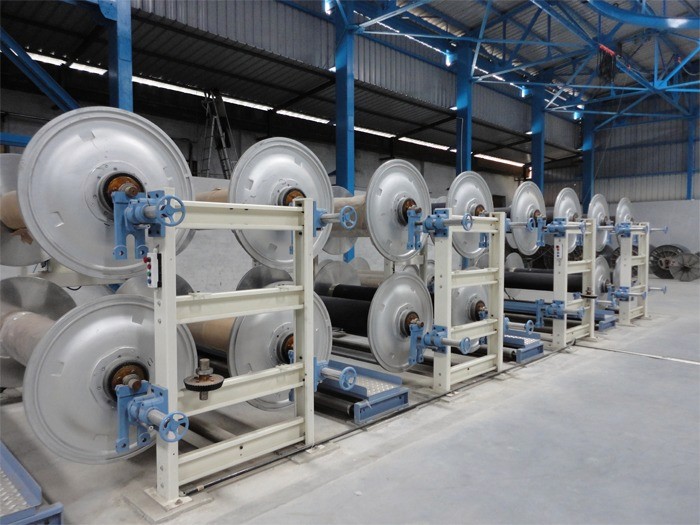
Function:
The creel holds multiple warp yarn packages (cones or beams) in parallel arrangement.
Mechanical Role:
Ensures uniform unwinding tension
Aligns sets of yarns into a warp sheet
Prevents snarling and crossovers
Importance:
Uniform tension at the creel prevents uneven size penetration later in the sizebox. If tension varies here, weaving defects such as uneven warp and weft density occur.
In high-performance sizing systems using Alpenol compound sizing agents, controlled tension helps maintain optimal size add-on percentage .
2. What Is the Premixer in Textile Sizing?
Function:
The premixer blends water and sizing ingredients to form a homogeneous slurry.
Key Role:
Dissolves starch derivatives
Prevents lump formation
Ensures chemical uniformity
Modern starch-based sizing agents such as Alpenol’s single-shot systems reduce the need for complex multi-ingredient blending .
3. What Is the Cooker and Why Is Controlled Cooking Essential?
Function:
The cooker gelatinizes starch at high temperature and pressure.
Technical Importance:
Activates adhesive properties
Controls viscosity
Enhances film formation
Alpenol documentation specifies high-pressure autoclave cooking for optimal performance .
Improper cooking leads to:
Issue | Result |
Under-cooking | Weak adhesion |
Over-cooking | Brittleness |
Poor viscosity control | Uneven pick-up |
4. What Is the Storage Tank Used For?
Function:
Stores cooked sizing solution before application.
Importance:
Maintains constant temperature
Prevents retrogradation
Ensures continuous supply
Stable starch systems such as Alpenol are engineered to remain stable without frequent viscosity fluctuations .
5. What Happens Inside the Sizebox?
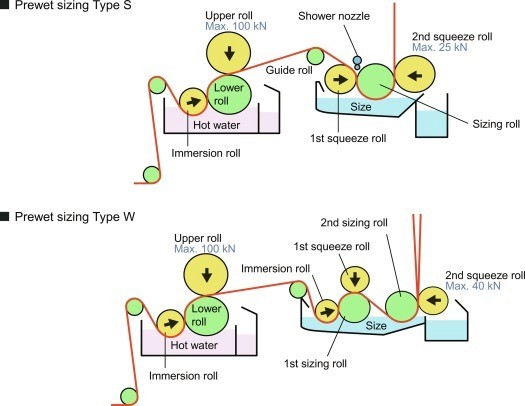
Function:
The warp sheet passes through the heated sizing solution.
Process:
Yarn immersion
Adhesion of sizing film
Controlled penetration
Temperature typically maintained around 85-90°C as recommended for compound sizing agents .
Proper sizebox control ensures:
Uniform coating
Controlled add-on
Better abrasion resistance
6. Why Are Squeeze Rolls Critical in Sizing?
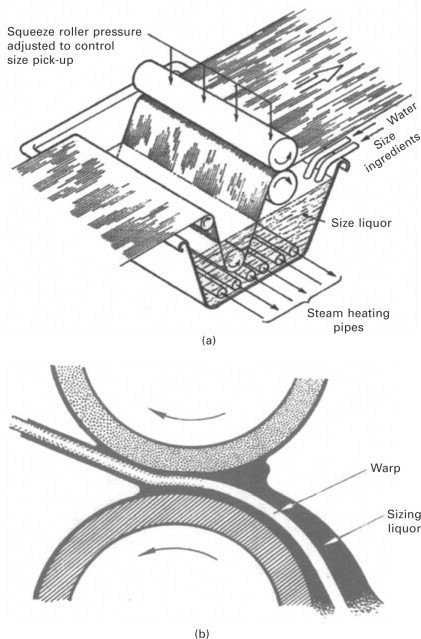
Function:
Remove excess sizing solution.
Importance:
Controls pick-up percentage
Maintains consistent warp diameter
Prevents sticky yarns
For high-density fabrics, minimum size add-on is crucial, especially for fine cotton and viscose yarns .
7. How Do Drying Cylinders Improve Warp Strength?
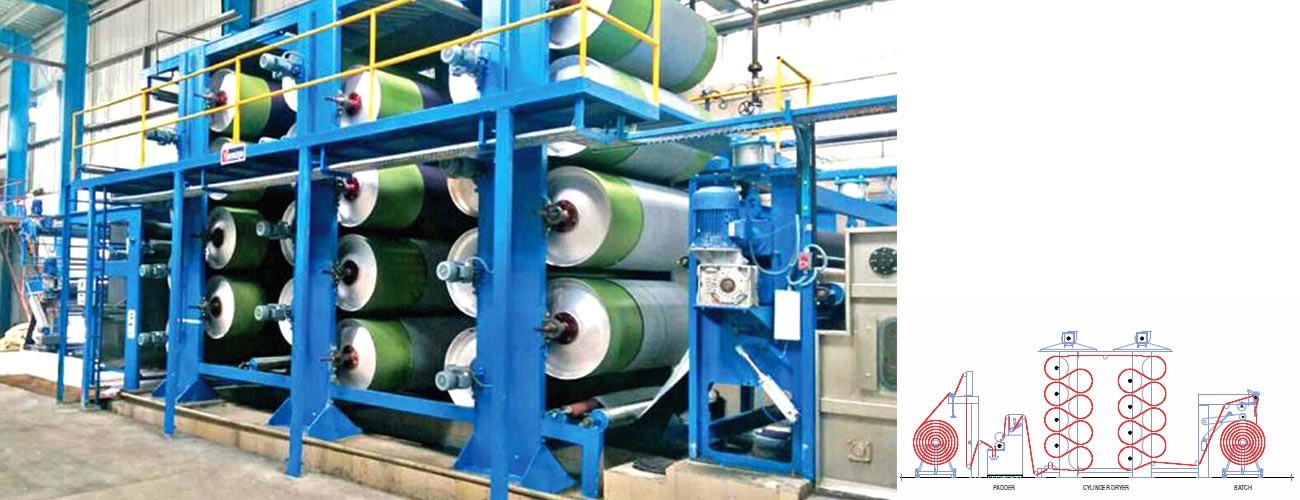
Function:
Evaporate moisture from sized warp yarns.
Mechanical Role:
Film formation
Moisture stabilization
Strength development
Improper drying can cause:
Brittleness (over-dry)
Poor film strength (under-dry)
Balanced drying supports weaving efficiency and smooth shed formation.
8. What Is PLEVA (Moisture Control System)?
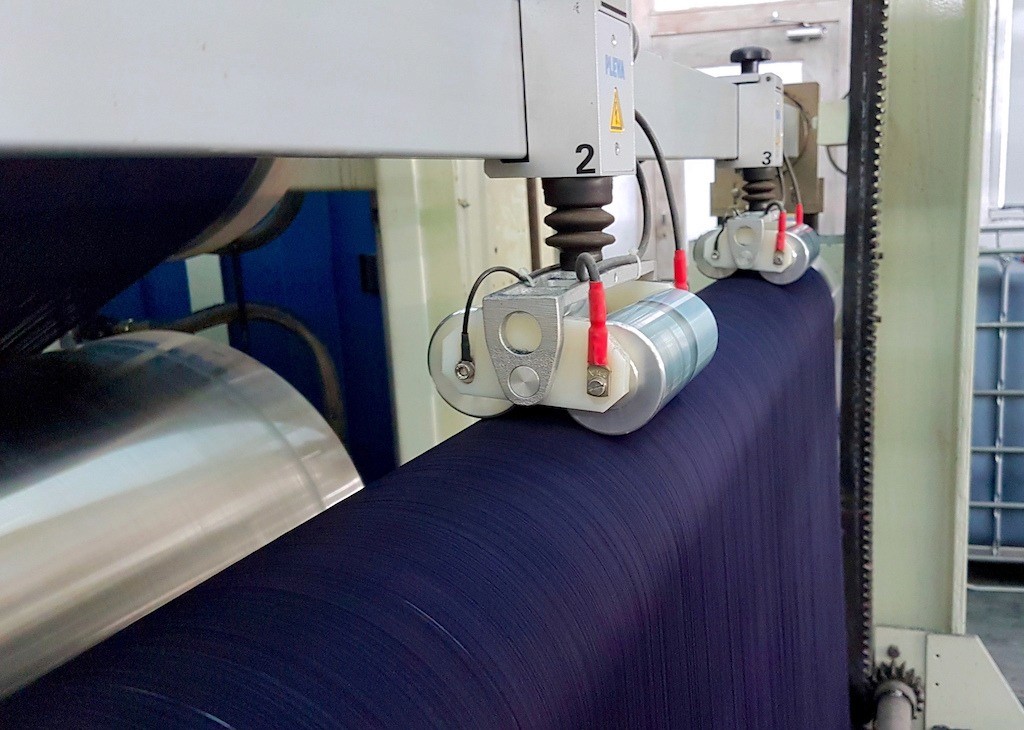
Function:
Online moisture monitoring system.
Importance:
Ensures consistent residual moisture
Prevents over-drying
Reduces loom breakage
Moisture control is essential for sustainable sizing operations aligned with green chemistry principles .
9. What Are Lease Rods Used For?
Function:
Maintain warp yarn separation.
Importance:
Prevents yarn entanglement
Maintains order of warp threads
Facilitates easier drawing-in
10. What Is the Head Stock in Sizing?
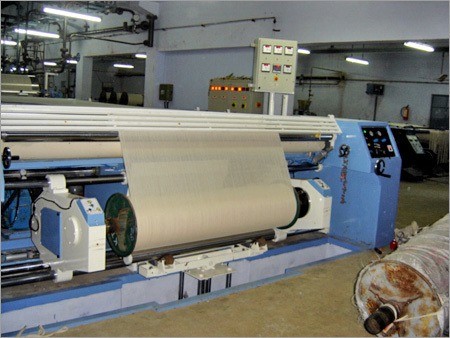
Function:
Winds the sized warp sheet onto the warp beam.
Importance:
Uniform winding tension
Correct beam density
Smooth unwinding in weaving machine
Proper beam formation ensures trouble-free operation during weaving process.
Complete Sizing Flow Summary
Stage | Machine | Purpose |
1 | Creel | Yarn alignment & tension control |
2 | Premixer | Size slurry preparation |
3 | Cooker | Gelatinization & viscosity control |
4 | Storage | Temperature stability |
5 | Sizebox | Coating application |
6 | Squeeze Rolls | Pick-up control |
7 | Drying Cylinders | Film formation |
8 | Pleva | Moisture control |
9 | Lease Rods | Yarn separation |
10 | Head Stock | Warp beam formation |
Sustainability and Modern Sizing
Traditional sizing often relied heavily on polyvinyl alcohol. Modern starch-based systems aim to reduce PVA and synthetic dependency while complying with sustainability standards such as ZDHC and OEKO-TEX .
Alpenol’s starch-based compound sizing systems are engineered to:
Reduce synthetic polymers
Lower effluent load
Maintain high weaving efficiency
Support environmentally responsible manufacturing
FAQs
What is the main purpose of warp sizing?
Warp sizing increases yarn strength, reduces hairiness, and improves abrasion resistance during the weaving process.
What temperature is maintained in the sizebox?
Typically 85-90°C depending on the sizing solution used .
Why are squeeze rolls important?
They control size pick-up percentage and ensure uniform coating thickness.
What happens if warp yarn is over-dried?
It becomes brittle, increasing warp thread breakage during weaving.
How does moisture control improve weaving efficiency?
Online moisture systems like Pleva ensure optimal residual moisture, preventing brittleness and loom stoppages.
References
ZDHC Wastewater Guidelines (Sizing Effluent & Sustainability), https://downloads.roadmaptozero.com/output/ZDHC-Wastewater-Guidelines
ZDHC Wastewater Guidelines V1.1 (Textile Chemicals Context),
https://wastewater.sustainabilityconsortium.org/downloads/zdhc-wastewater-guidelines-verson-1-1/
Textile Industry Wastewater Standards (Sizing COD/BOD),
GOTS Implementation Manual (Sustainable Sizing Processes),
https://global-standard.org/images/Implementation_Manual_7.0_Second_Revision_Draft.pdf
GOTS Official Site (Organic Textile Sizing Standards),
OEKO-TEX Standards (Chemical Compliance in Sizing),
https://www.oeko-tex.com/en/our-standards/
OEKO-TEX STeP (Sustainable Warp Preparation),
https://www.oeko-tex.com/en/our-standards/oeko-tex-step/
ZDHC-OEKO-TEX Collaboration (Green Sizing Chemicals),
https://www.oeko-tex.com/en/news/infocenter/zdhc-and-oeko-tex-strengthen-collaboration
PMC: Synthetized Potato Starch as Eco Sizing Agent (Creel to Beam),
https://pmc.ncbi.nlm.nih.gov/articles/PMC6572457/
PMC: Starch Graft Copolymer for Warp Sizing (Cooker/Sizebox Process),
https://pmc.ncbi.nlm.nih.gov/articles/PMC10820382/
PMC: Corn Starch Derivatives for Cotton Sizing (Gelatinization/Viscosity),
https://pmc.ncbi.nlm.nih.gov/articles/PMC7361798/
PMC: Sustainable Starch Bio-Sizing (Drying & Film Formation),
https://pmc.ncbi.nlm.nih.gov/articles/PMC11137591/
ACS ES&T: Biodegradable Sizes Replacing PVA (Squeeze Rolls/Pick-up),
https://pubs.acs.org/doi/10.1021/es504988w
PubMed: Sustainable Slashing with Modified Proteins (Sizebox Immersion),
https://pubmed.ncbi.nlm.nih.gov/25687520/
ScienceDirect: Keratin-Based Pollution Reduction (PVA in Sizing Effluent),
https://www.sciencedirect.com/science/article/abs/pii/S0959652613006598
Persistence Market Research: Textile Sizing Chemicals Market (Modern Compounds),
https://www.persistencemarketresearch.com/market-research/textile-sizing-chemicals-market.asp
Markets and Markets: Textile Chemicals Market (Sizing Machines Impact),
https://www.marketsandmarkets.com/Market-Reports/textile-chemical-market-12380328.html
Mordor Intelligence: Textile Chemicals Analysis (Starch Systems),
https://www.mordorintelligence.com/industry-reports/textile-chemicals-market
Textile Excellence: Sizing Chemicals Market to $33.1B (Head Stock/Beam),
Biopol Chemicals: Textile Chemicals Growth (Premixer/Cooker),
https://biopolchemicals.com/textile-chemicals/market/textile-chemicals-market/
TextileSchool: Sizing Process Machines (Creel, Sizebox, Drying Cans),
https://www.textileschool.com/
TextileLearner: Warp Sizing Machines (Squeeze Rolls, Lease Rods),
https://textilelearner.net/warp-sizing-machines/
Slideshare: Sizing Process Breakdown (Gelatinization, Viscosity Control),
https://www.slideshare.net/slideshow/23mt02-concepts-of-sheddingpicking-and-beatuppptx/264954690
Study.com: Textile Preparation Processes (Sizing for Abrasion Resistance),
https://study.com/academy/lesson/textile-weaving-terminology.html
CottonWorks: Warp Preparation Basics (Tension Control in Creel),
https://cottonworks.com/learning-hub/weaving/weaving-basics/
Heuritech: Fabric Innovations 2026 (Sustainable Sizing Trends),
https://heuritech.com/articles/fashion-fabric-innovations/
Tessuti: Fabric Forecast 2026 (Sizing for High-Density Weaves),
Vaaritex: Sustainable Fabric Trends 2026 (Green Sizing),
Liked it? Share it with your people.


Disclaimer
The information provided in this blog is intended solely for educational and informational purposes within the textile industry. While the content references technical concepts, sizing and desizing practices, and general chemical information, it does not constitute professional, commercial, or operational advice for any specific textile process or production environment.
Process conditions, chemical selections, and operational parameters may vary significantly across mills, machinery types, fabric constructions, and environmental constraints. Readers should always consult qualified technical professionals, internal laboratory data, and product-specific Technical Data Sheets before making any decisions related to textile processing.
Any references to Alpenol, Sizaltex, or other products are included only for contextual, educational, and illustrative purposes and should not be interpreted as endorsements, recommendations, or guarantees of performance. The authors assume no responsibility for decisions made based on the information contained herein.