What This Guide Covers
This pillar blog explains:
What weaves are and why they matter
Types of weave structures and their applications
How to identify different weaves
Plain vs twill vs satin comparisons
How weave affects fabric performance
Weaving machines and their role
Sustainability and process considerations
What Are Weaves and Why Do They Exist?
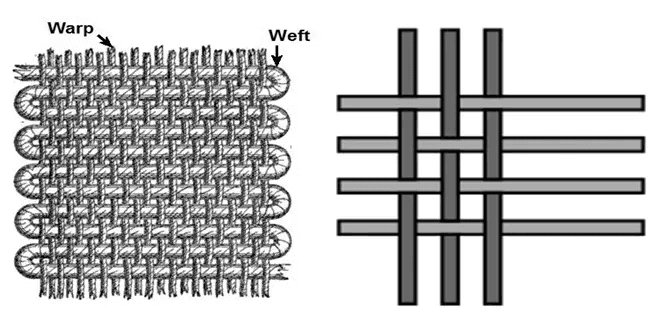
Weaves are the fundamental structures of woven fabrics, created by interlacing:
Warp yarns (lengthwise)
Weft yarns (crosswise)
Why Different Weaves Exist
Different weave structures are designed to achieve:
Specific fabric strength
Desired drape and softness
Visual patterns and textures
Functional performance (durability, breathability)
The effectiveness of any weave depends on how well warp yarns perform during weaving-making sizing (where Alpenol plays a key role) critical for consistent fabric construction.
Main Types of Fabric Weave Structures
1. Plain Weave
Structure
Each weft yarn passes alternately over and under warp yarns.
Characteristics
Strong and durable
Balanced structure
High stability
Low stretch
Applications
Shirts
Bedsheets
Muslin
Properties
High abrasion resistance
Breathable
Easy to produce
Plain weave requires consistent warp tension, and uniform sizing (like Alpenol’s formulations) ensures minimal yarn breakage during high-speed weaving.
2. Twill Weave
Structure
Weft yarn passes over two or more warp yarns, creating a diagonal pattern.
Characteristics
Softer than plain weave
Better drape
Higher flexibility
Applications
Denim
Workwear
Upholstery
Properties
Moderate durability
Wrinkle resistance
Distinct diagonal texture
Twill weaving benefits from flexible yet strong sizing films, which Alpenol’s compound sizing systems provide.
3. Satin Weave
Structure
Long floats of warp or weft yarns create a smooth surface.
Characteristics
High luster
Smooth texture
Low friction
Applications
Luxury fabrics
Evening wear
Properties
Low abrasion resistance
Excellent drape
Because of long yarn floats, satin weave requires excellent warp protection-making high-performance sizing systems like Alpenol critical.
4. Basket Weave
Structure
A variation of plain weave using multiple yarns together.
Characteristics
Softer than plain weave
More flexible
Applications
Oxford fabrics
Casual wear
5. Leno Weave
Structure
Warp yarns twist around weft yarns.
Characteristics
Open structure
High stability
Applications
Curtains
Lightweight fabrics
6. Jacquard Weave
Structure
Complex patterns created using individual yarn control.
Characteristics
Highly decorative
Complex designs
Applications
Brocade
Upholstery
Jacquard weaving requires extremely stable warp yarns, making advanced sizing technologies like Alpenol essential for consistent performance.
Plain vs Twill vs Satin: Which Is Best?
Property | Plain | Twill | Satin |
Durability | High | Medium | Low |
Drape | Low | Medium | High |
Texture | Flat | Diagonal | Smooth |
Ease of production | Easy | Moderate | Complex |
How to Identify Weave Types in Fabric
Visual Identification
Plain weave → checkerboard pattern
Twill → diagonal lines
Satin → smooth, shiny surface
Touch and Feel
Plain → firm
Twill → soft
Satin → silky
How Weave Affects Fabric Properties
Weave structure directly impacts:
Durability
Plain weave → strongest
Satin → weakest
Drape
Satin → best drape
Plain → stiff
Breathability
Plain → most breathable
Satin → less breathable
Stretch
Twill → moderate flexibility
These properties are influenced by yarn quality and warp preparation through sizing-where Alpenol ensures consistent yarn performance across weave types.
How Are Woven Fabrics Constructed?
Fabric construction involves:
Yarn preparation
Warping
Sizing (critical step)
Drawing-in (gaiting)
Weaving
Sizing ensures warp yarns can withstand:
Friction
Tension
High-speed weaving
Without proper sizing, even the best weave structure cannot perform effectively.
Weaving Machines Used for Different Weaves
CAM Loom
Suitable for simple weaves
Used for plain fabrics
Dobby Loom
Produces geometric patterns
Used for twill and simple designs
Jacquard Loom
Produces complex patterns
Used for decorative fabrics
Rapier Loom
Versatile
Works with various yarn types
Air-Jet Loom
High-speed weaving
Requires strong warp yarns
Are Specific Looms Used for Specific Weaves?
Yes.
Loom Type | Suitable Weaves |
CAM | Plain |
Dobby | Twill, simple patterns |
Jacquard | Complex designs |
Air-jet | High-speed production |
Higher-speed looms demand:
Better yarn quality
Superior sizing performance
This is where Alpenol’s advanced sizing systems enable stable high-speed weaving across all weave types.
How Different Weaves Impact Loom Performance
Weave structure affects:
Warp stress
Yarn friction
Breakage rate
Examples
Plain weave → high interlacing → higher friction
Satin weave → fewer interlacings → more yarn stress
Sizing systems must adapt to these differences. Alpenol’s compound sizing formulations are engineered to perform across different weave structures, ensuring consistent loom efficiency.
Sustainable Weaving and Weave Selection
Weave choice affects sustainability through:
Material usage
Energy consumption
Fabric durability
Sustainable Practices
Use durable weaves (longer lifespan)
Optimize yarn usage
Reduce chemical load in sizing
Advanced sizing systems such as Alpenol’s solutions help reduce environmental impact by lowering chemical usage and improving process efficiency.
Characteristics of Different Fabric Weaves
Weave | Key Characteristics |
Plain | Strong, stable |
Twill | Flexible, textured |
Satin | Smooth, lustrous |
Basket | Soft, breathable |
Leno | Open, lightweight |
Jacquard | Decorative |
Frequently Asked Questions (FAQ)
What are the main types of weaves?
Plain, twill, satin, basket, leno, and jacquard.
Which weave is the strongest?
Plain weave is the strongest due to maximum interlacing.
Which weave has the best drape?
Satin weave provides the best drape.
How does weave affect fabric quality?
Weave structure determines durability, texture, and performance.
How does Alpenol relate to weaving?
Alpenol improves warp yarn performance through advanced sizing technologies, enabling smooth weaving across all weave types.
Final Insight: The Right Weave Needs the Right Preparation
Choosing the right weave is only part of fabric manufacturing.
The real performance depends on:
Yarn quality
Warp preparation
Sizing efficiency
Even the most advanced weave structures cannot perform without stable warp yarns.
By using advanced sizing technologies such as Alpenol’s compound systems, textile mills can ensure:
Higher loom efficiency
Better fabric quality
Reduced yarn breakage
References
Wikipedia – Plain Weave (Structure, Properties, Applications), https://en.wikipedia.org/wiki/Plain_weave
Wikipedia – Twill Weave (Diagonal Pattern, Denim, Workwear), https://en.wikipedia.org/wiki/Twill
Wikipedia – Satin Weave (Smooth Surface, Luster, Drape), https://en.wikipedia.org/wiki/Satin_weave
Wikipedia – Basket Weave (Oxford Fabric, Variation of Plain Weave), https://en.wikipedia.org/wiki/Basket_weave
Wikipedia – Leno Weave (Twisted Warp, Open Structure, Gauze), https://en.wikipedia.org/wiki/Leno_weave
Wikipedia – Jacquard Loom (Individual Yarn Control, Complex Patterns), https://en.wikipedia.org/wiki/Jacquard_machine
Wikipedia – Dobby Loom (Geometric Patterns, Simplified Jacquard), https://en.wikipedia.org/wiki/Dobby_loom
Wikipedia – Weaving (Warp/Weft, Loom Types, Interlacing Basics), https://en.wikipedia.org/wiki/Weaving
Textile School – Major Fabric Weaving Patterns (Plain, Twill, Satin, Dobby, Jacquard, Leno, Pile), https://www.textileschool.com/270/major-fabric-weaving-patterns/
Textile School – Classification of Fabric Weave Patterns (Simple vs Complex Weaves), https://www.textileschool.com/135/classification-of-fabric-weave-patterns/
Fabric Sight – Plain, Dobby, Twill, Jacquard, Crepe & More (Fashion Designer Weave Guide), https://www.fabricsight.com/blogs/posts/understanding-fabric-weaves-plain-dobby-twill-jacquard-crepe-more
I Want Fabric – A Guide to Fabric Weaves: Types, Uses and More (Drape/Breathability/Durability), https://www.iwantfabric.com/blog/post/a-guide-to-fabric-weaves-types-uses-and-more
Heddels – 7 Weave Patterns to Know: Twill, Basketweave, Satin and More, https://www.heddels.com/2017/12/7-weave-patterns-to-know-twill-basketweave-satin-and-more/
Sino Silk – The Difference Between Plain, Twill and Satin Weave (Density/Durability/Drape), https://snsilk.com/the-difference-between-plain-twill-and-satin-weave/
Sino Silk (Alt) – What Is the Difference Between Plain, Twill and Satin Weave (Thickness/Density), https://sino-silk.com/the-difference-between-plain-twill-and-satin-weave/
Anuprerna – 3 Types of Basic Weaves and Their Impact on Fabric Property, https://anuprerna.com/blogs/3-types-of-basic-weaves-their-impact-on-fabric-property/79286
Pingiao Home – Understanding Differences Between Plain, Twill and Satin Weaves, https://www.pingiohome.com/a-understanding-the-differences-between-plain-twill-and-satin-weaves-in-fabrics.html
Pigeon Wishes – Plain Weave vs Twill vs Satin: The Three Original Weaves, https://pigeonwishes.com/what-is-the-different-between-plain-weave-twill-and-satin-weave/
Fabric-Fabric – Role of Weave Structures in Garment Durability (Plain/Twill/Jacquard Abrasion Resistance), https://www.fabric-fabric.com/blog/role-of-fabrics-garment-durability
Scribd – Overview of Weave Structures and Properties (Satin/Twill/Plain Comparison PDF), https://www.scribd.com/presentation/637379820/Weave
SemanticScholar – Influence of Plain, Twill and Satin Weave Structures on Dye Absorption (Research Paper), https://pdfs.semanticscholar.org/50c7/6f4e4d29ab7f19fd7a3a00be09d3f8f430d2.pdf
ACP Composites – Woven Fabric Style Guide (Technical Weave Properties for Composites), https://acpcomposites.com/woven-fabric-style-guide
Textile Learner – Yarn Sizing: Important Warp Preparatory Process (Why Sizing Is Critical for All Weave Types), https://textilelearner.net/yarn-sizing-important-warp-preparatory-process/
Textile Learner – Sizing Defects Causes and Remedies (Warp Breaks Across Weave Structures), https://textilelearner.net/sizing-defects-causes-and-remedies/
Textile Trainer – Sizing in Weaving: Objectives (Film Formation for Different Weave Structures), https://textiletrainer.com/sizing-in-weaving-easy-objectives-of-sizing/
TextileListing – Sizing Operation in Textiles: Principles, Processes and Industrial Practice, https://textilelisting.com/sizing-operation-in-textiles-principles-processes-materials-and-industrial-practice/
JEMIT PDF – Sizing Efficiency and Cost Reduction Strategies (Weave-Specific Sizing Performance), https://jemit.aspur.rs/archive/v3/n1/3.pdf
PMC – Performance Evaluation of Cotton Warp Sizing (Impact on Warp Tension in Weaving), https://pmc.ncbi.nlm.nih.gov/articles/PMC12845530/
Liked it? Share it with your people.


Disclaimer
The information provided in this blog is intended solely for educational and informational purposes within the textile industry. While the content references technical concepts, sizing and desizing practices, and general chemical information, it does not constitute professional, commercial, or operational advice for any specific textile process or production environment.
Process conditions, chemical selections, and operational parameters may vary significantly across mills, machinery types, fabric constructions, and environmental constraints. Readers should always consult qualified technical professionals, internal laboratory data, and product-specific Technical Data Sheets before making any decisions related to textile processing.
Any references to Alpenol, Sizaltex, or other products are included only for contextual, educational, and illustrative purposes and should not be interpreted as endorsements, recommendations, or guarantees of performance. The authors assume no responsibility for decisions made based on the information contained herein.