
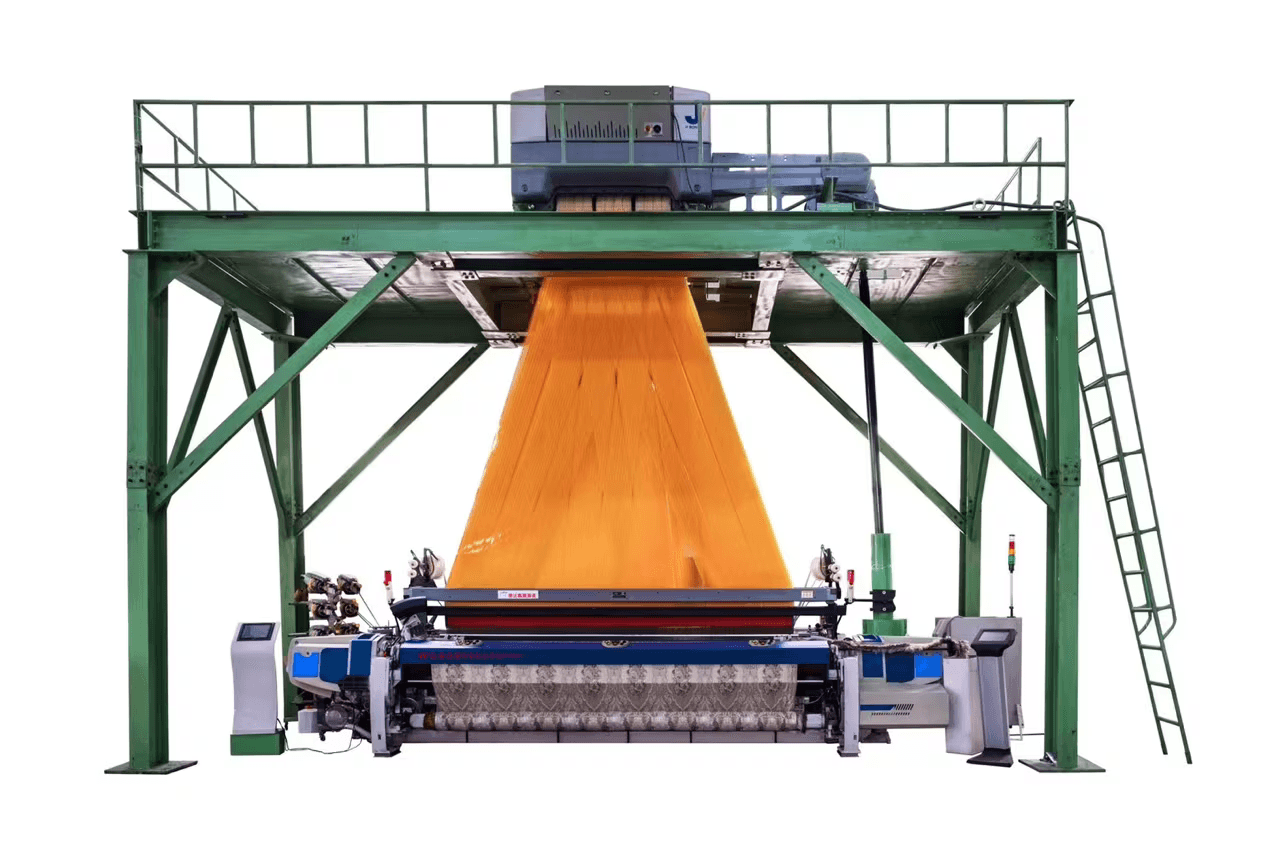
What Are the Main Types of Weaving Machines Used in Textile Manufacturing?
Modern weaving machines fall into two broad categories:
1. Shuttle Looms (Traditional Weaving Machines)
These machines use a shuttle to carry the weft across the warp.
Characteristics
Low speed
Heavy movement → higher noise
Traditional fabric feel
Suitable for artisanal production
Common Applications
Handloom-style textiles
Heavy cotton fabrics
Crafts and heritage weaving
Shuttle looms are still used in small-scale handloom weaving, but large factories now prefer shuttleless weaving machines for efficiency.
2. Shuttleless Weaving Machines (Modern Industrial Weaving Machinery)
These represent the majority of industrial weaving machines used globally.
Types
Rapier looms
Air-jet looms
Water-jet looms
Projectile looms
These high-speed weaving machines provide superior consistency, reduced vibration, lower defect rates, and greater compatibility with automation.
How Do Modern Weaving Machines Work? Key Components Explained
All fabric weaving machines share essential components:
1. Reed
Beats the weft into place to form fabric.
2. Heddles
Hold warp yarns and form the shed.
3. Heald/Shaft Frames
Raise and lower yarn groups for weave patterns.
4. Shuttle / Rapier / Jet System
Inserts weft yarn across the shed.
5. Take-Up Motion
Rolls woven fabric onto the cloth beam.
6. Let-Off Motion
Controls warp yarn release from the warp beam.
7. Temple
Maintains fabric width during weaving.
Understanding these components helps operators maintain productivity in textile weaving equipment.
Difference Between CAM, CRANK, ESAID & Jacquard Machines
Machine Type | Mechanism | Best For | Notes |
CAM | Cam-based shedding | Basic repeat patterns | Simple & reliable |
CRANK | Mechanical crank motion | Lightweight fabrics | Low-cost option |
ESAID | Electronic shedding | Medium complexity | Flexible settings |
Jacquard | Warp-wise control | Intricate designs | High complexity |
Jacquard looms remain the most advanced patterning machines used in weaving machines for textiles requiring individualized warp control.
Rapier Looms vs Air-Jet Looms: Cost-Effectiveness & Fabric Suitability
This is a major equipment decision for weaving mills.
Feature | Rapier | Air-Jet |
Best For | Cotton, blends, jacquards | Polyester, air-friendly yarns |
Speed | Moderate | Very high |
Energy Use | Low/Moderate | High |
Yarn Flexibility | Excellent | Limited |
Cost-Effectiveness (Polyester) | Moderate | High for medium-weight polyester fabrics |
For mills producing medium-weight polyester fabrics, air-jet looms often provide the best cost-per-meter ratio due to their incredible speed, although sizing quality greatly influences air-jet performance.
Alpenol’s clean, low-residue sizing solutions help support smoother weft insertion on air-jet looms by reducing warp breaks and minimizing linting.
Jacquard Looms vs Dobby Looms: Which Should You Choose?
Dobby Loom
Controls groups of warp threads
Suitable for small repeat patterns (stripes, checks)
Easy setup + lower cost
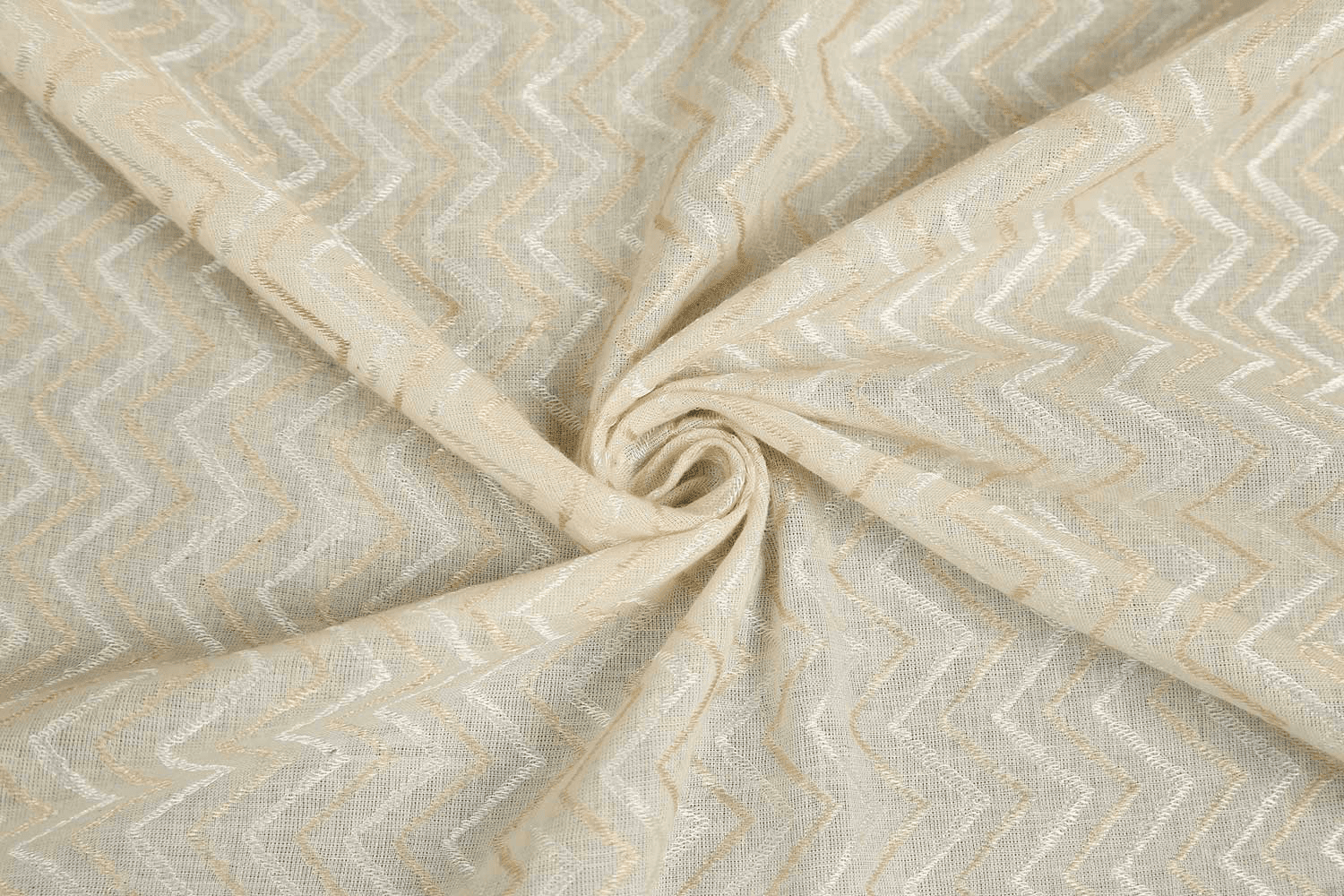
Jacquard Loom
Controls individual warp threads
Capable of large, intricate motifs
Used for upholstery, brocades, sarees
Choose Jacquard for complexity; choose Dobby for speed and lower operating cost.
How Are Weaving Machines Integrated Into Smart Factories (Industry 4.0)?
Industry 4.0 is transforming modern weaving machines through:
Real-time loom monitoring
Sensor-based warp tension control
Predictive maintenance
Automated air-pressure optimization (air-jet)
Digital pattern transfer for Jacquard systems
Remote machine diagnostics
Energy-efficiency dashboards
Automated weaving is now a core component of textile production machinery in smart textile factories.
Why Choose Shuttleless Looms for Large-Scale Production?
Shuttleless machines dominate industrial weaving because they provide:
Higher speed (PPM)
Lower maintenance
Less fabric defects
Reduced vibration
Better edge quality (selvedge)
Lower cost per meter
They also integrate easily with IoT and automation software.
How Do Fabric Type, Yarn Count & Weave Density Affect Machine Settings?
Fabric Type
Delicate fabrics → lower speed
Technical fabrics → higher tension control
Yarn Count
Fine yarns → lower insertion pressure
Coarse yarns → robust beat-up force
Weave Density
High-density weaves → lower PPM
Loose weaves → high speed possible
Connection to Sizing
Warp stability depends on yarn preparation.
Sustainable sizing products like Alpenol can improve warp smoothness on high-speed looms, which reduces end breaks and allows mills to run tighter warp tensions with fewer stoppages.
Spun Yarn vs Filament Yarn Loom Suitability
Yarn Type | Best Loom Type | Notes |
Spun Yarn (cotton, blends) | Rapier, projectile | Needs good sizing for durability |
Filament Yarn (polyester, nylon) | Air-jet, water-jet | Smooth surface, high speed |
Correct equipment selection reduces defects and machine wear.
Latest Innovations & Trends in Weaving Machine Technology
Key advancements include:
1. Sensorization
Warp tension sensors
Broken end detectors
Smart leno systems
2. High-Speed Shuttleless Looms
Advanced air-jet nozzles
Closed-loop air-flow optimization
Faster rapier transfer systems
3. Industry 4.0 Automation
Predictive lubrication
Motor analytics
Self-calibrating shedding systems
4. Eco-Efficiency
Reduced airflow consumption
Energy-saving motors
Recyclable lubrication oils
5. Sustainable Weaving Chemistry Integration
Warp-prep machines now support eco-friendly sizing agents.
Alpenol’s biodegradable formulations complement modern weaving machines by reducing friction and improving loom efficiency-especially relevant as mills transition to greener production.
Weaving Machine Maintenance Checklist
Daily Maintenance
Clean lint accumulation
Check oil levels
Inspect warp tension
Weekly Maintenance
Clean reed and temples
Check air-jet pressures
Inspect lubrications and belts
Monthly Maintenance
Check shedding system
Service motors
Verify alignment
Common Problems & Fixes
Broken end → improve sizing, clean drop wires
Unclear shed → adjust heddle height
Poor selvedge → check leno system
Top Global Weaving Machine Manufacturers: Comparison Guide
Major suppliers include:
1. Toyota Industries (Japan)
Strong in air-jet looms
Exceptional reliability
Industry 4.0 compatible
2. Picanol (Belgium)
Leader in air-jet and rapier systems
Extremely user-friendly interfaces
Excellent energy optimization
3. Dornier (Germany)
Superior build quality
Best for technical textiles
High-precision weaving
4. Itema (Italy)
Focus on rapier technology
Efficient for apparel fabrics
Strong global service network
5. Sulzer / Tsudakoma
Water-jet specialists
Efficient for filament weaving
When comparing suppliers, evaluate:
After-sales service
Spare part availability
Power consumption
Speed (PPM)
Compatibility with yarn types
Budget & payback period
FAQ
1. What are the main types of weaving machines?
Shuttle looms and shuttleless looms such as rapier, air-jet, water-jet, and projectile machines.
2. What components make a weaving machine work?
Reed, heddles, shafts, weft insertion system, take-up, let-off, temples.
3. Why are shuttleless looms preferred today?
Higher speed, less maintenance, lower cost per meter, better fabric quality.
4. How does sizing affect weaving performance?
Proper sizing improves warp strength, reduces breaks, and enhances efficiency on high-speed looms. Alpenol’s eco-friendly sizing helps achieve smoother performance.
5. Which manufacturers dominate the weaving machine market?
Toyota, Picanol, Dornier, Itema, Sulzer/Tsudakoma.
References
Wikipedia - Loom (Weaving Machine History & Types),
https://en.wikipedia.org/wiki/Loom
Wikipedia - Rapier Loom (Shuttleless Weaving Technology),
https://en.wikipedia.org/wiki/Rapier_loom
Wikipedia - Air-Jet Loom (High-Speed Weft Insertion),
https://en.wikipedia.org/wiki/Air_jet_loom
Textile School - Basic Weaving Operations (Loom Components/Process),
https://www.textileschool.com/206/basic-weaving-operations/
Textile Learner - Parts of a Loom and Their Function (Reed/Heddles/Shuttle/Temple),
https://textilelearner.net/parts-of-a-loom-and-their-function/
Textile Learner - Yarn Sizing: Important Warp Preparatory Process (Sizing for Weaving),
https://textilelearner.net/yarn-sizing-important-warp-preparatory-process/
TextileListing - Sizing Operation in Textiles (Warp Prep for Looms),
Textile Trainer - Sizing in Weaving (Objectives for Loom Efficiency),
https://textiletrainer.com/sizing-in-weaving-easy-objectives-of-sizing/
Toyota Industries - Textile Machinery Division (Air-Jet Looms),
https://www.toyota-industries.com/products/textile_machinery/
Picanol - Weaving Machines (Rapier & Air-Jet Technology),
Itema - Weaving Solutions (Rapier Looms),
Dornier - Weaving Machines (Technical Textiles),
https://www.lindauerdornier.com
Tsudakoma - Water-Jet Looms (Filament Weaving),
https://www.tsudakoma.co.jp/en/
Sulzer - Projectile Looms (Heavy Fabrics),
ITMA - International Textile Machinery Association (Weaving Innovation Trends),
India ITME - Indian Textile Machinery Exhibition (Loom Technology Updates),
ScienceDirect - Textile Machinery Evolution (Academic Review),
https://www.sciencedirect.com/topics/engineering/weaving-machine
Textile World - Weaving Technology Advances (Industry Magazine),
Fibre2Fashion - Weaving Machine Types (Shuttle vs Shuttleless),
PMC - Performance Evaluation of Cotton Warp Sizing (Weaving Efficiency),
https://pmc.ncbi.nlm.nih.gov/articles/PMC12845530/
JEMIT PDF - Sizing Efficiency and Weaving Cost Reduction,
https://jemit.aspur.rs/archive/v3/n1/3.pdf
Textile Learner - Process Control in Sizing (Tension/Viscosity for Looms),
https://textilelearner.net/process-control-in-sizing-of-warp-yarn/
Liked it? Share it with your people.


Disclaimer
The information provided in this blog is intended solely for educational and informational purposes within the textile industry. While the content references technical concepts, sizing and desizing practices, and general chemical information, it does not constitute professional, commercial, or operational advice for any specific textile process or production environment.
Process conditions, chemical selections, and operational parameters may vary significantly across mills, machinery types, fabric constructions, and environmental constraints. Readers should always consult qualified technical professionals, internal laboratory data, and product-specific Technical Data Sheets before making any decisions related to textile processing.
Any references to Alpenol, Sizaltex, or other products are included only for contextual, educational, and illustrative purposes and should not be interpreted as endorsements, recommendations, or guarantees of performance. The authors assume no responsibility for decisions made based on the information contained herein.