
What Is a Finished Fabric?
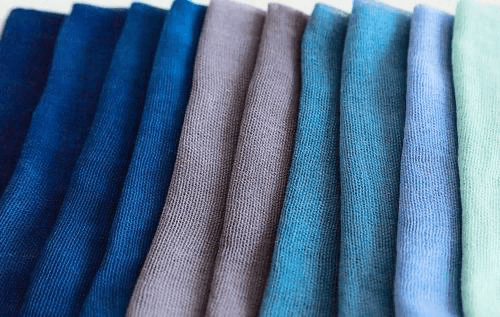
Finished fabric is the final commercially usable form of a textile. After leaving the loom or knitting machine as greige fabric, it passes through multiple finishing processes that enhance its functionality, aesthetics, and usability.
A fabric is considered finished when it meets:
End-use performance requirements
Visual and tactile expectations
Regulatory and buyer testing standards
In industrial practice, finishing transforms a structural textile into a consumer-ready material.
Why Is Fabric Finishing Important?
Fabric finishing is critical because raw or greige fabric cannot meet market expectations on its own.
Key Reasons Finishing Is Essential
Improves appearance (color, brightness, smoothness)
Enhances comfort (softness, breathability)
Adds functional properties (water repellency, flame resistance)
Ensures dimensional stability (shrinkage control)
Enables brand and buyer compliance
From a manufacturing standpoint, the quality of greige fabric and warp sizing chemistry directly affects finishing efficiency, chemical consumption, and defect rates-making upstream decisions economically decisive.
How Is a Finished Fabric Made?
Finished fabric is produced through a multi-stage finishing sequence, which varies by fiber type and end use.
Step-by-Step Fabric Finishing Process
Desizing – Removal of warp sizing materials
Scouring – Elimination of natural oils, waxes, and impurities
Bleaching – Achieving uniform whiteness (optional)
Dyeing / Printing – Color or pattern application
Mechanical Finishing – Stentering, calendaring, sanforizing
Chemical Finishing – Functional treatments
A well-prepared greige fabric-especially one sized with easily removable, starch-based systems like Alpenol’s sizing technology-requires less aggressive chemistry during these steps, improving both quality and sustainability outcomes.
Difference Between Greige Fabric and Finished Fabric
Parameter | Greige Fabric | Finished Fabric |
Stage | After weaving | After finishing |
Color | Natural / uneven | Uniform |
Handle | Stiff | Soft |
Strength | Higher | Slightly reduced |
Chemical content | Low | Moderate to high |
End use | Not usable | Ready for consumption |
Cost | Lower | Higher |
Types of Textile Finishes
Textile finishes are broadly classified into mechanical and chemical finishes.
1. Mechanical Finishes
Calendaring (smoothness, luster)
Sanforizing (shrinkage control)
Raising / Sueding (surface texture)
Heat setting (synthetics)
2. Chemical Finishes
Softening
Wrinkle resistance
Water & oil repellency
Flame retardancy
Antimicrobial treatments
Many of these finishes perform best when applied to uniform, low-residue fabrics, reinforcing the importance of clean greige preparation.
How to Identify a Finished Fabric
Finished fabric can be identified through:
Uniform color or print
Soft, controlled hand feel
Reduced shrinkage
No sizing stiffness
Consistent width and GSM
Experienced textile professionals can immediately distinguish finished fabric by touch, drape, and visual consistency.
Finished Fabric Testing and Standards
Finished fabrics must meet strict international testing standards before approval.
Common Testing Protocols
Property Tested | Standard |
Colorfastness (wash, rub, light) | AATCC / ISO |
Dimensional stability | ISO 6330 |
Water repellency | AATCC 22 |
Flame retardancy | ISO 15025 |
Abrasion resistance | ISO 12947 |
Pilling | ISO 12945 |
Failures in these tests often trace back to uneven pre-treatment or incomplete desizing, highlighting the hidden importance of greige-stage chemistry.
What Is Finished Fabric Used For?
Finished fabrics are used across nearly every textile category:
Apparel – shirts, denim, dresses
Home textiles – bed linen, curtains, upholstery
Technical textiles – protective wear, medical textiles
Industrial fabrics – filtration, automotive interiors
Each application demands specific finishing performance, which is impossible without controlled fabric preparation.
Environmental and Chemical Impacts of Fabric Finishing
Fabric finishing is the most resource-intensive phase of textile manufacturing.
Environmental Challenges
High water consumption
Chemical-intensive processes
Effluent COD/BOD load
Energy-intensive drying and curing
RFD (Ready-for-Dyeing) Specific Impacts
Residual sizing chemicals increase effluent load
Harsh bleaching increases fiber damage
Synthetic polymers complicate wastewater treatment
Sustainable Direction
Cleaner desizing systems
Reduced synthetic polymers
Lower liquor ratios
Biodegradable auxiliaries
Mills increasingly focus on upstream improvements-like optimized sizing-to reduce downstream finishing impact, aligning with modern sustainability certifications.
Why Finished Fabric Quality Starts Before Finishing
Although finishing occurs at the end of manufacturing, its success is determined much earlier:
Warp sizing uniformity
Size removability
Fabric construction consistency
Greige inspection accuracy
Improving these variables reduces chemical overdosing, reprocessing, shade variation, and environmental load-a strategy increasingly adopted by performance-driven mills.
Frequently Asked Questions
Can finished fabric be re-dyed?
Yes, but results depend on existing finishes and color depth.
Is finished fabric always softer than greige fabric?
Generally yes, due to softeners and mechanical finishing.
Does finishing reduce fabric strength?
Slightly, due to chemical and mechanical stress during processing.
What is RFD fabric in finishing?
RFD (Ready for Dyeing) fabric is bleached but undyed finished fabric.
Why do buyers specify finishing standards?
To ensure consistency, safety, and end-use performance across batches.
References
GarmentsMerchandising: Greige vs Finished Fabric (Finishing Steps),
https://garmentsmerchandising.com/difference-between-greige-fabric-and-rfd-fabric/
TextileIndustry.net: RFD/Finished Fabric Properties (Post-Weaving),
https://www.textileindustry.net/difference-between-greige-fabric-and-rfd-fabric/
OnlineClothingStudy: RFD vs Greige (Finishing Cost/Process),
https://www.onlineclothingstudy.com/2013/07/difference-between-rfd-and-greige-fabric.html
Google Patents: Desizing, Scouring, Bleaching in Finishing (Cotton/Poly),
https://patents.google.com/patent/US3619111A/en
ScienceDirect: Wet Processing Environmental Assessment (Finishing Effluent),
https://www.sciencedirect.com/science/article/abs/pii/S0048969722065949
Wiley: Textile Wet Processing Review (Chemical Finishes),
https://onlinelibrary.wiley.com/doi/abs/10.1002/tqem.21538
Inflibnet: Grey Cloth Finishing (Singeing to Chemical Treatments PDF),
_ ...
ICIRESM: Finishing Environmental Impacts & Effluent,
...
ZDHC Wastewater Guidelines (Finishing Effluent Standards),
https://downloads.roadmaptozero.com/output/ZDHC-Wastewater-Guidelines
ZDHC Wastewater V1.1 (Chemical Finishing Load),
https://wastewater.sustainabilityconsortium.org/downloads/zdhc-wastewater-guidelines-verson-1-1/
Textile Wastewater Standards (Post-Desizing Finishing),
GOTS Implementation Manual (Sustainable Finishing),
https://global-standard.org/images/Implementation_Manual_7.0_Second_Revision_Draft.pdf
OEKO-TEX Standards (Finished Fabric Testing),
https://www.oeko-tex.com/en/our-standards/
AATCC Official Site (Colorfastness, Abrasion Standards),
(AATCC for wash/rub/lightfastness)
ISO Textiles Standards (Dimensional Stability ISO 6330),
https://www.iso.org/standard/75374.html
(ISO laundering shrinkage)
ISO Abrasion Resistance (Martindale Method),
https://www.iso.org/standard/65234.html
[ISO 12947]
ISO Pilling Test (Martindale),
https://www.iso.org/standard/68332.html
[ISO 12945]
ISO Flame Retardancy (Protective Clothing),
https://www.iso.org/standard/61639.html
[ISO 15025]
PMC: Starch Sizing Impact on Finishing (Greige Prep),
https://pmc.ncbi.nlm.nih.gov/articles/PMC6572457/
PMC: Warp Sizing for Finishing Efficiency,
https://pmc.ncbi.nlm.nih.gov/articles/PMC10820382/
ACS ES&T: Sizing Residues in Finishing Effluent,
https://pubs.acs.org/doi/10.1021/es504988w
Persistence: Finishing Chemicals Market (Mechanical/Chemical),
https://www.persistencemarketresearch.com/market-research/textile-sizing-chemicals-market.asp
MarketsandMarkets: Textile Finishing Agents,
https://www.marketsandmarkets.com/Market-Reports/textile-chemical-market-12380328.html
TextileSchool: Mechanical Finishes (Calendaring, Sanforizing),
https://www.textileschool.com/206/basic-weaving-operations/
TextileLearner: Fabric Finishing Techniques,
https://textilelearner.net/different-parts-of-loom-and-their-functions/
CottonWorks: Finishing Basics (Softening, Stability),
https://cottonworks.com/learning-hub/weaving/weaving-basics/
Heuritech: 2026 Finishing Innovations,
Liked it? Share it with your people.


Disclaimer
The information provided in this blog is intended solely for educational and informational purposes within the textile industry. While the content references technical concepts, sizing and desizing practices, and general chemical information, it does not constitute professional, commercial, or operational advice for any specific textile process or production environment.
Process conditions, chemical selections, and operational parameters may vary significantly across mills, machinery types, fabric constructions, and environmental constraints. Readers should always consult qualified technical professionals, internal laboratory data, and product-specific Technical Data Sheets before making any decisions related to textile processing.
Any references to Alpenol, Sizaltex, or other products are included only for contextual, educational, and illustrative purposes and should not be interpreted as endorsements, recommendations, or guarantees of performance. The authors assume no responsibility for decisions made based on the information contained herein.