

 Summarize this Article with AI
In the evolving landscape of modern weaving, the relationship between performance, efficiency, and sustainability has become inseparable. Traditional sizing chemicals were designed primarily to protect yarn during weaving, often overlooking what happens after the loom stops.
Sizaltex LVN, developed by Alpenol, represents a fundamental shift in how textile sizing chemicals are engineered, integrating weaving performance with a radically simplified and sustainable post-weaving workflow. Sizaltex LVN is a water-soluble compound textile sizing agent focused on three critical outcomes: superior weaving performance, elimination of conventional desizing complexity, and measurable gains in production efficiency and sustainability.
Sizaltex LVN and the Textile Sizing Process
The textile sizing process traditionally relies on synthetic polymers and binders, most notably polyvinyl alcohol, to deliver strength. While effective during weaving, these materials create downstream challenges during desizing. Sizaltex LVN breaks this dependency. As an advanced PVA replacement, Sizaltex LVN forms a high-performance sizing solution that:
- Delivers excellent film strength during weaving
- Maintains yarn flexibility and elongation
- Fully dissolves in hot water after weaving
This redefines the role of textile sizing chemicals from temporary protection to process optimization across the entire value chain.
A Breakthrough in Desizing: Hot Wash, No Enzymes
One of the most transformative aspects of Sizaltex LVN is what happens after weaving. Conventional sizing systems require a dedicated desizing step using enzymes, chemicals, time, and energy. With Sizaltex LVN:
- Desizing enzymes are not required
- Greige fabric does not need conventional desizing
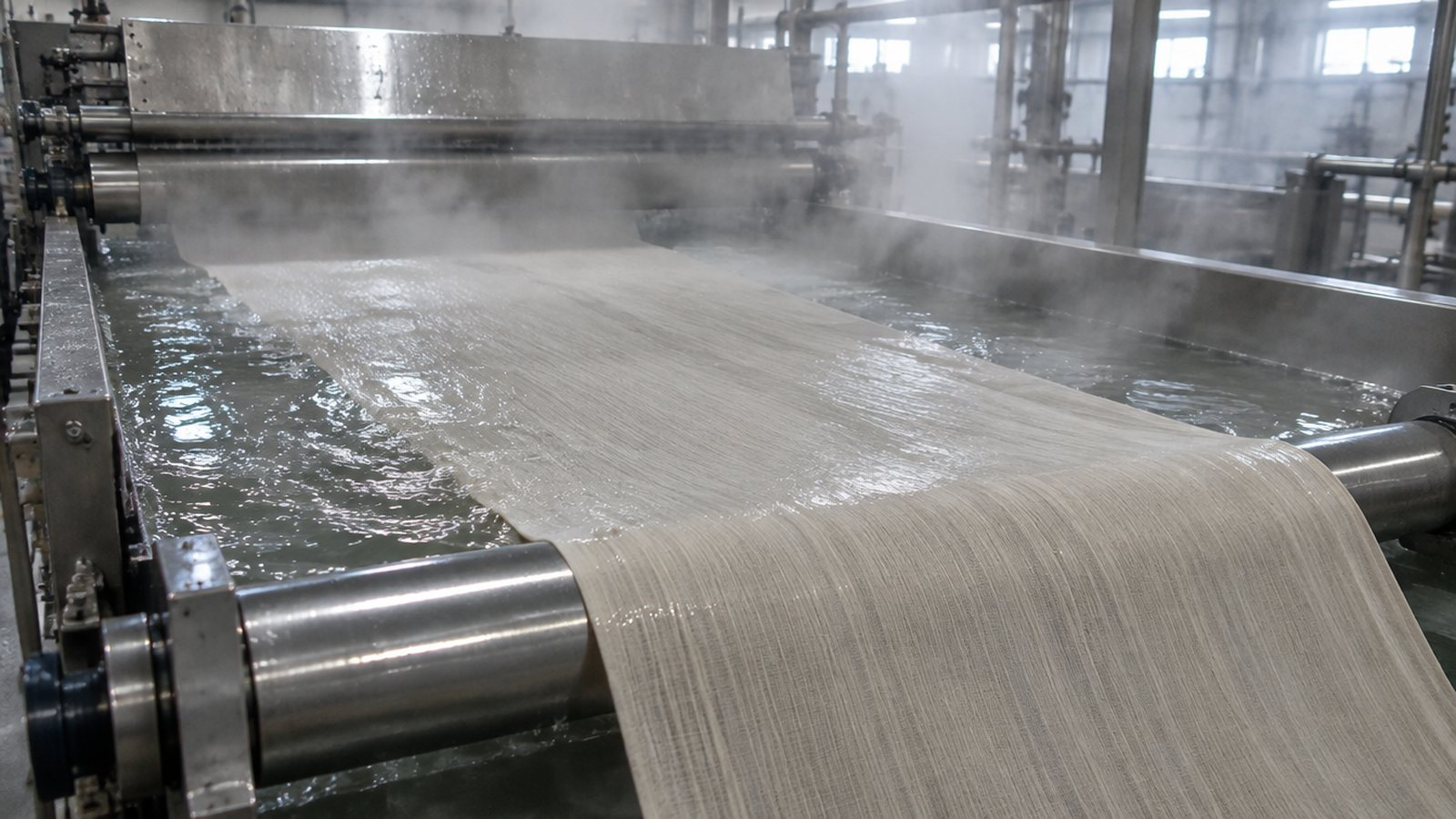
- A simple hot wash is sufficient to remove the sizing film completely
This approach makes the desizing process:
- Faster and more efficient
- Significantly more environmentally friendly
- Lower in water, energy, and chemical consumption
By eliminating enzymes, Sizaltex LVN reduces process variability, simplifies effluent treatment, and supports truly sustainable textiles.
Compatibility Across Yarn and Fabric Types
Sizaltex LVN is designed for broad application across diverse yarn and fabric categories, including:
- Cotton fabric
- Polyester fabric
- Cotton blend fabric
- Viscose fabric
- Rayon fabric
- Viscose rayon fabric
- Engineered and patterned Jacquard fabric
This versatility makes it suitable for mills producing a wide range of types of fabric, from commodity textiles to high-value woven structures.
Optimized for Modern Textile Sizing Machines
Sizaltex LVN integrates seamlessly with advanced textile sizing machine configurations, offering:
- Stable viscosity control in the sizing solution
- Uniform penetration and film formation on warp yarns
- Clean runnability with reduced deposits on sizing equipment
This alignment with modern weaving systems ensures scalability, repeatability, and predictable performance across all types of looms.
Sustainability by Design: Reducing Synthetics and Effluent Load
Sizaltex LVN directly supports industry goals to reduce PVA and other synthetics. Its water-soluble nature lowers:
- Chemical oxygen demand in effluent
- Total chemical load entering ETP systems
- Water and energy usage during desizing
By simplifying both sizing and desizing, Sizaltex LVN enables a more circular, responsible approach to textile sizing chemicals, without sacrificing weaving performance
In addition, Sizaltex holds globally recognized sustainability certifications:
- Oeko-Tex Eco Passport
- ZDHC Level 3
- GOTS These credentials reinforce its suitability for environmentally responsible fabric manufacturing.
Sizaltex LVN: A New Paradigm in Textile Sizing
Sizaltex LVN is more than a textile sizing agent. It is a technology that rethinks how sizing, weaving, and finishing connect as one continuous system.
By delivering strong performance during the weaving process and enabling fast, enzyme-free removal afterward, Sizaltex LVN sets a new benchmark for efficiency, sustainability, and control in textile weaving. This is the future of sizing: fewer chemicals, faster processing, cleaner outcomes, and fabrics engineered for the demands of tomorrow.


