

 Summarize this Article with AI
Key Highlights
- Textile sizing is the process of applying a protective coating to warp yarns before weaving to increase yarn strength, reduce hairiness, improve abrasion resistance.
- In woven fabric production, two sets of yarn are interlaced:
- The warp sizing process takes place after yarn spinning and before weaving.
- Sizing improves weaving performance through several mechanisms.
- Several types of sizing agents are used depending on yarn type and weaving requirements.
Quick Navigation
- What Is Textile Sizing?
- What This Guide Covers
- What Is the Purpose of Sizing in Textile Manufacturing?
- Textile Warp Sizing Process Explanation
- How Does Sizing Improve Yarn Strength and Weaveability?
- Types of Sizing Agents Used in the Textile Industry
- Desizing Process in Textile Manufacturing
- Sizing Techniques for Different Fiber Types
- Challenges and Common Problems in Textile Sizing
- Environmental Impact of Textile Sizing Chemicals
- Benefits of Modern Sizing Technologies in Weaving
- Quality Control Parameters for Textile Sizing
- Alternative Methods to Traditional Textile Sizing
- The Role of Modern Sizing Chemistry
- FAQ’s
What Is Textile Sizing?
Textile sizing is the process of applying a protective coating to warp yarns before weaving to increase yarn strength, reduce hairiness, improve abrasion resistance, and prevent breakage during the weaving process.
Sizing improves loom efficiency by forming a thin film around the warp yarn, allowing the yarn to withstand the high tension, friction, and mechanical stress generated during weaving. Modern compound sizing technologies, such as the PVA-free solutions developed by Alpenol, now enable mills to achieve high loom efficiency while also reducing environmental impact.
What This Guide Covers
This complete guide explains:
- What textile sizing is
- The purpose of sizing in textile manufacturing
- The warp sizing process
- How sizing improves yarn strength and weaveability
- Types of sizing agents used in the textile industry
- The desizing process in textile manufacturing
- Sizing techniques for different fiber types
- Challenges and common problems in textile sizing
- Environmental impact of textile sizing chemicals
- Benefits of modern sizing technologies in weaving
- Quality control parameters for textile sizing
- Alternative methods to traditional textile sizing
Each section also connects to modern advances in sizing chemistry, including PVA-free compound sizing technologies pioneered by Alpenol.
What Is the Purpose of Sizing in Textile Manufacturing?
In woven fabric production, two sets of yarn are interlaced:
- Warp yarns, longitudinal yarns on the loom
- Weft yarns, crosswise yarns inserted during weaving
Warp yarns experience intense mechanical stress during weaving due to:
- High tension
- Repeated bending
- Abrasion from heddles and reeds
- High-speed weft insertion
Without sizing, warp yarns would break frequently, leading to loom stoppages and poor fabric quality.
Key Objectives of Textile Sizing
Sizing serves several critical purposes:
- Increase warp yarn strength
- Reduce yarn hairiness
- Improve abrasion resistance
- Improve weaving efficiency
- Reduce warp breakage
- Ensure smooth warp movement on the loom
By strengthening warp yarns before weaving, sizing allows mills to achieve higher loom productivity and consistent fabric quality.
Textile Warp Sizing Process Explanation
The warp sizing process takes place after yarn spinning and before weaving.
The process typically follows these steps:
1. Preparation of Size Solution
Sizing agents are dissolved or cooked in water to create a uniform sizing solution.
2. Immersion of Warp Yarns
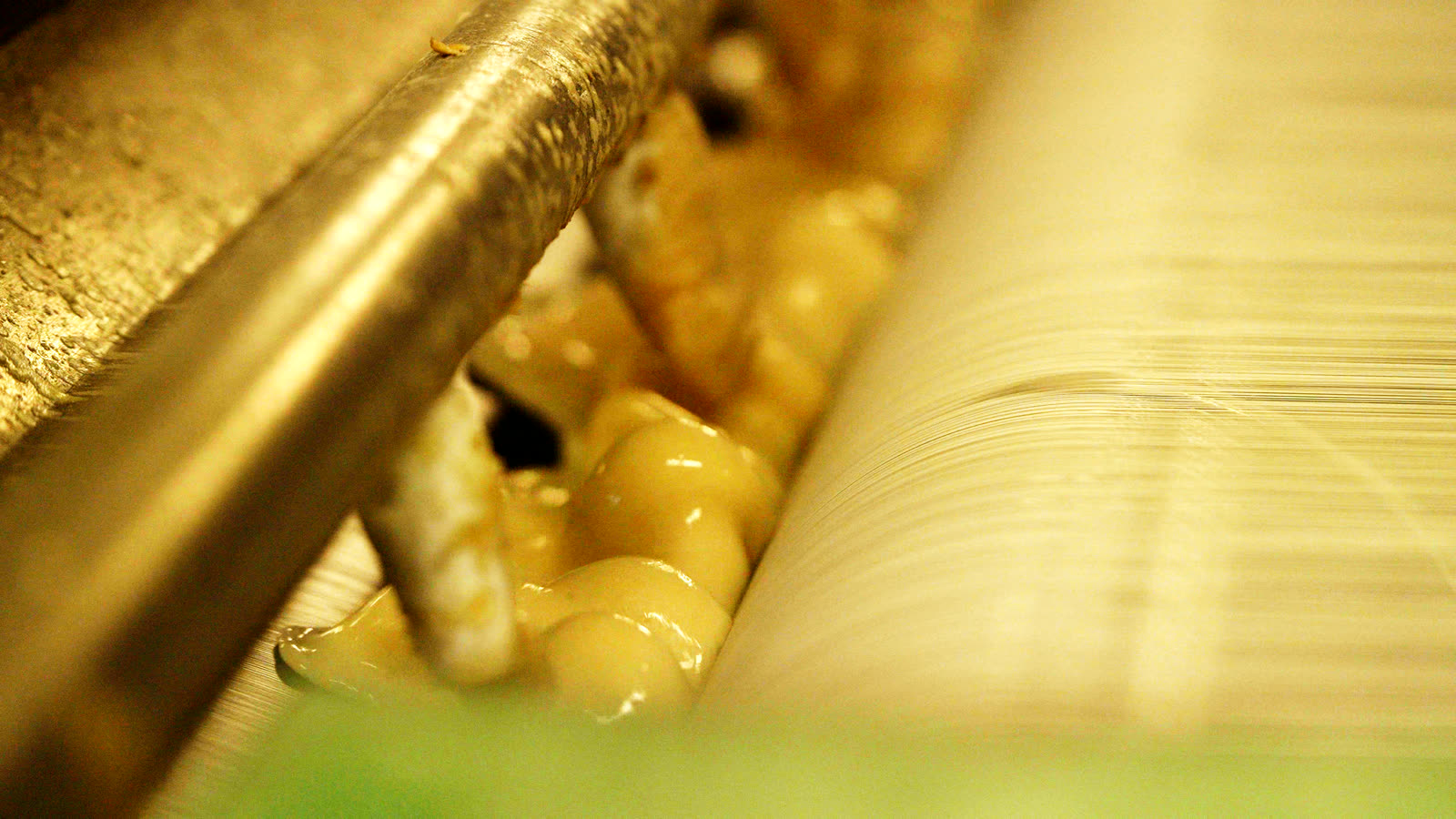
Warp yarn sheets pass through the sizing bath where the solution penetrates the yarn structure.
3. Squeezing and Pickup Control
Excess size is removed using squeeze rollers to ensure controlled size pickup.
4. Drying
Sized warp yarns are dried in heated drying cylinders to form a thin protective film.
5. Winding onto Warp Beam
The sized yarn sheet is wound onto a beam ready for weaving.
This entire process is designed to create uniform film formation across thousands of warp threads.
How Does Sizing Improve Yarn Strength and Weaveability?
Sizing improves weaving performance through several mechanisms.
Film Formation
The sizing agent forms a thin film around the yarn surface that binds loose fibers.
Reduced Yarn Hairiness
Loose fibers are encapsulated by the size film, reducing friction during weaving.
Increased Abrasion Resistance
The protective film shields the yarn from mechanical damage.
Improved Yarn Cohesion
Sizing helps fibers stick together, increasing tensile strength.
These improvements enable warp yarns to withstand the high-speed environment of modern looms such as:
- Air-jet looms
- Rapier looms
- Projectile looms
Types of Sizing Agents Used in the Textile Industry
Several types of sizing agents are used depending on yarn type and weaving requirements.
| Sizing Agent | Source | Advantages | Limitations |
|---|---|---|---|
| Native Starch | Natural | Low cost | Brittle film |
| Modified Starch | Chemical modified | Better adhesion | Still inconsistent |
| Polyvinyl Alcohol (PVA) | Synthetic | Strong film | High environmental impact |
| Acrylic Polymers | Synthetic | Flexible film | High cost |
| Compound Sizing Agents | Engineered | Balanced performance | Requires expertise |
Traditional systems often rely heavily on PVA, which provides strong film formation but also creates sustainability challenges.
Modern compound sizing systems, such as those developed by Alpenol, replace PVA entirely while maintaining weaving performance.
Desizing Process in Textile Manufacturing
After weaving, the size applied to warp yarns must be removed to allow proper dyeing and finishing.
This process is known as desizing.
Common Desizing Methods
| Enzymatic desizing | Enzymes break down starch-based sizes |
|---|---|
| Oxidative desizing | Chemicals degrade size films |
| Acid desizing | Acid hydrolysis removes size |
| Hot water desizing | Used for easily removable sizes |
Efficient desizing ensures:
- Proper dye penetration
- Uniform finishing
- Clean fabric surface
Modern eco-friendly sizing agents are designed for easy removal during desizing, reducing water and energy consumption.
Sizing Techniques for Different Fiber Types
Different fibers require different sizing approaches.
Cotton Yarn Sizing
Cotton fibers are short and hairy, requiring strong adhesion and film flexibility.
Polyester Yarn Sizing
Synthetic fibers require smoother film formation and lower friction.
Viscose Yarn Sizing
Viscose yarns require gentle sizing to avoid brittleness.
Blended Yarn Sizing
Polyester-cotton blends require balanced adhesion and flexibility.
Modern compound sizing systems allow mills to size multiple fiber types using simplified formulations.
Challenges and Common Problems in Textile Sizing
Sizing remains one of the most complex processes in weaving preparation.
Common Sizing Challenges
- Warp breakage during weaving
- Uneven size pickup
- Recipe inconsistency
- Excessive yarn hairiness
- Poor film flexibility
- High energy consumption
These issues reduce loom efficiency and increase weaving costs.
Modern sizing technologies aim to solve these problems through engineered compound formulations and improved process control.
Environmental Impact of Textile Sizing Chemicals
Traditional sizing systems, especially those using PVA, contribute significantly to textile wastewater pollution.
Environmental Concerns
- High Chemical Oxygen Demand (COD)
- Poor biodegradability
- High water consumption
- Increased load on effluent treatment plants
As sustainability becomes a priority across the textile supply chain, mills are increasingly transitioning to eco-friendly sizing solutions.
One of the most important innovations in this area is the development of PVA-free sizing technologies, which significantly reduce environmental impact while maintaining weaving performance.
Benefits of Modern Sizing Technologies in Weaving
Modern sizing technologies focus on improving both performance and sustainability.
Advantages of Modern Sizing Systems
- Reduced warp breakage
- Higher loom efficiency
- Lower energy consumption
- Simplified sizing recipes
- Improved environmental performance
Compound sizing systems also allow mills to reduce the number of chemicals used in the sizing process, improving process consistency.
Quality Control Parameters for Textile Sizing
Effective sizing requires careful monitoring of several parameters.
Key Quality Control Metrics
| Parameter | Importance |
|---|---|
| Size pickup % | Controls film thickness |
| Viscosity | Ensures uniform coating |
| Yarn strength after sizing | Determines weaving performance |
| Moisture content | Affects film formation |
| Warp break rate | Indicates sizing efficiency |
Consistent monitoring of these parameters ensures stable weaving performance.
Alternative Methods to Traditional Textile Sizing
As sustainability pressures increase, several alternatives to traditional sizing methods are emerging.
Emerging Alternatives
- PVA-free compound sizing agents
- Bio-based sizing polymers
- Enzyme-based sizing technologies
- Advanced polymer blends
These technologies aim to provide high weaving efficiency with lower environmental impact, helping mills meet global sustainability standards.
The Role of Modern Sizing Chemistry
Sizing technology continues to evolve as weaving speeds increase and sustainability expectations grow.
Advanced compound sizing technologies are now designed to:
- Improve warp protection
- Simplify sizing recipes
- Reduce environmental impact
- Maintain high loom efficiency
Companies such as Alpenol have focused on developing PVA-free compound sizing systems that enable mills to achieve sustainable weaving without compromising performance.
FAQ’s
What is the purpose of textile sizing?
Sizing strengthens warp yarns before weaving to reduce breakage and improve loom efficiency.
What is the warp sizing process?
Warp sizing involves applying a protective size solution to warp yarns, followed by squeezing, drying, and winding before weaving.
Why are sizing chemicals necessary?
Sizing chemicals create a protective film around yarns that improves abrasion resistance and weaving performance.
What is desizing in textile manufacturing?
Desizing is the removal of sizing agents from fabric after weaving to allow proper dyeing and finishing.
Can traditional sizing chemicals be replaced with sustainable alternatives?
Yes. Modern compound sizing technologies and PVA-free solutions provide sustainable alternatives while maintaining weaving performance.
How does Alpenol replace PVA in textile sizing?
Alpenol has developed advanced compound sizing technologies that function as a complete PVA replacement. These formulations create a flexible and durable film around warp yarns, improving abrasion resistance and loom efficiency while significantly reducing environmental impact compared to traditional PVA-based sizing systems.
Are Alpenol sizing solutions environmentally sustainable?
Yes. Alpenol’s sizing technologies are designed to be PVA-free and aligned with modern sustainability requirements. By eliminating synthetic polymers like polyvinyl alcohol, Alpenol formulations help reduce effluent load, lower COD levels, and support compliance with global sustainability standards such as ZDHC and OEKO-TEX.
Can Alpenol sizing chemicals work on modern high-speed looms?
Yes. Alpenol sizing systems are engineered specifically for modern weaving environments, including air-jet and rapier looms. The formulations improve warp yarn protection, reduce yarn hairiness, and enhance loom runnability, enabling mills to achieve high weaving efficiency even without using PVA.


