

 Summarize this Article with AI
Key Highlights
- The sizing process strengthens warp yarns by applying a protective polymer film that improves abrasion resistance, cohesion, and weaving efficiency.
- Sizing is the application of a protective coating (starch, PVA, acrylics, blends) to warp yarns to:
- The typical sizing machine (slasher or multi-box) follows this sequential flow:
- Throughout this process, QC teams monitor checkpoints to maintain consistent results.
- Alpenol systems reduce many of these issues by maintaining stable viscosity and providing enhanced flexibility in the size film.
Quick Navigation
- What Is the Sizing Process?
- What Is the Machine Flow of the Sizing Process?
- 1. Creel / Warp Supply
- 2. Size Box (Impregnation Zone)
- 3. Squeeze / Nip Rollers
- 4. Drying Zone
- 5. Leasing & Separation
- 6. Re-Beaming
- What Are Common Defects in Sizing?
- What Are the Checkpoints of the Sizing Process?
- 1. Pre-Sizing Checkpoints
- A. Yarn Quality Check
- B. Recipe Verification
- C. Size Bath Preparation
- 2. In-Process Checkpoints
- A. Viscosity Monitoring
- B. Size Pick-Up Measurement
- C. Squeeze Roller Pressure
- D. Warp Sheet Tension
- E. Drying Temperature Control
- F. Yarn Separation at Leasing Rods
- G. End-Break Frequency
- 3. Post-Sizing Checkpoints
- A. Yarn Strength & Elongation Test
- B. Hairiness Measurement
- C. Film Uniformity Evaluation
- D. Moisture Content Check
- E. Beam Build Quality
- F. Loom Trial
- Why Are These Checkpoints Important?
- FAQs
The sizing process strengthens warp yarns by applying a protective polymer film that improves abrasion resistance, cohesion, and weaving efficiency. To ensure high-quality warp preparation, mills use checkpoints across all stages of the sizing cycle-from yarn inspection and size recipe preparation to viscosity monitoring, drying control, and post-sizing beam evaluation. Effective QC prevents common defects like uneven pick-up, flaking, and sticking. Modern sizing solutions such as Alpenol help make these checkpoints easier to maintain by stabilizing viscosity, promoting flexible film formation, and improving yarn adhesion at lower add-on levels.
What Is the Sizing Process?
Sizing is the application of a protective coating (starch, PVA, acrylics, blends) to warp yarns to:
- Increase tensile strength
- Reduce hairiness
- Lower abrasion during weaving
- Improve loom efficiency
- Enhance fabric quality
This step is essential because warp yarns endure significant stress during shedding, picking, and beating-up. Without sizing, spun yarns-especially cotton and viscose-would break excessively. Alpenol formulations are designed to deliver strong adhesion and flexible films, helping mills reach high weaving speeds with reduced warp breaks.
To learn more about sizing process.
What Is the Machine Flow of the Sizing Process?
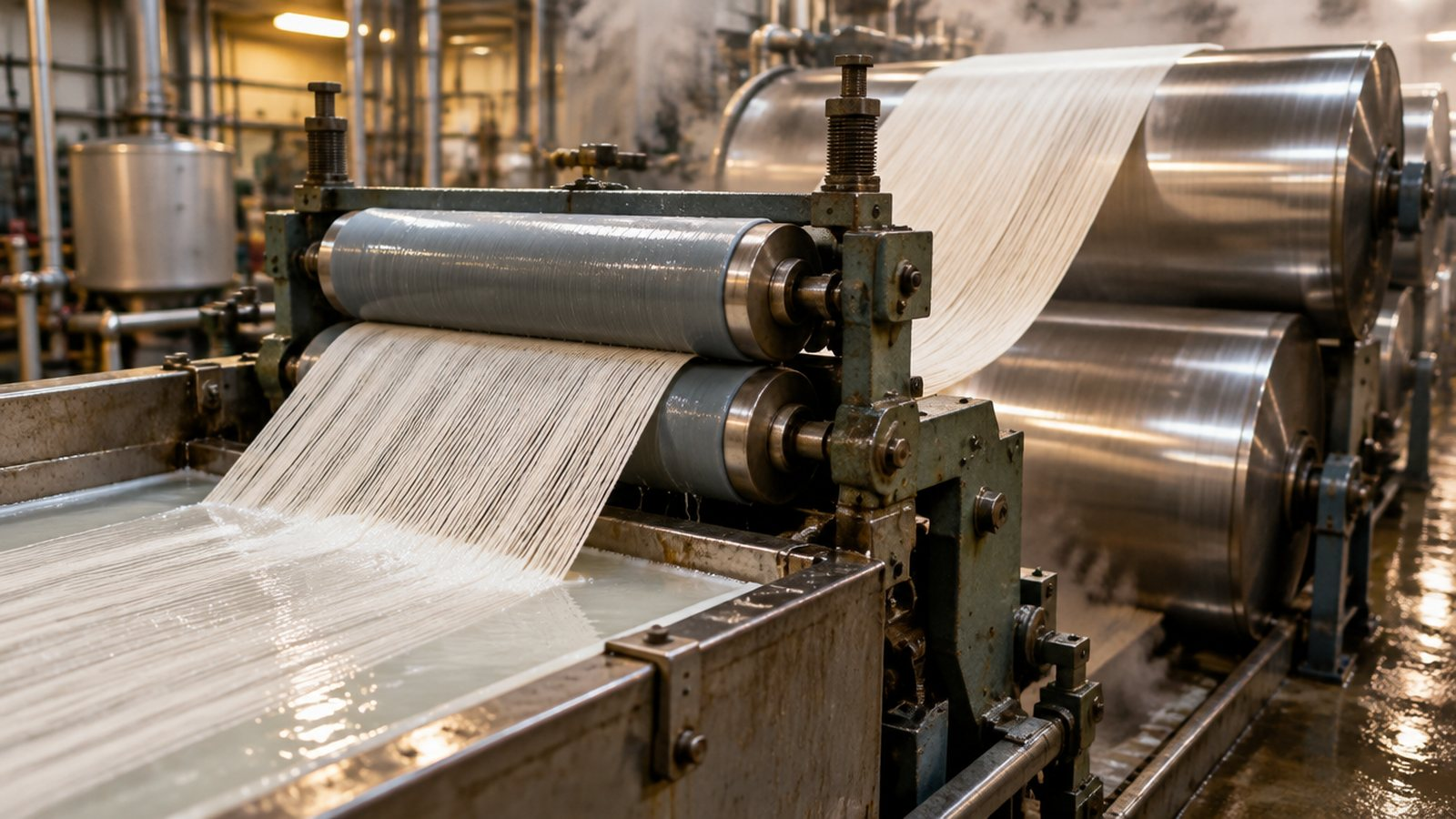
The typical sizing machine (slasher or multi-box) follows this sequential flow:
1. Creel / Warp Supply
- Warp ends arranged parallel on beams
- Tension equalized
- Broken ends repaired
2. Size Box (Impregnation Zone)
- Yarn sheet immersed in size formulation
- Key variables: viscosity, temperature, penetration, wetting
3. Squeeze / Nip Rollers
- Remove excess size
- Control pick-up
- Prevent dripping and uneven coating
4. Drying Zone
- Multi-cylinder drying
- Removes moisture, sets the film
- Influences flexibility, brittleness, and sticking
5. Leasing & Separation
- Warp threads grouped correctly
- Prevents sticking and entanglement
6. Re-Beaming
- Warp rewound onto a weaving beam
- Tension must be uniform
- Beam quality critical for loom stability
Throughout this process, QC teams monitor checkpoints to maintain consistent results.
What Are Common Defects in Sizing?
| Sizing Defect | Cause | Impact |
|---|---|---|
| Uneven pick-up | Viscosity drift, roller pressure imbalance | Bar lines, irregular yarn strength |
| Flaking/powdering | Brittle film, over-drying | Dust, loom stoppages |
| Sticking | Under-drying, excess plasticizer | Reed marks, poor shedding |
|---|---|---|
| Poor penetration | High viscosity, inadequate wetting | Hairiness, weak film |
| Lumps/gels | Improper cooking or mixing | Roller deposits, streaks |
| High hairiness | Under-sizing | Excessive abrasion on loom |
Alpenol systems reduce many of these issues by maintaining stable viscosity and providing enhanced flexibility in the size film.
To learn more about defects in sizing.
What Are the Checkpoints of the Sizing Process?
Sizing QC checkpoints are divided into pre-siz ing, in-process, and post-sizing stages. Each checkpoint ensures consistency, minimizes defects, and optimizes loom performance.
1. Pre-Sizing Checkpoints
A. Yarn Quality Check
- Yarn count
- Strength
- Hairiness
- Moisture content
- Blend ratio
Why it matters: The sizing recipe and penetration depth must match yarn characteristics. For example, highly hairy cotton yarns require more adhesion and smoother films-achieved easily with Alpenol’s high-cohesion agents.
B. Recipe Verification
- Solid content
- Polymer ratios (starch/PVA/acrylic)
- Additive levels
- pH control
Why it matters: Incorrect recipes lead to brittle film, sticking, or poor penetration.
C. Size Bath Preparation
- Proper cooking of starch
- Even blending of all polymers
- No lumps/gels
- Temperature control
Why it matters: A homogeneous bath ensures uniform film on warp ends.
2. In-Process Checkpoints
A. Viscosity Monitoring
- Checked every 1-2 hours
- Must remain within specified range
Why it matters: Viscosity drift = uneven pick-up → inconsistent warp performance.
B. Size Pick-Up Measurement
- Adjusted through nip pressure & immersion level
- Should be uniform across warp width
Why it matters: Too much pick-up → brittleness Too little → insufficient protection
C. Squeeze Roller Pressure
- Uniform pressure across roll width
- Surface clean & parallel alignment
Why it matters: Imbalanced pressure causes streaks and side-centre variation.
D. Warp Sheet Tension
- Should remain steady across the process
- No loose or overtight ends
Why it matters: Tension variations create uneven penetration and inconsistent drying.
E. Drying Temperature Control
- Balanced cylinder temperature profile
- Target moisture regain at take-up
Why it matters: Over-drying → brittle film + flaking Under-drying → sticky yarn
Flexible-film chemistries like Alpenol maintain strength even with slight moisture variations.
F. Yarn Separation at Leasing Rods
- Prevent sticking
- Maintain sheet uniformity
G. End-Break Frequency
- Monitored throughout the run
Why it matters: Rising break rates indicate immediate sizing issues.
3. Post-Sizing Checkpoints
A. Yarn Strength & Elongation Test
- Tensile strength should increase by 15-25%
- Check both edge and center ends
B. Hairiness Measurement
- Expect noticeable reduction
- Use USTER hairiness index or equivalent
C. Film Uniformity Evaluation
- No cracks, flaking, or powdering
- Film should flex without breaking
D. Moisture Content Check
- Typically 6-12% depending on yarn type
E. Beam Build Quality
- Even tension
- Smooth winding
- No ridges or slack ends
Why it matters: Poor beam quality leads to loom stoppages-even when size quality is good.
F. Loom Trial
- Low warp breakage
- Low dust levels
- Stable running at target loom speed
Warp beams sized with Alpenol often show improved loom efficiency due to the consistent and flexible film.
Why Are These Checkpoints Important?
1. Ensure Yarn Strength & Protection
Sizing protects yarn from mechanical stress during weaving.
2. Maintain Fabric Quality
Prevents streakiness, reed marks, and uneven texture.
3. Optimize Production Efficiency
Reduces loom stoppages and maintenance downtime.
4. Improve Cost-Efficiency
Correct pick-up avoids overuse of size chemicals. (Alpenol’s lower add-on requirement enhances cost savings.)
5. Ensure Lot-to-Lot Consistency
Stable QC checkpoints prevent variability in quality or performance.
6. Reduce Environmental Impact
Controlled sizing reduces chemical load in wastewater. Alpenol’s high-efficiency systems further reduce solids consumption.
FAQs
What is the sizing process?
It is the application of a protective polymer film to warp yarns to improve weaving performance.
What are the main checkpoints in sizing?
Yarn inspection, recipe control, viscosity monitoring, pick-up consistency, drying control, strength testing, and loom trials.
Why are checkpoints important?
They ensure stable weaving, reduce defects, and maintain consistent quality.
What are common defects in sizing?
Uneven pick-up, flaking, sticking, low penetration, high hairiness, and roller build-up.
How does sizing chemistry affect QC?
Stable and flexible-film systems like Alpenol reduce brittleness, improve adhesion, and make QC checkpoints easier to maintain.


