

 Summarize this Article with AI
Key Highlights
- The weaving process converts warp and weft yarns into fabric through shedding, picking, and beating-up.
- Weaving is the interlacing of two sets of yarns:
- While machine configuration varies by loom type (air-jet, rapier, shuttle, waterjet), the general process flow is:
- QC Focus: uniform tension, no crossed ends, no slack yarns
- QC Focus: correct shed size, synchronized motion, stable frame movement
Quick Navigation
- What Is the Weaving Process?
- What Is the Machine Flow of the Weaving Process?
- 1. Warp Beam Loading
- 2. Shedding Mechanism (Loom Shedding)
- 3. Picking (Weft Insertion)
- 4. Beating-Up
- 5. Take-Up & Let-Off
- 6. On-Loom Fabric Inspection
- Common Defects in Weaving
- What Are the Checkpoints in the Weaving Process?
- 1. Pre-Weaving Checkpoints
- A. Beam Quality Check
- B. Warp Yarn Condition
- C. Heald & Reed Preparation
- D. Loom Settings Verification
- E. Weft Yarn Quality Check
- 2. In-Process Weaving Checkpoints
- A. Shed Clarity
- B. Warp Tension Consistency
- C. Weft Insertion Monitoring
- D. Beat-Up Quality
- E. On-Loom Fabric Surface Check
- F. Loom Efficiency Monitoring
- 3. Post-Weaving Checkpoints
- A. Fabric Quality Inspection
- B. Loom Data Analysis
- C. Evaluation of Warp Performance
- Why Are These Checkpoints Important?
- FAQs
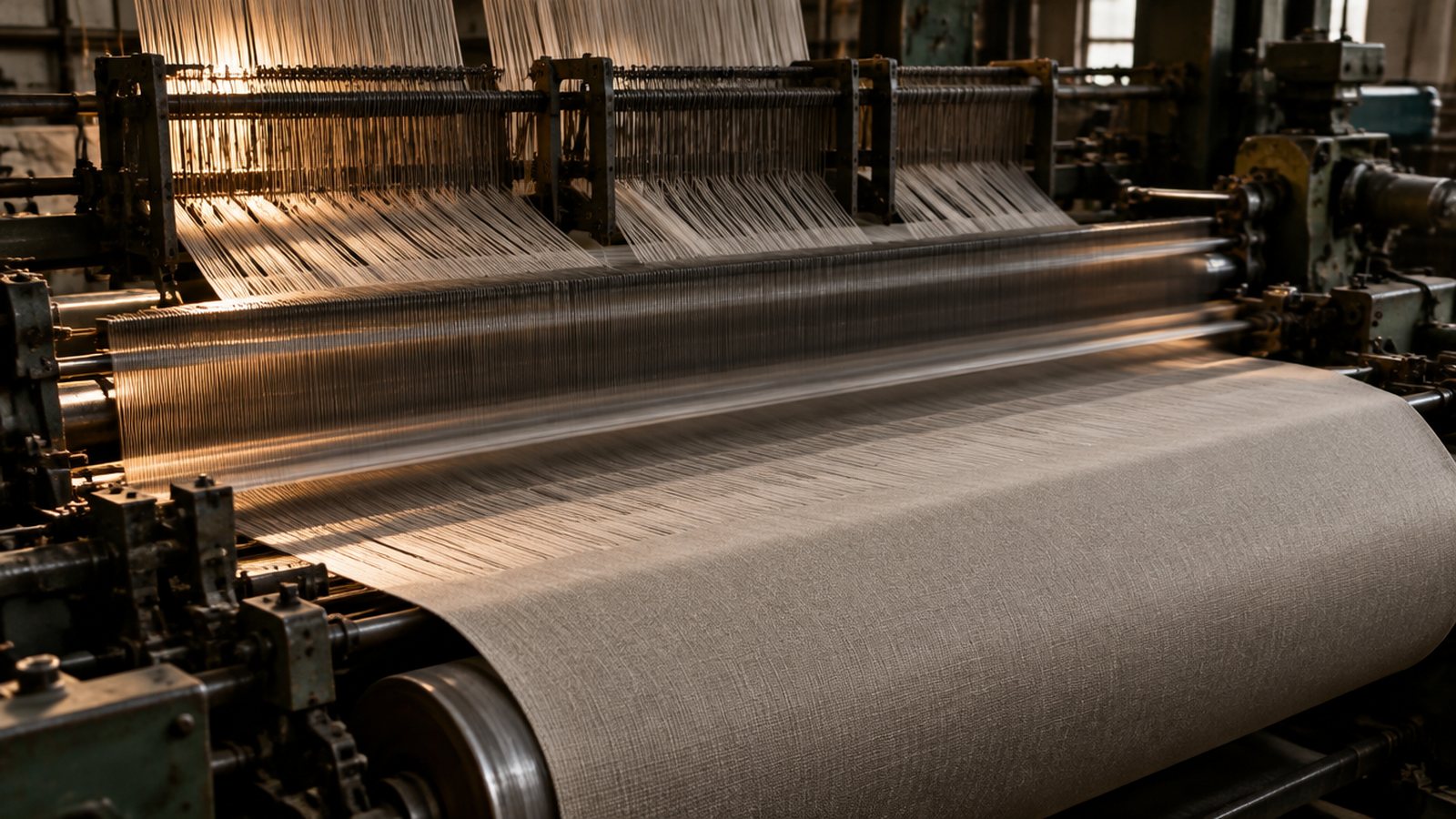
The weaving process converts warp and weft yarns into fabric through shedding, picking, and beating-up. Because weaving is a high-speed, high-stress operation, systematic quality-control checkpoints are essential to ensure consistent fabric quality, reduce loom downtime, and maintain production efficiency. These checkpoints monitor warp preparation, loom settings, fabric formation, and defect prevention. Since warp yarn performance is heavily influenced by proper sizing, the effectiveness of sizing solutions-such as Alpenol‘s flexible and high-adhesion formulations-directly impacts weaving stability and reduces defects at the loom.
What Is the Weaving Process?
Weaving is the interlacing of two sets of yarns:
- Warp yarns (lengthwise), kept under tension
- Weft yarns (crosswise), inserted through the warp shed
The basic weaving stages include:
- Shedding, opening warp yarns to form a path (shed)
- Picking, inserting the weft yarn through the shed
- Beating-up, pushing the inserted weft to fabric fell
- Take-up & Let-off, winding finished fabric and releasing warp
The quality of warp yarns-greatly influenced by the sizing process-determines how smoothly these motions occur. Warps sized with Alpenol demonstrate lower breakages, cleaner running, and reduced dusting, boosting weaving efficiency.
What Is the Machine Flow of the Weaving Process?
While machine configuration varies by loom type (air-jet, rapier, shuttle, waterjet), the general process flow is:
1. Warp Beam Loading
- Sizing beam mounted on loom
- Warp sheet threaded through drop wires, heddles, and reed
QC Focus: uniform tension, no crossed ends, no slack yarns
2. Shedding Mechanism (Loom Shedding)
- Heald frames or dobby/jacquard open warp layers
- Critical for pattern control and shed clarity
QC Focus: correct shed size, synchronized motion, stable frame movement
Warp stiffness and smoothness-enhanced by Alpenol-ensure clean shedding and reduce end whipping.
3. Picking (Weft Insertion)
Different looms use different picking technologies:
- Airjet → compressed air
- Rapier → mechanical rapier tapes
- Projectile → metal projectile
- Shuttle → traditional insertion
QC Focus: correct insertion force, nozzle timing (airjet), rapier alignment, projectile speed
4. Beating-Up
- Reed pushes the weft into fabric
- Determines fabric density and uniformity
QC Focus: proper reed alignment, consistent beat-up force
5. Take-Up & Let-Off
- Finished fabric wound continuously
- Warp tension released gradually
QC Focus: even tension, no wrinkles, no slackness
Warp yarn behavior during let-off depends heavily on sizing quality-Alpenol’s flexible films prevent brittle breaks in this zone.
6. On-Loom Fabric Inspection
- Real-time monitoring
- Catching defects early saves production time and material
Common Defects in Weaving
| Weaving Defect | Cause | Impact |
|---|---|---|
| Warp Breaks | Weak sizing, low strength, bad tension | Loom stoppages, poor efficiency |
| Weft Breaks | Weft yarn faults, insertion issues | Weft bars, lines |
| Missing Ends/Ends Out | Threading mistakes, yarn breakage | Fabric streaks |
| Double Picks | Picking faults | Uneven weft insertion |
| Floats | Heddle or jacquard faults | Defective weave structure |
| Reed Marks | Bad sizing, uneven tension | Visible vertical lines |
| Broken Picks | Irregular picking | Skipped weft area |
| Oil Stains | Lubrication issues | Permanent stain defects |
| Temple Marks | Incorrect temple pressure | Distorted fabric edges |
A significant portion of weaving defects originates from warp-related issues, which in turn trace back to sizing consistency. This is where Alpenol’s stable viscosity and strong adhesion reduce warp breaks and fabric defects.
What Are the Checkpoints in the Weaving Process?
Weaving QC checkpoints are divided into three stages:
1. Pre-Weaving Checkpoints
A. Beam Quality Check
- Even winding
- Correct tension
- No ridges or soft edges
Why it matters: Bad beam → uneven let-off → weaving instability.
B. Warp Yarn Condition
- Check hairiness, strength, moisture
- Verify sizing quality from the beam
Why it matters: Poorly sized warp → excessive breakage.
Alpenol-treated warps typically show lower dust and cleaner shed behavior.
C. Heald & Reed Preparation
- No bent dents
- Clean drop wires
- Correct denting pattern
Why it matters: Prevents reed marks, end breaks, and uneven fabric.
D. Loom Settings Verification
- Shed timing
- Picking timing (nozzle pressure in air-jet)
- Beat-up force
- Warp tension settings
Why it matters: Precise synchronization ensures smooth weaving.
E. Weft Yarn Quality Check
- Strength, count uniformity
- Cone package faults
- Moisture check
2. In-Process Weaving Checkpoints
A. Shed Clarity
- Proper separation of warp layers
- No licking ends, no warp crowding
Why it matters: Improper shed increases warp breaks and fabric defects.
Warp yarns sized with Alpenol maintain smooth, stiff-but-flexible behavior, improving shed quality.
B. Warp Tension Consistency
- Monitored continuously
- Must be uniform across warp width
Why it matters: Tension variation → broken ends, fabric barriness.
C. Weft Insertion Monitoring
- Nozzle pressure (air-jet)
- Rapier alignment (rapier)
- Projectile speed (projectile)
Why it matters: Stable weft insertion prevents double picks, broken picks, and weft bars.
D. Beat-Up Quality
- Uniform beat-up across reed width
Why it matters: Ensures consistent fabric density and appearance.
E. On-Loom Fabric Surface Check
Inspect for:
- Missing ends
- Floats
- Reed marks
- Double picks
- Weft bars
- Stains
Why it matters: Early detection limits scrap and rework.
F. Loom Efficiency Monitoring
- End-break rate
- Weft-break frequency
- Stoppages per hour
Why it matters: Efficiency is the most important KPI for weaving performance.
Sizing with Alpenol often results in lower breakages, boosting efficiency.
3. Post-Weaving Checkpoints
A. Fabric Quality Inspection
Check for:
- Uniformity
- Defects
- Density (EPI × PPI)
- Hand feel
- Color acceptance (if pre-treated yarns were used)
B. Loom Data Analysis
- Breakage patterns
- Stop causes
- Operator logs
Why it matters: Helps determine if defects originated at weaving or sizing.
C. Evaluation of Warp Performance
- Dust levels
- Film flaking
- Adhesion success
Alpenol systems typically leave less dust and fewer brittle residues behind.
Why Are These Checkpoints Important?
1. Ensure Consistent Fabric Quality
Prevents weaving defects and maintains uniformity.
2. Improve Productivity & Machine Efficiency
Lower end breaks = higher loom efficiency.
3. Reduce Cost of Production
Less rework, fewer stoppages, less waste.
4. Co-validate Sizing Quality
Weaving checkpoints reveal whether warp sizing delivered the required performance.
5. Ensure Product Standards for Apparel & woven textiles
QC checkpoints are essential when supplying to global brands and industrial buyers.
FAQs
What is the weaving process?
It is the interlacing of warp and weft yarns to form fabric.
What are the main weaving checkpoints?
Beam condition, warp tension, shed clarity, picking, beat-up, fabric inspection, and loom efficiency.
Why are weaving checkpoints important?
They reduce defects, stabilize production, and ensure fabric consistency.
What are common weaving defects?
Warp breaks, weft breaks, missing ends, floats, reed marks, and double picks.
How does sizing impact weaving quality?
Good sizing improves strength and smoothness. Alpenol formulations provide strong adhesion and reduced dusting, enabling higher loom speed and fewer warp breaks.


