

 Summarize this Article with AI
Key Highlights
- Desizing is the process of removing warp sizing agents from fabric before dyeing, printing, or finishing.
- The method of desizing depends entirely on the type of sizing agent used.
- Enzymatic desizing is the most commonly used method in cotton textiles.
- Oxidative desizing uses oxidizing chemicals to break down sizing materials.
- Hot-wash desizing relies purely on thermal solubility of the sizing agent.
Quick Navigation
- What Is Desizing in Textiles?
- Why Are Different Desizing Methods Required?
- What Are the Different Methods of Desizing?
- What Is Oxidative Desizing?
- What Is Hot-Wash Desizing?
- Why Hot-Wash Desizing Represents a Technological Shift
- Which Is the Most Sustainable Method of Desizing?
- What Are the Environmental Impacts of Traditional Desizing Methods?
- How Modern Sizing Technology Reduces the Need for Desizing
- Key Insight: Desizing Is a Consequence, Not a Necessity
- Frequently Asked Questions
Desizing is the process of removing warp sizing agents from fabric before dyeing, printing, or finishing. The main methods of desizing are:
- Enzymatic desizing
- Oxidative desizing
- Acid desizing
- Hot-wash (water) desizing
Among these, hot-wash desizing-when paired with water-soluble sizing technology-is considered the most sustainable method, as it avoids enzymes, harsh chemicals, and complex effluents.
What Is Desizing in Textiles?
Desizing is the first wet-processing step carried out on greige fabric to remove the sizing materials applied to warp yarns during weaving.
Sizing is essential for:
- Improving yarn strength
- Reducing hairiness
- Enhancing loom efficiency
However, once weaving is complete, this same sizing layer becomes a barrier to dye penetration and finishing chemistry, making desizing unavoidable-unless the sizing chemistry itself is redesigned.
To learn more about Desizing Process.
Why Are Different Desizing Methods Required?
The method of desizing depends entirely on the type of sizing agent used.
- Insoluble starch → needs enzymes
- Synthetic polymers (PVA) → need oxidative or alkaline treatment
- Water-soluble polysaccharides → need only hot water
This is why desizing is best understood not as a finishing process, but as a direct consequence of sizing choice.
What Are the Different Methods of Desizing?
1. Enzymatic Desizing
Enzymatic desizing is the most commonly used method in cotton textiles.
How it works
- Uses amylase enzymes
- Enzymes hydrolyze starch into water-soluble sugars
- Fabric is then washed to remove residues
Advantages
- Gentle on cotton fibers
- Selective action on starch
- Widely established
Limitations
- Ineffective on synthetic sizing agents
- Sensitive to pH, temperature, and time
- Adds biological load to effluent
- Increases process cost
Enzymatic desizing exists primarily because traditional starch becomes insoluble once dried on yarn.
What Is Oxidative Desizing?
Oxidative desizing uses oxidizing chemicals to break down sizing materials.
Common oxidants
- Hydrogen peroxide
- Sodium persulfate
- Hypochlorite (limited use)
Advantages
- Works on starch and some synthetic polymers
- Faster than enzymatic methods
Limitations
- Risk of fiber damage
- Reduced fabric strength
- High chemical consumption
- Increased COD in effluent
Oxidative desizing is often used when PVA or blended sizing systems are present, making it less environmentally favorable.
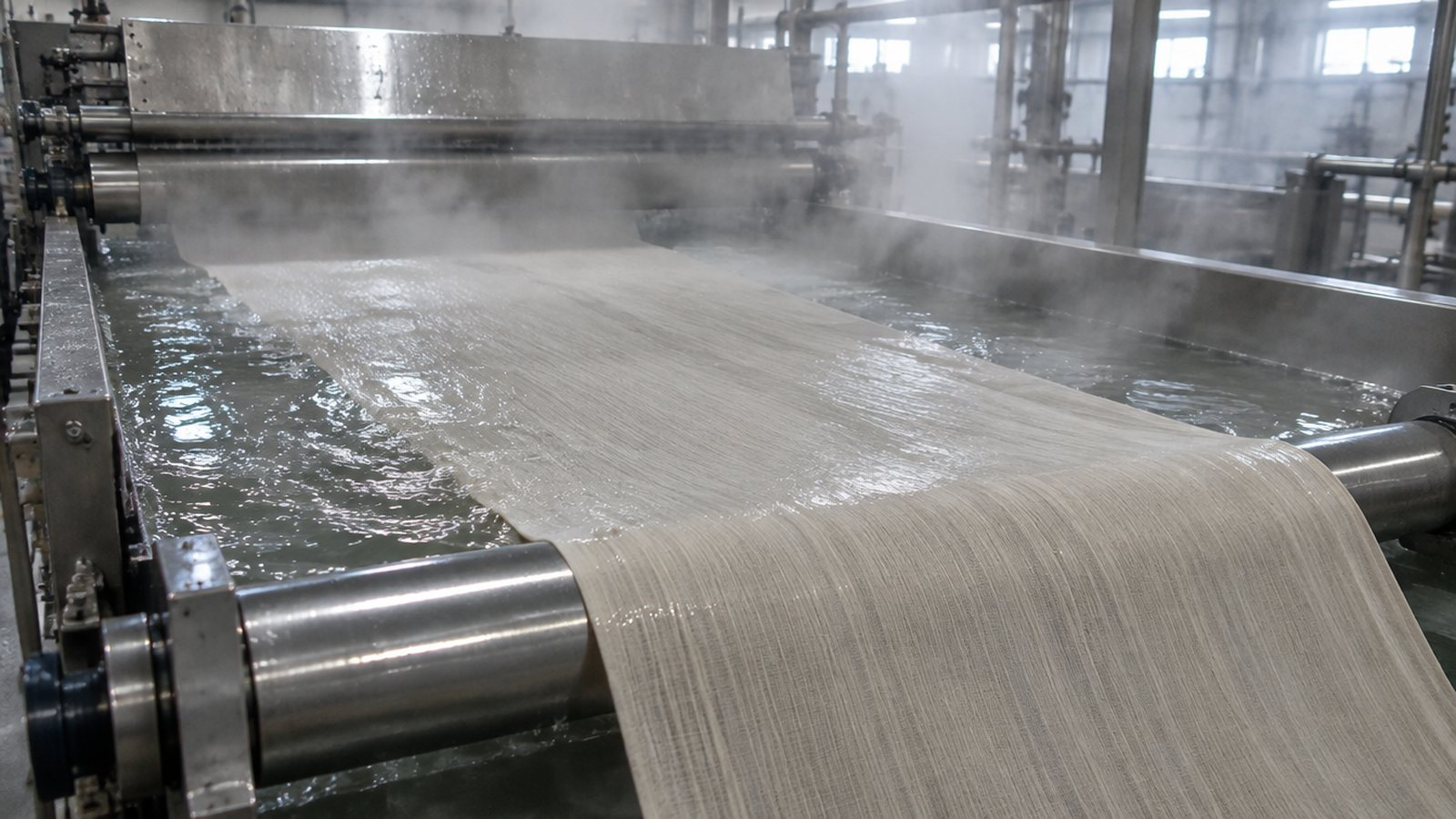
What Is Hot-Wash Desizing?
Hot-wash desizing relies purely on thermal solubility of the sizing agent. How it works
- Fabric is washed in hot water
- Size dissolves and is rinsed away
- No enzymes or chemicals required
Key requirement
This method works only when the sizing agent is fully water-soluble by design.
Why Hot-Wash Desizing Represents a Technological Shift
Traditional desizing methods exist because conventional sizing agents chemically resist water.
Modern water-soluble polysaccharide sizing systems-such as Sizaltex-type sizing technology-are engineered to:
- Form a strong film during weaving
- Dissolve completely in hot water
- Leave no chemically bound residue
Practical implication
Desizing is no longer a separate chemical process-it becomes a simple washing step.
Which Is the Most Sustainable Method of Desizing?
| Criteria | Enzymatic | Oxidative | Hot-Wash |
|---|---|---|---|
| Chemicals required | Yes | Yes | No |
| Enzymes required | Yes | No | No |
| Fiber damage risk | Low | Medium-High | Minimal |
| Effluent load | Medium | High | Very Low |
| Energy efficiency | Medium | Medium | High |
| Sustainability | Moderate | Low | Highest |
From a lifecycle perspective, hot-wash desizing is the most sustainable, but only when the sizing chemistry enables it. It’s sizing chemistry can only be enabled by using water soluble sizing agents like Sizaltex. To learn more about this process. To learn more about this sizing agent.
What Are the Environmental Impacts of Traditional Desizing Methods?
Traditional desizing releases:
- Hydrolyzed starch sugars
- Synthetic polymer residues
- Enzyme by-products
- Surfactants and stabilizers
Environmental concerns
- High COD and BOD
- Increased ETP load
- Sludge generation
- Poor biodegradability (especially PVA)
Reducing desizing complexity is one of the fastest ways to lower wet-processing environmental impact.
How Modern Sizing Technology Reduces the Need for Desizing
Instead of improving desizing chemistry, progressive mills are:
- Reducing size add-on
- Eliminating synthetic polymers
- Adopting water-soluble sizing systems
With such systems:
- Desizing enzymes become unnecessary
- Oxidative treatments are avoided
- Water consumption drops
- Effluent treatment simplifies
This represents a process-level sustainability improvement, not just a chemical substitution.
Key Insight: Desizing Is a Consequence, Not a Necessity
Desizing is required only because traditional sizing agents resist removal.
When sizing is:
- Fully water-soluble
- Non-crosslinking
- Thermally dispersible
Desizing becomes optional rather than mandatory
Frequently Asked Questions
Is enzymatic desizing mandatory for cotton fabrics?
Only when conventional starch sizing is used.
Can oxidative desizing damage fabric?
Yes, especially if not tightly controlled.
At what temperature does hot-wash desizing work?
Typically 80-90 °C, depending on fabric construction.
Does hot-wash desizing affect dyeing quality?
No, uniform size removal often improves dye consistency.
Is sustainable desizing about changing finishing or sizing?
Primarily changing sizing chemistry, not finishing chemistry.


