

 Summarize this Article with AI
Key Highlights
- Spinning is the process of converting raw fibers into yarn by aligning, drafting, and twisting fibers together to form a continuous strand suitable for weaving or knitting.
- Spinning transforms loose fibers into continuous yarns by:
- The spinning process consists of several stages:
- Carding separates and aligns fibers into a thin web.
- Multiple slivers are combined and drawn to improve:
Quick Navigation
- What Is Spinning in Textiles?
- What This Guide Covers
- What Is Spinning? Core Definition and Importance
- Step-by-Step Yarn Spinning Process
- 1. Blowroom, Opening and Cleaning
- 2. Carding, Fiber Alignment
- 3. Combing (Optional but Critical for Quality)
- 4. Drawing, Fiber Blending and Alignment
- 5. Roving, Pre-Spinning Stage
- 6. Final Spinning, Yarn Formation
- History and Cultural Significance of Spinning
- Why Twist Matters in Yarn Spinning
- Fiber Preparation and Its Impact on Yarn Quality
- Carding
- Combing
- Blending
- Types of Spinning Systems
- Ring Spinning
- Rotor (Open-End) Spinning
- Combed vs Carded Yarn
- Compact Spinning
- Comparison of Spinning Systems
- Spinning Techniques for Different Fibers
- Cotton
- Wool
- Silk
- Synthetic Fibers
- Characteristics of Spun Yarn
- Modern Spinning Machinery
- Impact of Spinning on Yarn Quality
- Future Trends in Textile Spinning (2025-2030)
- Relationship Between Spinning, Sizing, and Weaving
- FAQ’s
- Final Insight: Spinning Sets the Foundation, But Performance Depends on Preparation
What Is Spinning in Textiles?
Spinning is the process of converting raw fibers into yarn by aligning, drafting, and twisting fibers together to form a continuous strand suitable for weaving or knitting.
It is one of the most critical stages in textile manufacturing because yarn quality directly determines fabric strength, appearance, and performance on the loom.
What This Guide Covers
This pillar guide explains:
- What spinning is and why it matters
- Step-by-step yarn manufacturing process
- Types of spinning systems
- Fiber preparation techniques
- Yarn characteristics and structure
- Modern spinning machinery
- Sustainability and future trends in spinning
- How spinning impacts weaving and sizing performance
What Is Spinning? Core Definition and Importance
Spinning transforms loose fibers into continuous yarns by:
- Aligning fibers
- Drawing them into a strand
- Adding twist to bind them together
Why Spinning Is Critical
Spinning determines:
- Yarn strength
- Yarn uniformity
- Hairiness
- Fabric quality
- Loom efficiency
Poor spinning leads to weak yarns, which result in higher warp breaks during weaving-requiring stronger sizing systems such as those developed by Alpenol to compensate for variability.
Step-by-Step Yarn Spinning Process
The spinning process consists of several stages:
1. Blowroom, Opening and Cleaning
Raw fibers are opened and cleaned to remove:
- Dust
- Seeds
- Contaminants
2. Carding, Fiber Alignment
Carding separates and aligns fibers into a thin web.
Output:
- Sliver (loose fiber strand)
Carding is often called the “heart of spinning” because it determines fiber orientation.
3. Combing (Optional but Critical for Quality)
Combing removes:
- Short fibers
- Impurities
Result:
- Smoother, stronger yarn
4. Drawing, Fiber Blending and Alignment
Multiple slivers are combined and drawn to improve:
- Uniformity
- Strength
5. Roving, Pre-Spinning Stage
Fibers are slightly twisted into a roving.
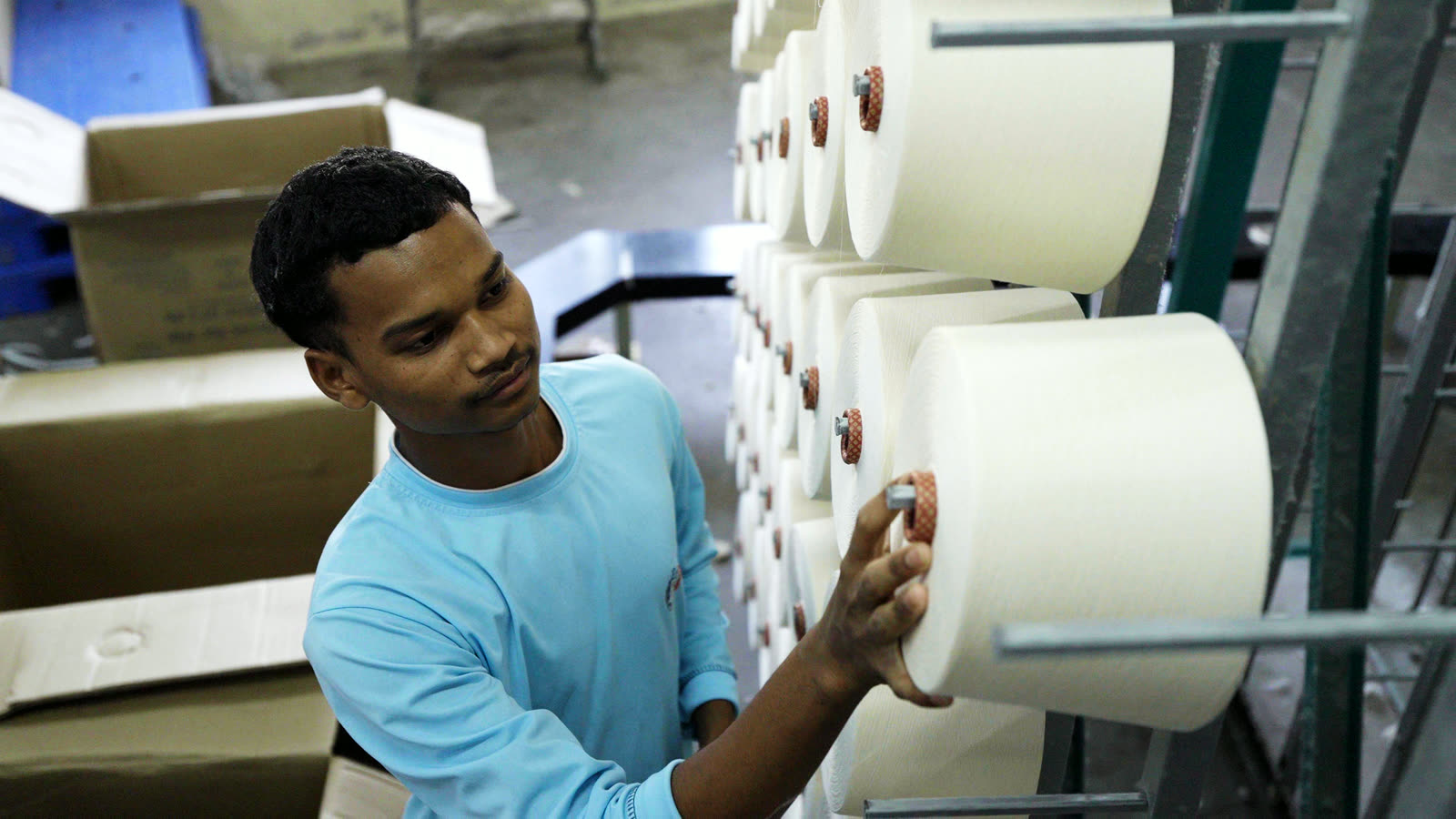
6. Final Spinning, Yarn Formation
Twist is applied to create final yarn.
Output:
- Yarn wound onto bobbins
History and Cultural Significance of Spinning
Spinning is one of the oldest textile processes.
Historical Tools
- Hand spindle
- Charkha (India)
- Spinning wheel (Europe)
Cultural Importance
- Symbol of self-reliance (e.g., Khadi movement)
- Integral to traditional textile crafts
Modern spinning evolved during the Industrial Revolution, enabling large-scale textile production.
Why Twist Matters in Yarn Spinning
Twist is the most critical parameter in yarn formation.
Functions of Twist
- Binds fibers together
- Increases yarn strength
- Controls flexibility
Twist Direction
- S-twist
- Z-twist
Impact of Twist Level
| Twist Level | Effect |
|---|---|
| Low twist | Soft but weak yarn |
| High twist | Strong but stiff yarn |
Optimal twist ensures balance between strength and flexibility, which is essential for smooth weaving and effective sizing.
Fiber Preparation and Its Impact on Yarn Quality
Fiber preparation significantly influences yarn quality.
Carding
- Basic alignment
- Suitable for general yarns
Combing
- Removes short fibers
- Produces high-quality yarn
Blending
- Combines different fibers (e.g., cotton + polyester)
Proper fiber preparation results in:
- Better yarn strength
- Reduced hairiness
- Improved uniformity
This reduces dependence on heavy sizing chemicals and allows more efficient sizing with advanced systems like Alpenol’s formulations.
Types of Spinning Systems
Ring Spinning
Characteristics
- High-quality yarn
- Strong and smooth
Applications
- Premium fabrics
Rotor (Open-End) Spinning
Characteristics
- High production speed
- Lower yarn quality
Applications
- Denim
- Towels
Combed vs Carded Yarn
| Type | Quality | Cost |
|---|---|---|
| Combed | High | Higher |
| Carded | Moderate | Lower |
Compact Spinning
- Reduces yarn hairiness
- Improves strength
Comparison of Spinning Systems
| System | Quality | Speed | Cost |
|---|---|---|---|
| Ring | High | Low | High |
| Rotor | Moderate | High | Low |
| Compact | Very high | Moderate | Higher |
Spinning Techniques for Different Fibers
Cotton
- Requires strong twist
- Needs good fiber alignment
Wool
- Lower twist
- Maintains softness
Silk
- Minimal processing
- Naturally continuous fiber
Synthetic Fibers
- Controlled extrusion
- Uniform structure
Blended yarns require careful spinning to ensure compatibility, which affects subsequent sizing performance and loom behavior.
Characteristics of Spun Yarn
Spun yarn properties include:
- Strength
- Evenness
- Hairiness
- Twist level
- Elasticity
These properties directly influence:
- Fabric quality
- Dyeing performance
- Weaving efficiency
Modern Spinning Machinery
Modern spinning mills use advanced machinery:
- Blowroom lines
- Carding machines
- Combing machines
- Draw frames
- Ring frames
- Rotor spinning machines
Automation has improved:
- Production efficiency
- Yarn consistency
- Quality control
Impact of Spinning on Yarn Quality
Spinning determines:
- Yarn strength
- Uniformity
- Surface smoothness
- Hairiness
Poor Spinning Results In:
- Weak yarn
- Frequent breakage
- Fabric defects
Good Spinning Results In:
- Strong yarn
- Smooth weaving
- High-quality fabric
Even with good spinning, yarn still requires effective sizing (where Alpenol plays a critical role) to withstand weaving stress.
Future Trends in Textile Spinning (2025-2030)
Automation
- AI-based quality control
- Smart spinning systems
Sustainability
- Recycled fibers
- Energy-efficient machinery
New Fiber Blends
- Bio-based fibers
- Performance blends
As spinning evolves, downstream processes like sizing must also adapt-Alpenol’s advanced sizing technologies align with these modern spinning developments.
Relationship Between Spinning, Sizing, and Weaving
Spinning quality directly affects:
- Warp strength
- Yarn behavior during weaving
However, even high-quality yarn requires sizing to:
- Improve abrasion resistance
- Reduce hairiness
- Enhance loom efficiency
Advanced sizing technologies such as Alpenol’s compound systems bridge the gap between spinning variability and weaving performance.
FAQ’s
What is spinning in textiles?
Spinning is the process of converting fibers into yarn through twisting and alignment.
What are the main types of spinning?
Ring spinning, rotor spinning, and compact spinning.
Why is twist important in yarn?
Twist binds fibers together and determines yarn strength and flexibility.
How does spinning affect fabric quality?
Spinning determines yarn strength, uniformity, and performance during weaving.
How does Alpenol relate to spinning?
While spinning creates yarn, Alpenol enhances its performance during weaving by providing advanced sizing solutions that compensate for yarn variability and improve loom efficiency.
Final Insight: Spinning Sets the Foundation, But Performance Depends on Preparation
Spinning defines the quality of yarn, but successful fabric production depends on how well that yarn performs during weaving.
That performance is shaped by:
- Yarn structure (spinning)
- Warp preparation
- Sizing quality
By combining high-quality spinning with advanced sizing technologies such as Alpenol’s compound systems, textile mills can achieve:
- Better loom efficiency
- Reduced yarn breakage
- Superior fabric quality


