

 Summarize this Article with AI
Key Highlights
- Yarn sizing is the process of applying a protective film to warp yarns before weaving to enhance strength, abrasion resistance, and weaving efficiency.
- A yarn is a continuous strand of textile fibers or filaments suitable for knitting, weaving, braiding, or sewing.
- Yarns are broadly classified into the following categories:
- Continuous strands, either mono or multi-filament.
- Filament yarns given crimp/bulk for stretch or softness.
Quick Navigation
- What Is a Yarn?
- What Are the Different Types of Yarns Produced?
- 1. Spun Yarns (Staple Fiber Yarns)
- 2. Filament Yarns
- 3. Textured Yarns
- 4. Fancy Yarns
- 5. Technical/Industrial Yarns
- Why Is Sizing Important in Weaving?
- Which Yarns Require Sizing?
- 1. Yarns That Definitely Require Sizing (High Priority)
- 2. Yarns That Sometimes Require Sizing (Conditional)
- 3. Yarns That Usually Do NOT Require Sizing
- Why Do These Yarns Require Sizing?
- Why Do Some Yarns Need Sizing While Others Don’t?
- Yarns That Need Sizing
- Yarns That Do Not Need Sizing
- Factors Influencing Sizing Need
- How Does Sizing Improve Weaving Performance and Final Fabric Quality?
- What Are Common Sizing Agents for Cotton, Polyester & Blends?
- When Is Sizing Necessary for Spun Yarns vs Filament Yarns?
- Sizing Requirements for Warp Yarns Compared to Weft Yarns
- Do Yarns Used in woven textiles Require Sizing?
- Sized vs Unsized Yarn: Performance Differences
- FAQ
Yarn sizing is the process of applying a protective film to warp yarns before weaving to enhance strength, abrasion resistance, and weaving efficiency. Not all yarns require sizing, only those prone to hairiness, abrasion, and breakage under loom tension. Spun yarns (cotton, viscose, polyester staple) usually need sizing, while smooth, continuous filament yarns (polyester filament, nylon filament) often do not. Proper sizing improves machine efficiency, fabric quality, and cost control. Advanced sizing systems like Alpenol make warp yarns smoother, stronger, and more stable at high loom speeds while requiring lower size add-on.
What Is a Yarn?
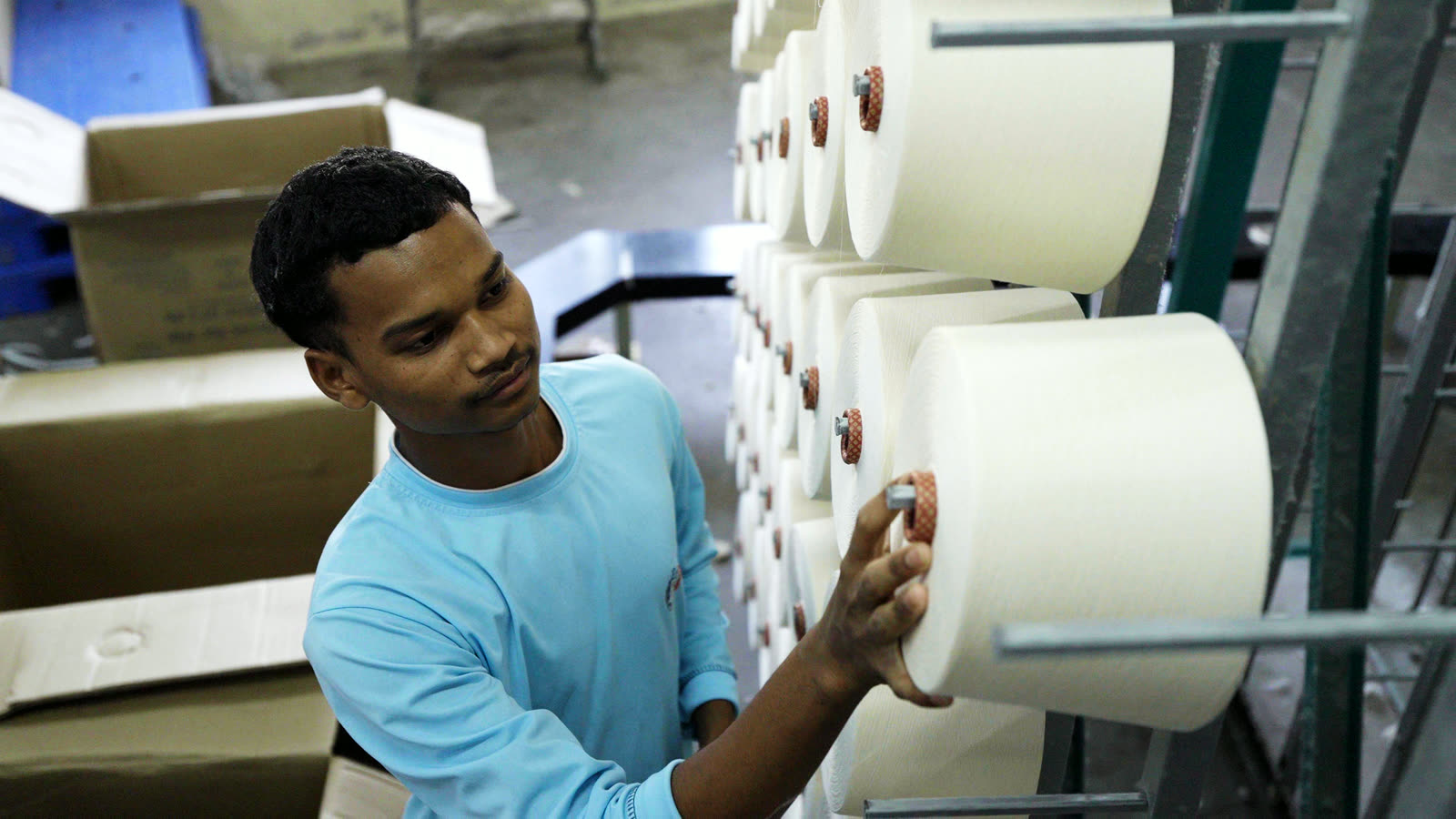
A yarn is a continuous strand of textile fibers or filaments suitable for knitting, weaving, braiding, or sewing. Yarns vary in:
- Fiber origin (natural, synthetic, regenerated)
- Structure (spun, filament, textured, fancy)
- Twist level
- Count/denier
- Surface characteristics
These factors govern whether a yarn needs sizing before entering the weaving process.
What Are the Different Types of Yarns Produced?
Yarns are broadly classified into the following categories:
1. Spun Yarns (Staple Fiber Yarns)
Made from short fibers twisted together. Examples: cotton, viscose, wool, polyester staple, acrylic.
2. Filament Yarns
Continuous strands, either mono or multi-filament. Examples: polyester filament, nylon filament, silk.
3. Textured Yarns
Filament yarns given crimp/bulk for stretch or softness. Examples: textured polyester, air-jet textured yarns.
4. Fancy Yarns
Slub, boucle, chenille, neppy yarns, decorative structures.
5. Technical/Industrial Yarns
Glass fiber, aramid (Kevlar/Nomex), carbon fiber, polypropylene industrial yarns.
Each yarn type interacts differently with loom stress, influencing the need for sizing. To learn more about different types of yarns.
Why Is Sizing Important in Weaving?
Sizing improves warp yarn performance by:
- Increasing tensile strength
- Reducing hairiness and dust
- Lowering abrasion at heddles and reeds
- Minimizing end-breaks during shedding and beating-up
- Enhancing weaving efficiency
In woven production, especially on high-speed air-jet and rapier looms, warp yarns face intense mechanical stress. A uniform sizing film such as those formed by Alpenol’s adhesive and flexible chemistries, helps yarns withstand these forces and run smoother throughout the beam.
To learn more about sizing.
Which Yarns Require Sizing?
1. Yarns That Definitely Require Sizing (High Priority)
A. Cotton Spun Yarns
Reasons:
- High hairiness
- Medium strength
- High abrasion during weaving
Applications: denim, shirting, sheeting, towelling.
Why sizing is essential: Alpenol’s systems reduce hairiness and strengthen warp, improving loom efficiency.
B. Polyester-Cotton (PC) and Polyester-Viscose (PV) Blends
Reasons:
- Synthetic portion adds smoothness, but cotton/viscose still swells
- Blends show uneven wetting without sizing
Applications: shirting, suiting, industrial fabric.
C. Viscose & Modal Spun Yarns
Reasons:
- Weak when wet
- High swelling tendency
- High friction
Applications: dress materials, flowy fabrics, home textiles.
D. Woolen & Acrylic Spun Yarns (in weaving)
Reasons:
- Loose structure
- High bulk and fiber movement
Applications: blankets, upholstery fabrics.
2. Yarns That Sometimes Require Sizing (Conditional)
A. Filament Polyester (FDY/POY/DTY) for High-Speed Weaving
Reasons (conditional):
- Smooth surface usually sufficient
- But fine deniers (20D – 75D) may break under tension
- High-speed air-jet weaving benefits from light sizing
Applications: sarees, curtains, lining fabrics, lightweight dress materials.
B. Filament Nylon
Rarely needed, except:
- Microfilament constructions
- High-drape fabrics requiring low-fuzz performance
C. woven textiles Yarns (glass, aramid, carbon)
Some require special-purpose sizing (not textile sizing), such as coupling agents or polymer coatings.
Applications:
- Composites
- Filtration
- Fire-resistant fabrics
3. Yarns That Usually Do NOT Require Sizing
A. Knitting Yarns
Knitted yarns are NOT sized. Reasons:
- Knitting requires flexibility, not stiffness
- Sized yarn becomes too rigid
- No warp tension or reed abrasion in knitting
B. Most Filament Yarns
Examples:
- Polyester filament
- Nylon filament
- Silk
Reasons:
- Continuous, smooth
- High strength
- Low hairiness
- Good abrasion resistance
Why Do These Yarns Require Sizing?
Spun yarns have:
- Short fibers protruding (hairiness)
- Increased friction
- Lower tensile strength
- Greater abrasion susceptibility
Sizing compensates by:
- Binding protruding fibers
- Forming a protective film
- Increasing yarn stiffness to withstand loom dynamics
- Improving uniformity
Alpenol’s modern formulations create flexible, abrasion-resistant films that reduce brittle behavior and dusting, especially on cotton and viscose warps.
Why Do Some Yarns Need Sizing While Others Don’t?
Yarns That Need Sizing
- Warp yarns in weaving are most commonly sized because they undergo high
tension and friction on the loom. Sizing helps prevent breakage and reduces fuzz, making the weaving process smoother.
- Yarns with low twist, high hairiness, or made from delicate fibers (like silk or
certain blends) often require sizing to maintain integrity and improve handling.
- Filament yarns or elastic yarns may also be sized to control shrinkage and
enhance dimensional stability.
Yarns That Do Not Need Sizing
- Weft yarns in many cases do not need sizing because they experience less
tension and abrasion during weaving.
- High-twist, smooth, or tightly spun yarns are generally strong enough to
withstand processing without additional coating.
- Yarns used for knitting or crafts (rather than industrial weaving) often do not
require sizing, as their end use does not subject them to the same stresses.
Factors Influencing Sizing Need
- Fiber type (cotton, wool, synthetic, blends)
- Twist level (higher twist yarns are less likely to need sizing)
- Yarn structure (filament vs. staple, singles vs. plied)
- End application (industrial weaving vs. handcrafts)
How Does Sizing Improve Weaving Performance and Final Fabric Quality?
1. Reduces Warp Breakages
Major cause of loom downtime.
2. Improves Abrasion Resistance
Yarn withstands healds, reeds, and temples better.
3. Enhances Smoothness of Fabric
Less hairiness = cleaner surface = better appearance.
4. Improves Efficiency and Lower Production Costs
More picks per minute with fewer stoppages.
Sizing’s contribution is especially visible in critical warp-dominant fabrics like denim, poplin, shirting, and technical wovens.
What Are Common Sizing Agents for Cotton, Polyester & Blends?
| Sizing Agent | Pros | Cons |
|---|---|---|
| Starch | Cheap, film-forming | Brittle at high speeds |
| Modified Starch | Better adhesion, flexible | Costlier |
| PVA | Very strong film | Poor biodegradability |
| Acrylic Polymers | Flexible, strong | Higher cost |
| Blended Systems | Balance of properties | Complex preparation |
Alpenol’s balanced, modern systems minimize add-on requirements and reduce viscosity drift, ensuring predictable warp behavior shift after shift.
When Is Sizing Necessary for Spun Yarns vs Filament Yarns?
Spun Yarns → ALWAYS for weaving
Cotton, viscose, wool, acrylic, PC, PV blends.
Filament Yarns → SOMETIMES
Microfilament polyester, nylon, and very fine deniers used in high-speed weaving.
To learn more about spun yarns and filament yarns.
Sizing Requirements for Warp Yarns Compared to Weft Yarns
Warp Yarns → Require Sizing
Because they undergo:
- Shedding
- Tension
- Abrasion
- Beating-up
Weft Yarns → Rarely Sized
Reasons:
- Minimal tension
- Not subject to the heald or reed movement
This is why warp beams are prepared with sizing, while weft yarns usually remain untreated.
Do Yarns Used in woven textiles Require Sizing?
YES, IF woven with high stress
Examples:
- Industrial polyester
- Polypropylene tape yarns
- Glass fiber weaving
NO, IF already coated or part of a composite
Aramids, carbon fibers, basalt fibers may use specialized coupling agents instead of textile size.
Sized vs Unsized Yarn: Performance Differences
| Property | Sized Yarn | Unsized Yarn |
|---|---|---|
| Strength | Higher | Lower |
| Abrasion Resistance | High | Poor |
| Hairiness | Reduced | High |
| Loom Efficiency | Higher | Lower |
| Dust Generation | Lower | Higher |
| Fabric Quality | Cleaner surface | Rough, more defects |
Sizing gives the warp yarn structure and stability to handle demanding high-speed weaving operations.
FAQ
Which yarns require sizing?
Mainly spun yarns: cotton, viscose, PC/PV blends, wool blends, staple polyester.
Do filament yarns need sizing?
Not usually only for fine deniers or technical weaving.
Are knitting yarns sized?
No, because sizing reduces flexibility and knitting involves low tension.
Why do spun yarns need sizing?
To reduce hairiness, improve strength, and reduce abrasion during weaving.
Does sizing improve fabric quality?
Yes, smoother surface, fewer defects, and stronger fabrics.


