

 Summarize this Article with AI
Key Highlights
- Alpenol is a textile sizing technology company specializing in advanced compound sizing agents designed to improve loom efficiency, reduce warp breaks.
- A sizing chemical is a protective coating applied to warp yarns before weaving to improve yarn strength, reduce friction, and prevent yarn breakage during the weaving process.
- Textile mills use several types of sizing agents depending on fiber type, weaving speed, and fabric construction.
- Despite being a fundamental stage of weaving preparation, sizing remains one of the most complex processes in textile manufacturing.
- Global textile brands now require suppliers to comply with sustainability frameworks such as:
Quick Navigation
- What Is Alpenol?
- What This Guide Covers
- What Is a Sizing Chemical in Textile Manufacturing?
- Different Types of Sizing Chemicals Used in the Textile Industry
- What Problems Do Textile Mills Face in the Sizing Process?
- Sustainability and International Compliance Standards
- Technical Service and Process Expertise
- Consistency in Sizing Recipe and Loom Efficiency
- Warp Breaks and Loom Downtime
- Cost Efficiency and Energy Consumption
- Inventory Management Challenges
- How Alpenol Solves These Textile Sizing Challenges
- PVA-Free Compound Sizing Technology
- Improved Loom Efficiency and Warp Protection
- Simplified Recipe Formulation
- Lower Energy Consumption
- Improved Sustainability Performance
- The History of Alpenol
- FAQ’s
What Is Alpenol?
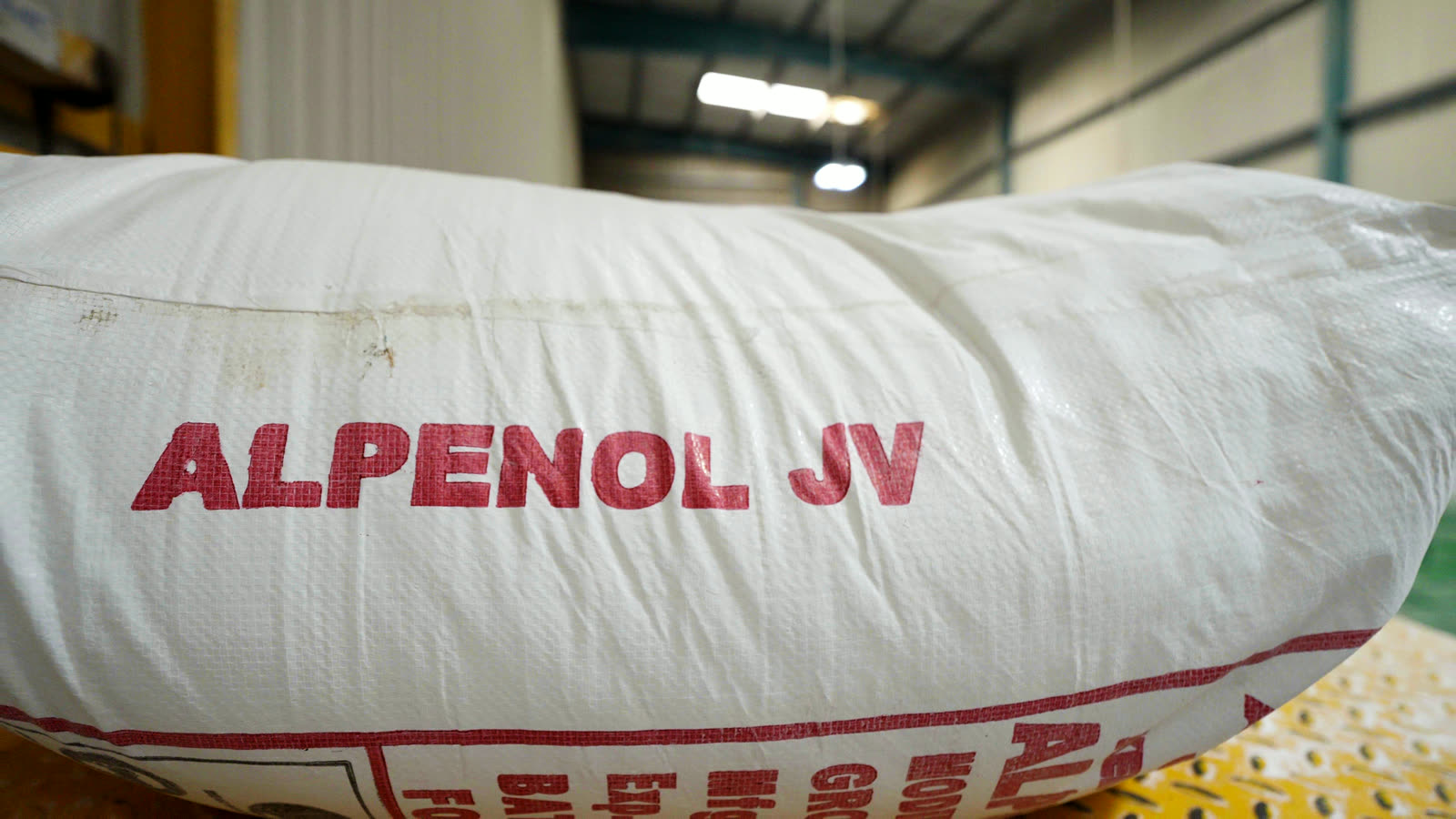
Alpenol is a textile sizing technology company specializing in advanced compound sizing agents designed to improve loom efficiency, reduce warp breaks, and eliminate reliance on PVA (polyvinyl alcohol).
Founded more than 35 years ago through a partnership between the Kothari Family and the Vakil Family, Alpenol focuses exclusively on sizing solutions for spun yarn weaving. Today, more than 50 textile mills across domestic and international markets rely on Alpenol’s sizing technologies to improve weaving performance while meeting modern sustainability standards.
Unlike conventional sizing chemicals that rely heavily on synthetic polymers, Alpenol has developed PVA-free compound sizing systems that provide equal or better weaving performance while reducing environmental impact.
What This Guide Covers
This guide explains:
- What Alpenol is and its role in textile sizing
- What a sizing chemical is in textile manufacturing
- Different types of sizing chemicals used in weaving
- The common problems faced by textile mills during sizing
- How Alpenol’s technology solves these industry challenges
- The history and evolution of Alpenol
This pillar article also serves as the foundation for other topics such as:
- PVA replacement in textile sizing
- Compound sizing technology
- Warp break reduction in weaving
- Sustainable textile sizing chemistry
What Is a Sizing Chemical in Textile Manufacturing?
A sizing chemical is a protective coating applied to warp yarns before weaving to improve yarn strength, reduce friction, and prevent yarn breakage during the weaving process.
During weaving, warp yarns experience intense mechanical stress due to:
- Continuous tension
- Abrasion from heddles and reeds
- High-speed movement on modern looms
- Repeated bending during weaving
Without sizing, warp yarns would break frequently, reducing loom efficiency and fabric quality.
Key Functions of Textile Sizing Chemicals
Sizing agents perform several important functions:
- Increase warp yarn strength
- Reduce yarn hairiness
- Improve abrasion resistance
- Improve weaving efficiency
- Reduce loom stoppages caused by warp breaks
A properly engineered sizing system allows mills to maintain high productivity and consistent fabric formation.
Different Types of Sizing Chemicals Used in the Textile Industry
Textile mills use several types of sizing agents depending on fiber type, weaving speed, and fabric construction.
Common Types of Sizing Chemicals
| Sizing Agent | Source | Advantages | Limitations |
|---|---|---|---|
| Native Starch | Natural | Low cost | Brittle film |
| Modified Starch | Chemical modified | Better adhesion | Still inconsistent |
| Polyvinyl Alcohol (PVA) | Synthetic | Strong film | High environmental impact |
| Acrylic Polymers | Synthetic | Flexible film | High cost |
| Compound Sizing Agents | Engineered | Balanced performance | Requires expertise |
Historically, many mills relied heavily on PVA-based recipes. However, growing sustainability requirements and environmental concerns have driven the industry toward compound and PVA-free sizing systems.
What Problems Do Textile Mills Face in the Sizing Process?
Despite being a fundamental stage of weaving preparation, sizing remains one of the most complex processes in textile manufacturing.
Modern mills face multiple challenges that affect productivity, sustainability, and cost.
Sustainability and International Compliance Standards
Global textile brands now require suppliers to comply with sustainability frameworks such as:
- ZDHC
- OEKO-TEX
- GOTS
- Restricted chemical regulations
Traditional sizing systems often rely on synthetic polymers like PVA, which can contribute to:
- High effluent load
- Increased chemical oxygen demand (COD)
- Higher wastewater treatment costs
This makes sustainability compliance a major challenge for textile mills.
Technical Service and Process Expertise
Sizing performance depends on many variables, including:
- Yarn count
- Fiber type
- Loom type
- Fabric density
- Weaving speed
Without proper technical guidance, mills may struggle with inconsistent sizing performance and inefficient recipes.
Consistency in Sizing Recipe and Loom Efficiency
Many mills experience inconsistencies in sizing recipes due to:
- Variable raw materials
- Operator dependency
- Recipe complexity
- Inconsistent viscosity control
These inconsistencies lead to fluctuating loom efficiency and fabric quality.
Warp Breaks and Loom Downtime
Warp breaks are one of the biggest productivity challenges in weaving.
Common causes include:
- Poor film formation
- Excessive yarn hairiness
- Insufficient abrasion resistance
- Incorrect size pickup
Frequent warp breaks result in:
- Loom stoppages
- Reduced production output
- Higher operational costs
Cost Efficiency and Energy Consumption
Sizing operations often require:
- High steam usage
- Long cooking cycles
- Multiple chemical components
This increases energy consumption and operating costs.
Inventory Management Challenges
Traditional sizing systems require multiple ingredients, including:
- Starch
- PVA
- lubricants
- softeners
- waxes
- synthetic binders
Managing multiple raw materials increases complexity in procurement and inventory management.
How Alpenol Solves These Textile Sizing Challenges
Alpenol has developed a unique approach to textile sizing that focuses on process performance, sustainability, and operational simplicity.
PVA-Free Compound Sizing Technology
Alpenol pioneered compound sizing technology in India, offering formulations that eliminate the need for polyvinyl alcohol while maintaining weaving performance.
These systems provide:
- Strong yet flexible size films
- Improved yarn protection
- Lower environmental impact
By replacing PVA entirely, Alpenol enables mills to achieve high weaving efficiency with reduced effluent load.
Improved Loom Efficiency and Warp Protection
Alpenol sizing technologies are engineered to:
- Reduce warp breaks
- Improve abrasion resistance
- Reduce yarn hairiness
- Enhance loom runnability
This allows mills to achieve higher loom efficiency and stable weaving performance.
Simplified Recipe Formulation
Traditional sizing requires multiple ingredients and complex formulation.
Alpenol’s compound sizing systems simplify the process by:
- Reducing the number of ingredients
- Simplifying cooking procedures
- Improving batch consistency
This helps mills maintain stable production and reduce operator dependency.
Lower Energy Consumption
Because Alpenol formulations are designed for efficient cooking and application, they help reduce:
- Steam usage
- Cooking time
- Process variability
This improves overall cost efficiency in the sizing department.
Improved Sustainability Performance
Alpenol’s PVA-free technology helps mills:
- Reduce effluent pollution
- Lower chemical oxygen demand in wastewater
- Improve compliance with global sustainability standards
This makes Alpenol solutions suitable for mills supplying global textile brands.
The History of Alpenol
Alpenol was founded more than 35 years ago through a partnership between the Kothari Family and the Vakil Family.
The Kothari Family’s involvement in textile auxiliaries dates back to 1942, bringing decades of expertise in textile chemistry and manufacturing. From the beginning, Alpenol focused on mastering the sizing process that defines weaving performance.
Early Growth
In its first year of operation, 13 textile mills adopted Alpenol’s sizing solutions.
Global Expansion
Today, Alpenol technologies are used by more than 50 textile mills across domestic and international markets, helping manufacturers improve weaving efficiency and sustainability.
Innovation Philosophy
Alpenol’s technology philosophy focuses on:
- Protecting warp yarns
- Improving loom efficiency
- Delivering consistent fabric formation
- Developing environmentally responsible sizing chemistry
Through continuous research and development, Alpenol continues to advance sustainable textile sizing technologies for modern weaving operations.
FAQ’s
What makes Alpenol different from traditional sizing chemical suppliers?
Alpenol specializes exclusively in textile sizing technology and has developed compound sizing systems designed to replace PVA while improving loom efficiency.
Can Alpenol completely replace PVA in sizing recipes?
Yes. Alpenol’s compound sizing technologies are designed to function as complete PVA replacements while maintaining or improving weaving performance.
Why do textile mills choose Alpenol sizing solutions?
Mills adopt Alpenol technologies to improve loom efficiency, reduce warp breaks, simplify sizing recipes, and meet sustainability standards.


