

 Summarize this Article with AI
Key Highlights
- Weaving is the process of interlacing two sets of yarns-warp (lengthwise) and weft (crosswise)-at right angles to form fabric.
- Warp preparation is critical before weaving begins.
- Modern weaving relies on power looms, where efficient warp protection using advanced sizing systems like Alpenol’s becomes essential.
- Both systems require highly stable warp yarns, making sizing quality critical.
- Sizing chemistry (such as Alpenol’s formulations) enhances these properties by improving yarn cohesion and reducing hairiness.
Quick Navigation
- What Is Weaving in Textiles?
- What This Guide Covers
- What Is Weaving? Basic Definition and Key Terms
- Fundamental Weave Structures: Plain, Twill, Satin
- Plain Weave
- Twill Weave
- Satin Weave
- Comparison of Weave Structures
- How to Set Up a Warp on a Loom
- Handloom vs Power Loom
- Handloom
- Power Loom
- Jacquard vs Dobby Weaving Systems
- Dobby System
- Jacquard System
- Yarn Properties and Their Impact on Fabric
- Troubleshooting Common Weaving Problems
- Weaving vs Knitting
- Loom Types and Their Impact on Production
- CAM Loom
- Crank Loom
- ESOP (Electronic Shedding)
- Jacquard Loom
- Characteristics of Woven Fabrics
- Sustainable Weaving Practices
- Environmental Impact of Textile Weaving
- Why Sizing Is Critical in Weaving
- Final Insight: Weaving Performance Begins Before the Loom
- FAQ’s
What Is Weaving in Textiles?
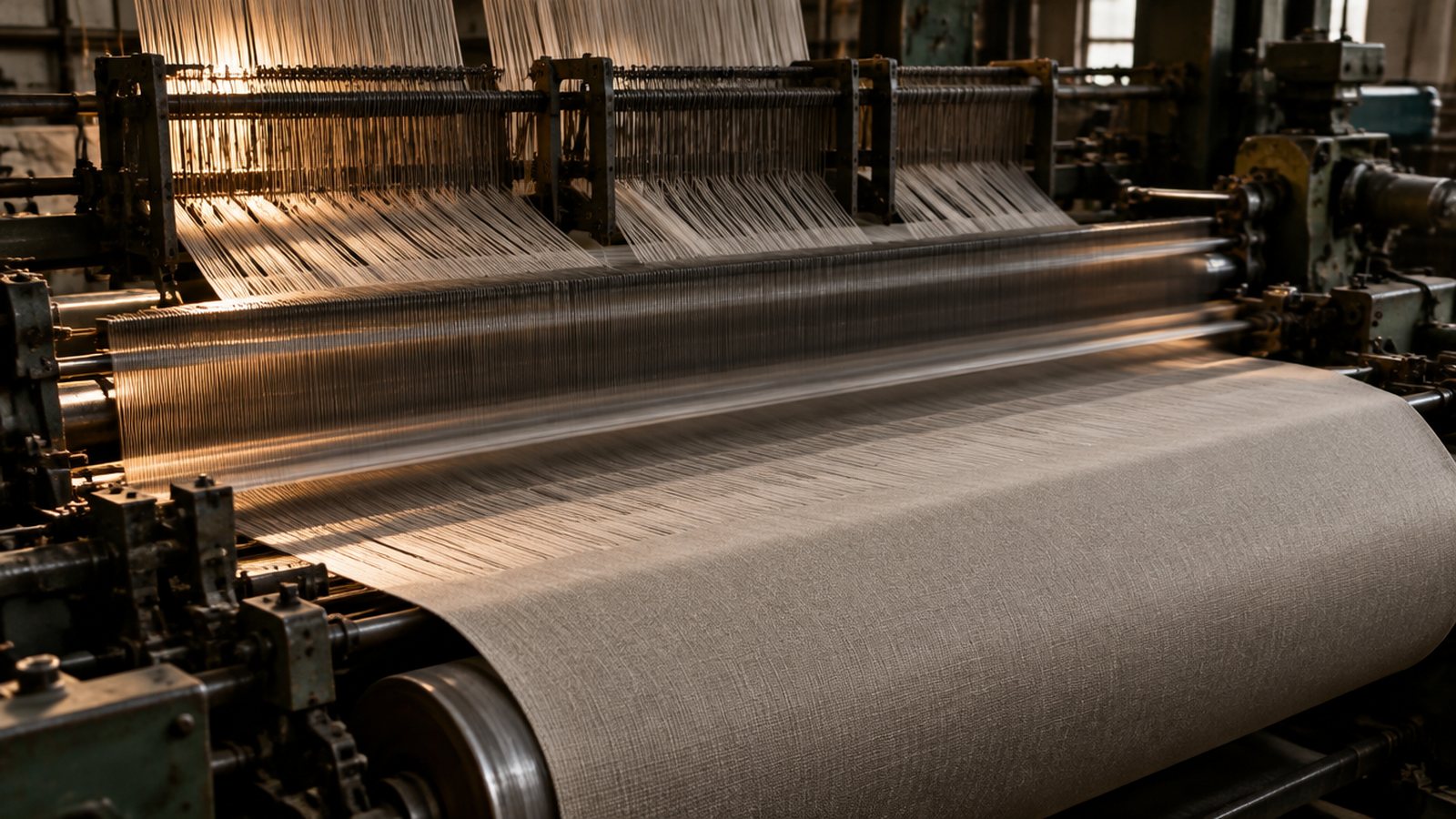
Weaving is the process of interlacing two sets of yarns-warp (lengthwise) and weft (crosswise)-at right angles to form fabric. It is one of the oldest and most widely used textile manufacturing methods, responsible for producing durable fabrics used in apparel, home textiles, and industrial applications.
Weaving performance depends heavily on yarn quality, warp preparation, and especially sizing, where advanced technologies such as those developed by Alpenol help ensure smooth loom operation and high fabric quality.
What This Guide Covers
This pillar guide explains:
- Basic weaving concepts and terminology
- Fundamental weave structures (plain, twill, satin)
- Loom setup and warp calculation
- Handloom vs power loom
- Jacquard and dobby weaving systems
- Yarn properties affecting fabric behavior
- Troubleshooting weaving problems
- Sustainability in weaving
- Loom types and their impact on production
- Woven vs knitted fabrics
What Is Weaving? Basic Definition and Key Terms
Weaving involves two primary yarn systems:
- Warp yarns → run lengthwise and are held under tension
- Weft yarns → inserted across warp yarns
Key Weaving Terms
- Warp beam → holds warp yarns
- Heddles → control yarn movement
- Reed → beats weft into place
- Selvedge → fabric edge
- Pick → one insertion of weft yarn
Weaving matters because it produces fabrics with:
- High strength
- Dimensional stability
- Structured appearance
Proper warp preparation and sizing (where Alpenol plays a critical role) ensures smooth weaving and minimal yarn breakage.
Fundamental Weave Structures: Plain, Twill, Satin
Plain Weave
- Simplest structure (over-under pattern)
- High durability
- Balanced fabric
Applications
- Shirts
- Bedsheets
Twill Weave
- Diagonal pattern
- Better drape
- Higher flexibility
Applications
- Denim
- Workwear
Satin Weave
- Smooth surface
- High luster
- Lower abrasion resistance
Applications
- Luxury fabrics
- Evening wear
Comparison of Weave Structures
| Property | Plain | Twill | Satin |
|---|---|---|---|
| Durability | High | Medium | Low |
| Appearance | Simple | Textured | Smooth |
| Production ease | Easy | Moderate | Complex |
How to Set Up a Warp on a Loom
Warp preparation is critical before weaving begins.
Steps in Warp Setup
- Yarn selection
- Warping (arranging yarns)
- Sizing (critical step)
- Drawing-in (gaiting)
- Beam mounting
Warp Length Calculation
Warp length depends on:
- Fabric length
- Loom waste
- Shrinkage allowance
- Take-up percentage
Yarn Requirement Formula
Total yarn = (warp ends × warp length)
Proper sizing-especially using consistent formulations like Alpenol’s compound sizing systems-ensures uniform warp tension and smooth weaving performance.
Handloom vs Power Loom
Handloom
Advantages
- Low energy usage
- Flexible designs
- Artisan production
Limitations
- Low speed
- Labor-intensive
Power Loom
Advantages
- High production speed
- Consistent quality
- Scalable manufacturing
Limitations
- Higher energy consumption
Modern weaving relies on power looms, where efficient warp protection using advanced sizing systems like Alpenol’s becomes essential.
Jacquard vs Dobby Weaving Systems
Dobby System
- Controls small patterns
- Limited harness control
Jacquard System
- Individual yarn control
- Complex patterns
When to Use Each
| System | Use Case |
|---|---|
| Dobby | Simple geometric patterns |
| Jacquard | Complex designs |
Both systems require highly stable warp yarns, making sizing quality critical.
Yarn Properties and Their Impact on Fabric
Yarn Twist
- Higher twist → stronger yarn
- Lower twist → softer fabric
Yarn Count
- Fine yarn → lightweight fabric
- Coarse yarn → heavier fabric
Fiber Type
- Cotton → breathable
- Polyester → durable
- Viscose → smooth
Sizing chemistry (such as Alpenol’s formulations) enhances these properties by improving yarn cohesion and reducing hairiness.
Troubleshooting Common Weaving Problems
Uneven Tension
Causes:
- Poor warping
- Inconsistent sizing
Solution:
- Ensure uniform sizing pickup (Alpenol helps maintain consistency)
Poor Selvedges
Causes:
- Incorrect tension
- Improper weft insertion
Warp Breaks
Causes:
- Weak yarn
- Poor sizing
Solution:
- Use high-performance sizing systems like Alpenol
Weaving vs Knitting
| Feature | Weaving | Knitting |
|---|---|---|
| Structure | Interlaced yarns | Looped yarns |
| Strength | High | Moderate |
| Stretch | Low | High |
| Applications | Wovens, denim | T-shirts, sportswear |
Weaving requires stronger warp yarns-making sizing a critical step.
Loom Types and Their Impact on Production
CAM Loom
- Simple designs
- Cost-effective
Crank Loom
- Mechanical motion control
- Moderate speed
ESOP (Electronic Shedding)
- Advanced automation
- Higher precision
Jacquard Loom
- Complex pattern capability
Higher-speed looms require:
- Better yarn quality
- Superior sizing performance
This is where Alpenol’s advanced sizing systems ensure warp stability and high-speed compatibility.
Characteristics of Woven Fabrics
Woven fabrics are known for:
- High strength
- Dimensional stability
- Low stretch
- Structured appearance
These properties depend heavily on:
- Yarn quality
- Weave structure
- Sizing efficiency
Sustainable Weaving Practices
Sustainability in weaving focuses on:
Fiber Selection
- Organic cotton
- Tencel
- Recycled fibers
Energy Efficiency
- Modern looms
- Reduced energy consumption
Chemical Optimization
- Reduced synthetic chemicals
- Lower effluent load
Sizing plays a major role here. Traditional systems increase environmental impact, while Alpenol’s advanced compound sizing technologies help reduce chemical load and improve sustainability.
Environmental Impact of Textile Weaving
Weaving itself is energy-intensive, but the biggest environmental impact comes from:
- Yarn preparation
- Sizing
- Wet processing
Reducing chemical usage in sizing-through innovations like Alpenol’s PVA-free systems-helps significantly lower environmental impact.
Why Sizing Is Critical in Weaving
Sizing directly impacts:
- Warp strength
- Loom efficiency
- Fabric quality
- Production cost
Poor sizing leads to:
- Warp breaks
- Fabric defects
- Reduced efficiency
Advanced sizing technologies such as those developed by Alpenol ensure consistent performance, reduced downtime, and improved fabric quality.
Final Insight: Weaving Performance Begins Before the Loom
Weaving is not just about interlacing yarns-it is about preparing yarns to perform under extreme conditions.
The most critical factor behind successful weaving is:
Consistent, high-performance sizing
By adopting advanced technologies such as Alpenol’s compound sizing systems, textile mills can achieve:
- Higher loom efficiency
- Better fabric quality
- Reduced environmental impact
FAQ’s
What is weaving in simple terms?
Weaving is the interlacing of warp and weft yarns to create fabric.
What are the three basic weave types?
Plain, twill, and satin weaves.
Why is sizing important in weaving?
Sizing strengthens warp yarns and prevents breakage during weaving.
What is the difference between dobby and jacquard weaving?
Dobby controls small patterns, while jacquard enables complex designs.
How does Alpenol contribute to weaving performance?
Alpenol provides advanced sizing solutions that improve warp protection, reduce yarn breaks, and enhance loom efficiency.


